Sarasbaug Closure Sparks Fresh Controversy in Pune; Last Year Religious Concerns, This Year Security Reasons Cited
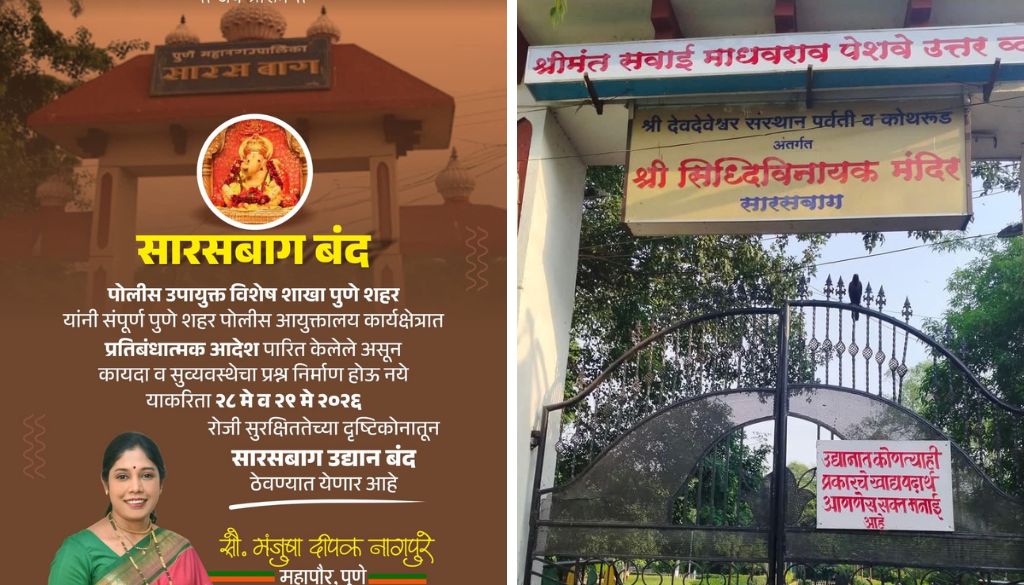
Pune, 27th May 2026: A fresh controversy has erupted over the closure of the iconic Sarasbaug garden in Pune, with questions being raised over the changing reasons cited by authorities for restricting public access to the popular public space.
Last year, the issue had surfaced after Rajya Sabha MP Dr. Medha Kulkarni wrote a letter to the Pune Municipal Commissioner alleging that some Muslim visitors were consuming non-vegetarian food near the Siddhivinayak temple premises inside Sarasbaug. In the letter, she claimed that the incident had hurt religious sentiments and could lead to social tension.
The letter had also referred to a social gathering programme planned by Hindu organisations on June 8 and demanded that the garden remain closed on that day, while allowing devotees access only for temple darshan.
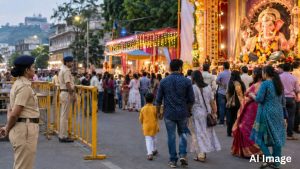
This year, however, authorities have cited security concerns as the reason for shutting the garden. Pune Mayor Manjusha Nagpure announced that Sarasbaug would remain closed on May 28 and 29 following preventive measures imposed by Pune Police to avoid any possible law and order issues.
According to the message issued by the mayor, the closure has been ordered from a security perspective.
The differing explanations given by authorities in the two instances have triggered criticism from citizens and observers, who are questioning the administration’s approach and transparency in taking decisions involving public spaces.
Several citizens have argued that clear, consistent, and transparent reasons should be provided whenever authorities decide to close public places. They said that while reasons such as religious sentiments, social tension, or security concerns may be cited, the administration should publicly clarify the factual basis and decision-making process behind such actions.
Sarasbaug is considered one of Pune’s most prominent public and religious landmarks, attracting visitors, devotees, walkers, and families throughout the year. Citizens have also stressed that decisions related to such public spaces should ensure equal treatment, transparency, and adherence to principles of good governance for all sections of society.