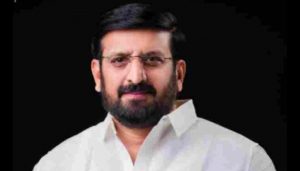
Tired of Pune Traffic Jams? BJP’s Pushkar Tuljapurkar Suggests 15 Measures, From AI Signals to Park-and-Ride
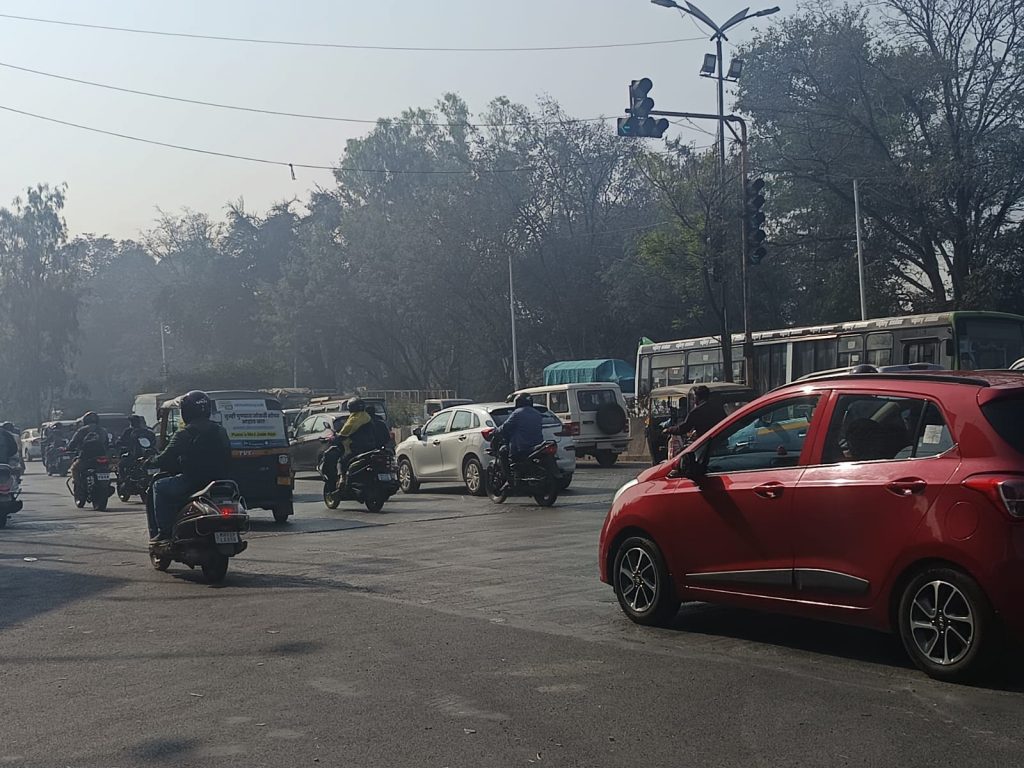
Pune, 13th August 2026: With traffic congestion worsening across Pune, BJP Pune city publicity and communications chief Pushkar Tuljapurkar has urged Police Commissioner Amitesh Kumar to adopt an integrated traffic management plan that combines digital mapping, artificial intelligence, smart surveillance, coordinated enforcement and public participation.
In a letter to Kumar, Tuljapurkar said Pune’s rapid growth in population and vehicle ownership had placed increasing pressure on the city’s road infrastructure. He said daily congestion at major junctions, roadside parking, encroachments, traffic violations, illegal turns, no-entry violations and the movement of heavy vehicles on narrow roads were causing significant delays for citizens.
“Instead of trying to resolve traffic congestion after it occurs, the need of the hour is to plan and prevent congestion before it develops,” Tuljapurkar said.
He acknowledged the efforts being made by the Pune Traffic Police but said manpower-based traffic management alone would not be sufficient given the city’s expansion and rising vehicle population. He called for greater use of technology, accurate digital mapping, scientific traffic planning and coordination among government agencies.
Digital mapping and Google Maps updates
One of the key suggestions was to create an official digital database of traffic restrictions in Pune and share it with Google Maps and other major mapping platforms.
Tuljapurkar pointed out that information about permanent or time-bound no-entry restrictions, one-way roads, vehicle-specific restrictions, U-turn bans and road closures is not always accurately reflected on digital maps.
“This is particularly important because visitors, tourists, business travellers and motorists coming from other cities often rely on Google Maps for navigation. Incorrect information can inadvertently direct them into no-entry roads and contribute to congestion,” he said.
He suggested that the Traffic Police, Pune Municipal Corporation, Regional Transport Office and other concerned agencies jointly establish a mechanism to regularly communicate traffic-related changes to mapping companies.
He also proposed an official system to quickly update temporary diversions caused by Ganeshotsav, palkhi processions, rallies, political events, major sports and cultural programmes, road works and VIP movements.
AI-based traffic management
Tuljapurkar also recommended expanding the use of CCTV cameras, AI-based vehicle counting and real-time traffic monitoring at major junctions.
Adaptive traffic signals, which automatically adjust signal timings based on traffic volume and road conditions, could be deployed on a larger scale, he said.
He further suggested installing CCTV and automatic number plate recognition (ANPR) cameras at locations where no-entry and one-way violations are frequent. Such systems could enable stronger e-challan enforcement while reducing the need for police personnel to remain stationed at the same locations.
Traffic bottleneck mapping
Another recommendation was to conduct joint traffic bottleneck mapping by the Traffic Police, Pune Municipal Corporation and other relevant agencies.
Tuljapurkar said locations affected by illegal parking and encroachments should be identified and maintained on a permanent list, followed by regular monitoring to prevent encroachments from returning after removal.
He also proposed a scientific Traffic Capacity Audit of major roads and junctions to compare their designed capacity with actual traffic volumes. Based on the findings, authorities could consider alternative routes, one-way systems, parking restrictions and other measures.
Park-and-ride and heavy vehicle restrictions
Tuljapurkar called for larger Park-and-Ride facilities near Metro stations, major bus stations and city entry points to encourage motorists to switch to public transport.
He also suggested time-based entry regulations for heavy goods vehicles on narrow and congested roads so that large vehicles do not enter busy areas throughout the day.
Digital traffic complaints
He proposed a “One Traffic Complaint – One Response System” through which citizens could submit photographs or videos of traffic congestion, illegal parking, no-entry obstructions, faulty signals and dangerous traffic conditions.
According to the proposal, complaints could be automatically categorised and forwarded to the relevant department, with action taken on each complaint recorded digitally.
School zones and public awareness
Special traffic plans should also be prepared around schools and colleges during peak arrival and dispersal hours, he said. Dedicated pick-up and drop-off zones, school bus zones and no-parking areas could help reduce congestion around educational institutions.
Tuljapurkar also called for a public awareness campaign on responsible driving involving the Traffic Police, educational institutions, NGOs and social organisations.
Traffic Command Centre and black spots
He suggested strengthening Pune’s traffic command centre so that CCTV feeds, signal operations, congestion, accidents, road closures and temporary traffic diversions could be monitored from a centralised platform.
The system should enable authorities to take immediate decisions on traffic diversions based on real-time conditions, he said.
He also proposed preparing a separate list of Traffic Black Spots where recurring congestion or accidents are reported and developing location-specific solutions for each.
Better integration of public transport
Tuljapurkar said better coordination between Pune Metro, PMPML buses and other public transport systems could help reduce dependence on private vehicles.
He suggested studying dedicated or improved public transport connectivity for major office districts, educational hubs and commercial areas.
“Many of these measures can be implemented in phases using existing resources. Updating digital maps, establishing official coordination with Google Maps and other mapping companies, AI-based traffic management, smart CCTV, encroachment control and citizen participation can bring a positive change to Pune’s traffic management,” Tuljapurkar said.
He urged the Police Commissioner to convene a joint meeting of the concerned departments and prepare an Integrated Traffic Management Action Plan for Pune.
“Traffic management can become more effective, transparent and citizen-centric when the efforts of the Pune Traffic Police are supported by technology,” Tuljapurkar said.