Wagholi: Why IT Professionals, Homemakers and Migrants in Pune Are Learning Marathi
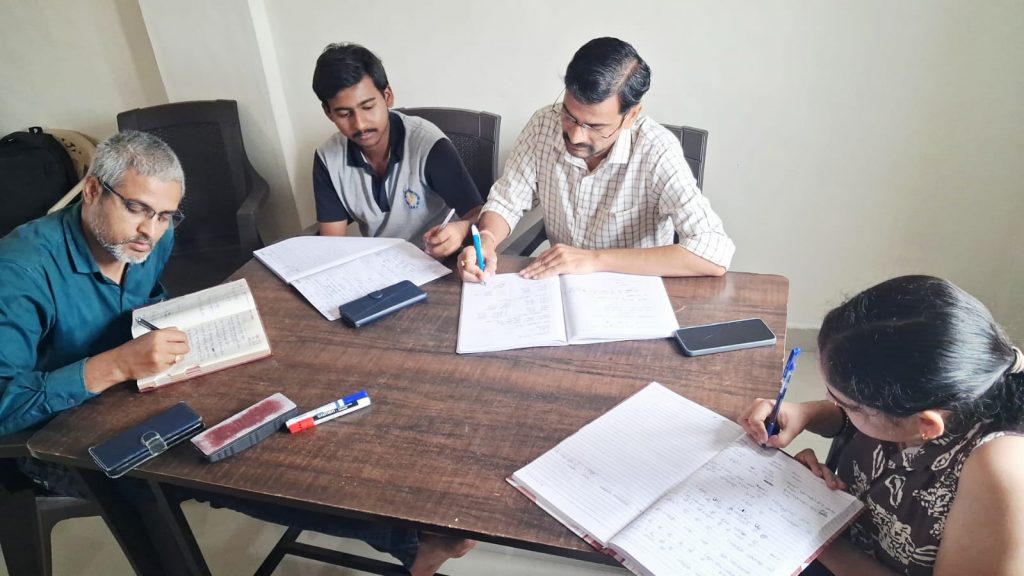
Wagholi, 21st August 2026: For Anil Kumar Mishra, 39, learning and speaking Marathi is not merely about mastering a new language but about connecting with the place where one lives.
A banker by profession and a native of Uttar Pradesh, Mishra founded the Maharashtra Marathi Speaking Academy (MMSA) to help adults from non-Marathi-speaking backgrounds overcome their hesitation and learn spoken Marathi.
Mishra said the idea for the academy came from observing the difficulties faced by people who move to Pune and other cities in Maharashtra for jobs, business, education and other opportunities.
“I started the Maharashtra Marathi Speaking Academy with a very simple thought — Marathi should not feel like a difficult language for anyone who lives and works in Maharashtra,” Mishra said.
Pune and Mumbai have increasingly become diverse cities, with people from different states and linguistic backgrounds settling here. Mishra said many of them genuinely want to communicate in Marathi but often do not know where to begin.
“Most traditional Marathi courses focus more on reading, writing and grammar. But an adult who has recently moved to Pune usually wants something much more practical. They want to know, ‘Mala Marathi madhe bolaycha aahe. Mi daily conversation kasa karu?’ — I want to speak Marathi, but how do I actually use it in my daily life?” he said.
That observation led Mishra to create a speaking-focused learning environment centred on everyday conversations and real-life situations.
From 20 students to more than 100
Mishra said MMSA began with around 20 students and now has more than 100 enrolled learners.
He has observed a growing interest in spoken Marathi, particularly among working professionals and people who have recently moved to Pune.
“People are not learning Marathi only because they have to. Many people genuinely want to speak with their neighbours, colleagues, domestic staff, shopkeepers, auto-rickshaw drivers, professionals and local communities in Marathi,” he said.
According to Mishra, the students come from diverse backgrounds and include IT professionals, corporate employees, business owners, homemakers, students, teachers and people working in various service sectors.
Some students are from other states, while others are Maharashtrians who grew up outside Maharashtra and had limited exposure to spoken Marathi.
“Despite coming from different backgrounds, everyone has one common objective — they want to communicate confidently in Marathi and become more comfortable in their day-to-day interactions,” Mishra said.
Why adults want to learn Marathi
Mishra said the reasons for joining the classes are largely practical.
For professionals, Marathi can help with workplace communication, while others want to communicate more easily with neighbours, society staff, shopkeepers, auto-rickshaw drivers, local service providers and government offices.
Some students, he said, already have Marathi-speaking friends and colleagues but want to participate more naturally in conversations instead of depending on Hindi or English.
“When someone makes an effort to speak the local language, even if their Marathi is not perfect, local people generally appreciate that effort,” Mishra said.
He believes learning Marathi can therefore help people build relationships and develop a better understanding of local culture.
Confidence is the biggest hurdle
According to Mishra, one of the biggest challenges for adult learners is not their ability to learn a language but their lack of confidence and opportunities to practise.
“Adults often understand Marathi to some extent but hesitate to speak because they are worried about making mistakes or being judged,” he said.
Time is another challenge, particularly for working professionals who may spend eight to 10 hours a day at work.
MMSA therefore focuses on daily-use sentences, real-life situations, vocabulary, pronunciation and conversation practice rather than making students memorise large amounts of grammar.
“We also encourage students to start speaking from the beginning. Making mistakes is actually part of the learning process,” Mishra said.
“Our objective is not to make someone perfect on Day 1. Our objective is to make them comfortable enough to start speaking.”
Spoken Marathi takes centre stage
Mishra said the academy’s primary focus is spoken Marathi. Students begin with basic vocabulary and sentence formation before progressing to daily conversations, pronunciation, listening, common expressions and real-life situations.
Grammar is also taught, but through practical sentences and situations rather than only as theory.
Depending on the learner and the course, reading and writing can also be introduced.
“Our main philosophy is very clear — first make the student comfortable speaking and understanding Marathi; then gradually improve accuracy, vocabulary and grammar,” he said.
₹2,499 course fee
MMSA charges ₹2,499 for its course and conducts both offline classroom and online classes at the same fee. The course generally runs for two months, or about eight weeks.
Mishra said the time required to become comfortable speaking Marathi varies from one learner to another and depends on regular attendance and practice.
“We try to keep our learning process level-based, practical and learner-friendly, rather than following a one-size-fits-all approach,” he said.
He added that keeping the course affordable is intended to ensure that cost does not become a barrier for people who genuinely want to learn Marathi.
Students gain confidence
Mishra said the response from students has been encouraging, particularly when learners begin using Marathi outside the classroom.
“Many students initially tell us, ‘I understand Marathi, but I cannot speak.’ After regular practice, they start using simple sentences with their colleagues, neighbours or local people,” he said.
He recalled the example of a homemaker from Rajasthan who, according to him, initially could not understand Marathi. After attending the course and practising regularly, she gradually began understanding and speaking Marathi in her daily life.
“These are the moments that motivate us the most,” Mishra said.
Another common feedback, he said, is that students are able to understand conversations around them and are no longer afraid to respond in Marathi.
“For us, that confidence is more important than simply completing a course,” he said.
‘Language should become a bridge, not a barrier’
Mishra believes the growing interest in Marathi among people from different parts of India reflects a broader need for integration in Pune rather than simply a language-learning trend.
Pune and Mumbai have emerged as major centres for IT, automobiles, manufacturing, education, startups and other sectors, attracting people from across the country.
“When people from different linguistic backgrounds live and work together, communication becomes very important,” Mishra said.
While Hindi and English can help people communicate, he believes learning Marathi can provide a deeper connection with the city, its culture and its people.
“I don’t see Marathi learning as an obligation. I see it as a form of integration and mutual respect,” he said.
He added that Marathi-speaking residents also benefit when newcomers make an effort to learn the language.
“Language should become a bridge, not a barrier,” Mishra said.
Plans to expand beyond Pune
MMSA currently conducts offline classes in Pune, while its online classes are available to learners from anywhere in the world.
Mishra said the academy is planning to expand its offline presence to Mumbai and other cities in Maharashtra.
“Learning a language is not only about learning words and grammar. It is about understanding people, understanding culture and becoming part of a community with mutual respect,” he said.
“At the Maharashtra Marathi Speaking Academy, our aim is not simply to teach Marathi. We want to remove the hesitation around speaking Marathi and make the language accessible, practical and enjoyable for adults.”
Mishra summed up the academy’s philosophy with the message: “Marathi shika, Marathi bola, ani Maharashtra shi joda” — learn Marathi, speak Marathi and connect with Maharashtra.