Water Wars in Pune: Tanker Cartel Threatens Strike in Mohammadwadi-Undri; Residents Demand ESMA Enforcement
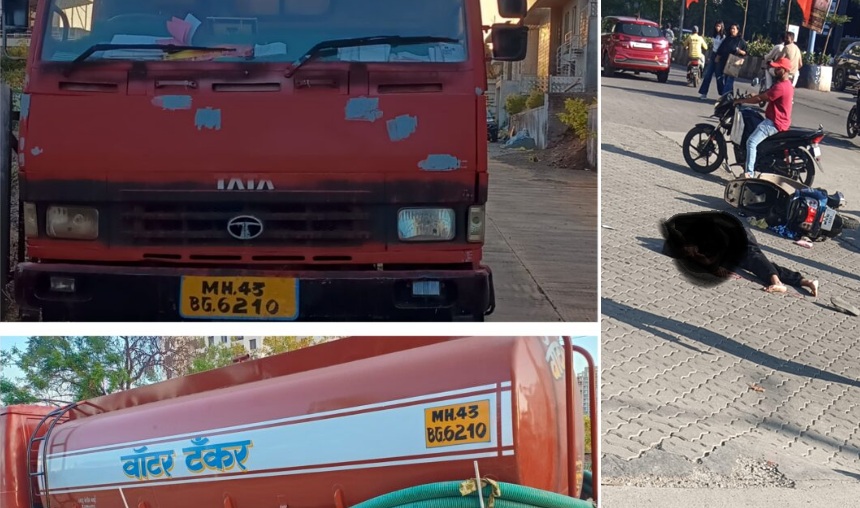
Mohammadwadi, 21st April 2026: A severe water crisis is looming over approximately two lakh residents in Pune’s Prabhag 41 (Mohammadwadi, Undri, Pisoli, and NIBM Annex) as private water tanker operators have threatened to suspend supplies starting May 1, 2026. The ultimatum follows new safety mandates imposed by the traffic police, prompting the operators to demand a steep 35% tariff hike—a move residents and experts are condemning as “blackmail” and “organized coercion.”
The Trigger: Tragic Accidents and New Safety Mandates
The ongoing standoff was triggered by the recent tragic deaths of two young people in the area, caused by water tankers. The ensuing public uproar prompted Pune Police to enforce stringent safety regulations on the notoriously unregulated tanker industry. Operators are now required to maintain proper documentation, strictly curb underage and drunk driving, and equip all vehicles with a dedicated cleaner and a 360-degree camera.
In retaliation, a consortium of “All Water Tanker Suppliers, Distributor’s & Vender Holder” issued a formal notice to local housing societies on April 15. Citing the added costs of the driver, cleaner, camera maintenance, and worsening traffic congestion, the operators announced a unilateral rate hike. The cost of a 9,000-liter tanker is set to increase from ₹600 to ₹800, coupled with an obligatory 10% perennial price increase every subsequent financial year. The operators have refused to negotiate, threatening to cut off the water supply by May 1 if the societies do not comply.
“Weaponizing a Life-Sustaining Resource”
The aggressive stance of the tanker operators has drawn sharp criticism. An unnamed retired senior army official, speaking on the condition of anonymity, highlighted the severe legal and ethical breaches of the proposed strike.
“What is unfolding in Mohammadwadi–Undri is not a routine commercial dispute—it bears the characteristics of organized coercion around a basic human necessity,” the retired official remarked. “Water is not a discretionary commodity; it is intrinsically linked to the fundamental right to life under Article 21 of the Constitution. Any entity that deliberately disrupts access to water in order to force compliance, suppress complaints, or extract economic advantage is effectively weaponizing a life-sustaining resource.”
The official further pointed out that if these operators are extracting groundwater outside municipal regulatory frameworks, their entire business stands on a “questionable legal footing.”
Addressing recent peaceful candle marches organized by citizens, the official criticized attempts to shift the blame onto the public. “Holding service providers accountable is not disruption—it is civic participation. To portray it otherwise is a deflection from the core issue: the absence of transparency and compliance within segments of the tanker ecosystem,” the official added, calling on enforcement agencies to investigate the legality of the operators and prevent unaccountable networks from holding communities hostage.
Residents Hit Back: Demand for ESMA Enforcement
Refusing to bow to the pressure, the Mohammadwadi – Undri Residents Welfare Development Foundation (MURWDF), supported by over 50 local housing societies, formally petitioned Pune Municipal Commissioner Naval Kishor Ram, District Collector Jitendra Dudi, and Commissioner of Police Amitesh Kumar on Tuesday.
In their letter, the foundation explicitly labeled the tanker operators’ demands as a breach of contract and an abuse of tax-paying citizens. The MURWDF has urged the Pune Municipal Corporation (PMC) to take immediate and decisive action by invoking the Maharashtra Essential Services Maintenance Act (MESMA), 2023.
Under MESMA, water supply—including transportation by tankers—is classified as an essential service, empowering the government to strictly prohibit strikes. Furthermore, the residents are calling upon the authorities to utilize the Maharashtra Drinking Water Supply Requisition Act, 1983, which would allow the PMC to commandeer private borewells, wells, and tankers to ensure uninterrupted water distribution.
With the May 1 deadline fast approaching, the ball is now in the administration’s court. Citizens are looking to the PMC and local police to see if they will enforce the rule of law or allow a private cartel to dictate terms over a fundamental human right.