Young Mother’s Health Crisis Highlights Urban Domestic Violence and Malnutrition
Navi Mumbai, 17th November 2025: In a country that often speaks of women empowerment and a rising “New India,” the lived reality for many young women remains starkly different. Across urban settlements and low-income pockets, countless women continue to suffer silently from domestic violence, malnutrition, and lack of basic healthcare.
One such case is that of a 23-year-old woman from Ghansoli in Navi Mumbai, whose identity has been changed to Seema for safety. She lives in a small rented room near Mari Aai Chouk with her husband and their one-year-old son. Behind the façade of an ordinary young family lies a harsh truth — Seema is a survivor of repeated domestic abuse, struggling with hunger, anaemia, and chronic weakness.
According to her account, her husband drinks frequently and often turns violent. Beyond physical assault, Seema says she is routinely denied food, rest, and access to medical care.
After giving birth, she was neither provided nutritious meals nor basic supplements. Over the months, she developed persistent stomach pain, severe fatigue, and a level of weakness that made daily tasks, including caring for her baby, increasingly difficult. Fear, financial dependence, and emotional coercion kept her from seeking treatment.
This form of abuse — where women are deprived of nutrition and healthcare — remains an underreported aspect of domestic violence in India.
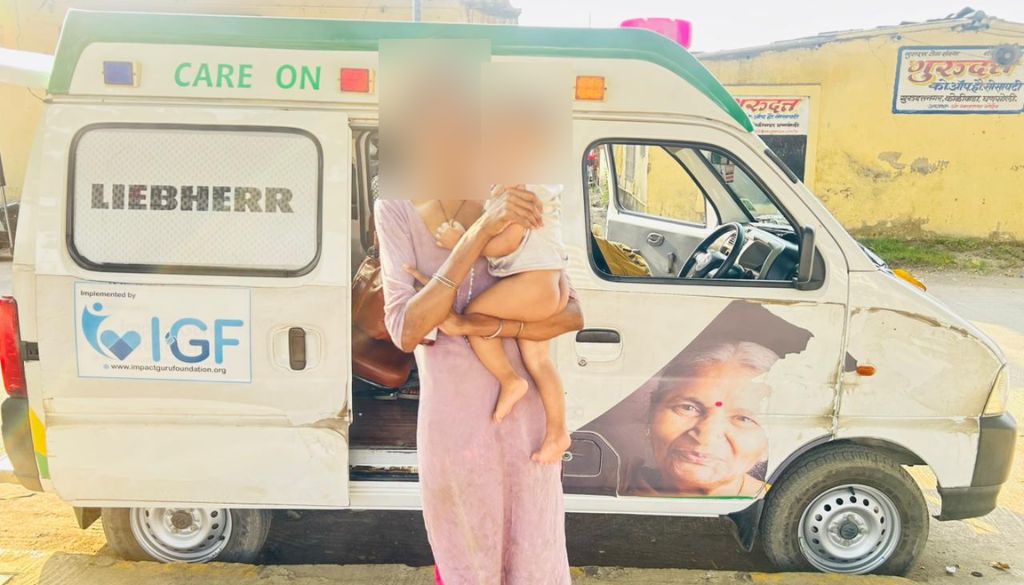
Relief came when IGF India’s Care on Wheels (COW) mobile medical unit, supported by Liebherr, visited her locality. For the first time in months, Seema sought help. She stepped out not just to narrate her ordeal but to receive a basic health check-up that marked the beginning of her recovery.
Medical staff at the unit found her severely weak and undernourished, with probable vitamin and blood deficiencies along with gastric issues. She was provided medication, counselling, and advice on managing her own health and that of her child.
A photograph taken during the visit shows her blurred face to protect her identity. However, her thin arms, frail shoulders, and visibly tired posture underline the extent of her poor health — a reminder of how malnutrition continues to affect young mothers in urban India.
Speaking about the case, IGF India CEO Sundeep Talwar said the situation reflects a larger societal failure.
“When a young mother in our cities is too weak to stand, too scared to seek help, and too undernourished to care for her child, it is not just her family’s failure — it is a failure of all of us. Through our Care on Wheels vans, we are trying to reach such women at their doorstep, but we cannot do it alone. We need citizens, corporates, and community leaders to step forward so that women like Seema are not forgotten inside their homes,” he said.
Talwar also reiterated the importance of women’s health in building a stronger future generation.
IGF India says its goal is to ensure access to quality primary healthcare for underserved communities, especially women and children.
Seema’s case serves as a reminder that despite the country’s rapid development narrative, many young mothers remain at risk — starved, abused, and without basic medical support. Ensuring their health is not just a welfare measure but a fundamental right.