80 Years After Independence, Akhade Vasti Residents Still Walk 4-5 Km Carrying Milk on Their Shoulders
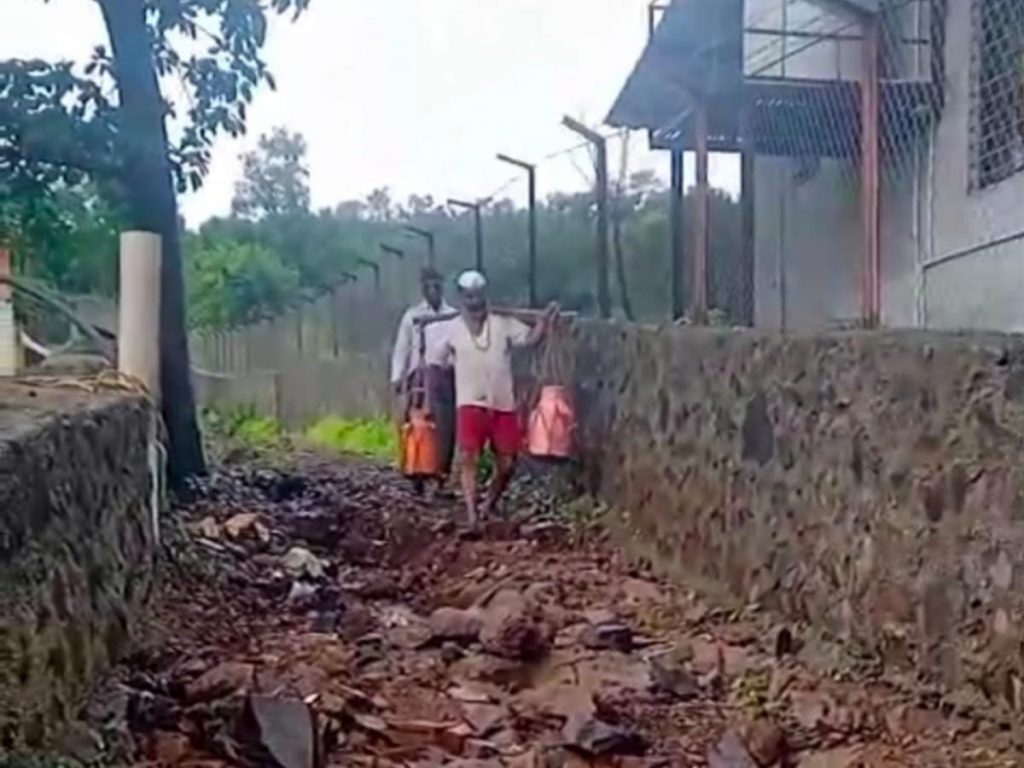
Pawanagar,21st August 2026 : Eight decades after India gained Independence, residents of Akhade Vasti in Shilimb continue to struggle for basic road connectivity. Around eight to ten pastoralist families from the Dhangar community living in the hilly settlement are forced to walk nearly four to five kilometres every day to reach the main road, as vehicles cannot access the settlement.
Agriculture and animal husbandry are the primary sources of livelihood for the families. After milking their cattle, residents have to carry milk cans to the main road for sale. With no motorable road, they use traditional shoulder-carried kavads to transport the milk and walk several kilometres over a rough, uneven path.
For these families, the daily journey is not merely inconvenient but directly affects their livelihood. Carrying heavy milk containers over long distances consumes time and physical energy and makes it difficult for them to transport other essential items, including cattle fodder and household supplies.
Monsoon Makes the Journey More Dangerous
The situation becomes particularly difficult during the monsoon. The unpaved route turns muddy and slippery, while stones and streams along the path increase the risk of falls and injuries. Residents carrying milk have to negotiate the hazardous stretches while balancing the heavy load on their shoulders.
The difficult journey also causes additional financial and physical hardship for families who depend largely on dairy farming for their income.
Students, Patients Also Affected
The absence of road connectivity has consequences beyond the dairy business. Students from the settlement have to use the same rough route to travel to school. During the monsoon, parents are particularly concerned about their children’s safety because of the slippery and uneven terrain.
Medical emergencies are another major concern. Since ambulances and other vehicles cannot reach the settlement, patients have to be carried to the main road before they can be transported to a hospital. Residents fear that the lack of access could have serious consequences during emergencies.
“We Have to Carry Milk Four Kilometres Every Day”
“Our main occupations are agriculture and animal husbandry. Every day, we have to carry milk in a kavad and walk nearly four kilometres to reach the main road. The condition of the route becomes even worse during the monsoon. We have been demanding a road for several years, but our problem has not been taken seriously.”
— Santosh Bhau Akhade, local resident
“Every Essential Task Becomes Difficult”
“Since vehicles cannot reach the settlement, transporting milk, cattle fodder and essential household materials has become extremely difficult. If someone falls ill, we have to carry them to the main road. Even after 80 years of Independence, not having a basic road is a matter of concern,” says Balu Chindhu Akhade, a local resident.
Parents Concerned About Children
“Children face difficulties travelling to and from school because there is no proper road. During the monsoon, the muddy and slippery path makes the journey dangerous. The administration should take immediate steps to provide proper road connectivity to our settlement.”
— Malhari Kalu Akhade, parent
Residents Demand Immediate Road Connectivity
Residents have urged the Gram Panchayat, concerned government departments and elected representatives to conduct an on-ground inspection of Akhade Vasti and construct a proper motorable road to the settlement.
The continuing lack of basic road connectivity has raised questions about the reach of rural development. For families who have to walk several kilometres every day simply to sell the milk produced by their cattle, a motorable road remains an urgent and long-pending need.