PCMC’s ESL initiative empowers Teachers, transforms English Learning in civic schools
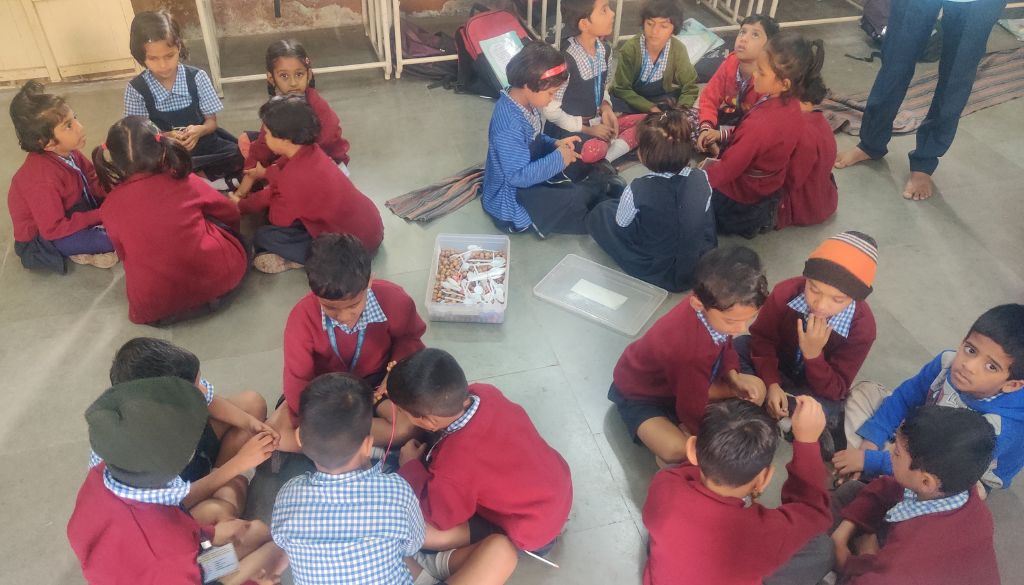
Pimpri, 27 June 2025: In a remarkable shift sweeping through Pimpri Chinchwad’s civic schools, English is no longer a subject feared by students and teachers—it’s becoming a language of confidence, expression, and joy.
The transformation comes through the English as a Second Language (ESL) initiative launched by the Pimpri Chinchwad Municipal Corporation (PCMC) two years ago. Focused initially on Grades 1 and 2, the programme has already reached over 27,000 students and is being hailed as a model for teacher-led change in public education.
“When I first received the English practice book, I could see the change almost immediately,” said Sharmistha Babar, teacher at Chhatrapati Shahu Maharaj Primary School, Dighi Kanya Shala. “The reading skills and vocabulary of my students in Grades 1 and 2 have improved significantly. Because the training is activity-based and designed around real classroom needs, even teachers feel more excited and stress-free while teaching English.”
The initiative began with monthly training workshops for 200 lower primary teachers, focusing on foundational skills like phonics, classroom interaction, and creating print-rich environments. But its biggest strength has been its responsiveness—listening to teachers, adapting to student needs, and placing educators at the center of the reform.
“The fear of English has reduced—not just among students, but also among teachers,” shared Sagar Gaikwad, teacher at Kanya School No. 31, Dapodi. “These trainings have been useful for both. The English practice book given to every child has helped them build strong reading foundations and boosted their confidence. This was reflected clearly in our annual assessments.”
In response to teacher feedback, a group of 10 civic school teachers co-created a 300-page English Practice Book, rolled out in three stages—from alphabet recognition to paragraph reading. The book has become a dual-purpose tool: enabling effective classroom learning and helping monitor student progress.
PCMC Commissioner Shekhar Singh praised the teacher-led approach.
He said, “This initiative is rooted in a simple idea—trust your teachers. When we support them with training and tools, they become change-makers. The ESL programme has not only improved English learning, but also restored faith in our public schools.”
To sustain and scale the effort, PCMC has created a cadre of Master Trainers—senior teachers who now conduct peer trainings, design resources, and mentor fellow educators. These trainers, drawn from the first cohort, have played a vital role in embedding quality practices across schools.
Additional Commissioner Pradip Jambhale Patil added, “We didn’t just bring in a new curriculum—we built a community of teacher-leaders. The sense of ownership among educators is what makes this initiative sustainable. It’s no longer a project; it’s a movement.”
Encouraged by its success, PCMC has extended the initiative to Grades 3, 4, and 5, developing new practice books and training modules tailored to older learners. The content was co-created by more than 20 contributors, including PCMC teachers, Teach For India fellows, civic officials, and even students.
Beyond English, the ESL strategies are now influencing how other subjects—like Marathi and Environmental Science—are taught. Teachers have begun using questioning techniques, group work, and storytelling across the curriculum.
From hesitant beginnings to confident storytelling, PCMC’s ESL initiative shows what’s possible when public education trusts its teachers and gives them the tools to lead.
Box
PCMC’s ESL Initiative: Key Highlights
Launched in 2022 to strengthen English learning in PCMC civic schools
200+ teachers trained through monthly workshops in phonics, interactive methods, and print-rich classrooms
Teacher-created 300-page English Practice Book now used by 27,000+ students in Grades 1 and 2
Practice books support both learning and assessment; divided into 3 levels—alphabet to paragraph reading
Master Trainers model ensures sustainability: peer mentoring and resource creation by experienced teachers
Improved English outcomes reported in QCI’s third-party assessment
Teacher voices strengthened: classroom stress reduced, student confidence increased