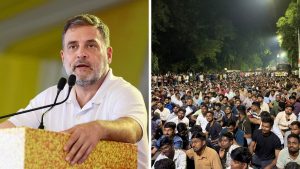
Bombay High Court Orders FIR in Alleged Custodial Death of Dalit Law Student Somnath Suryawanshi
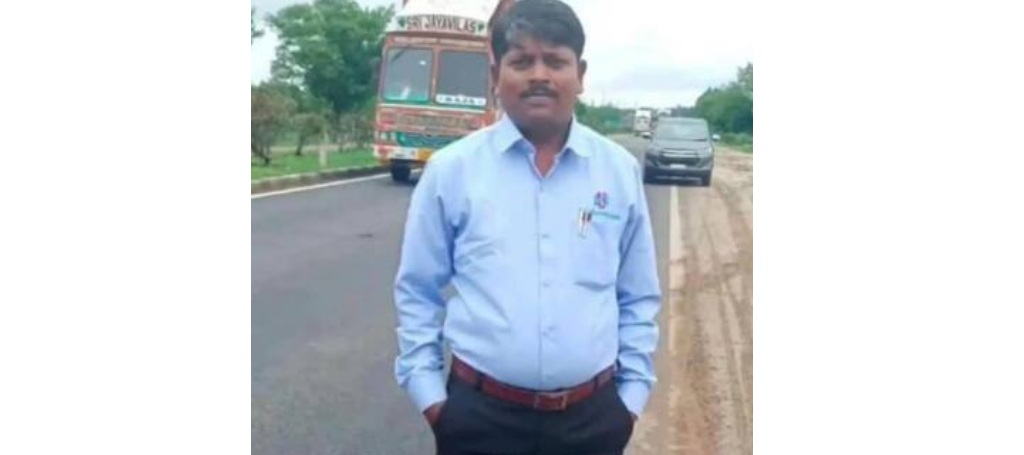
Parbhani, 5th July 2025: In a significant interim ruling, the Bombay High Court (Aurangabad Bench) on Friday directed the Maharashtra government and Parbhani police to register an FIR in the custodial death case of Somnath Suryawanshi, a 35-year-old Dalit law student who died while in judicial custody in December 2024.
The order came in response to a criminal writ petition filed by Vijayabai Suryawanshi (61) from Latur district, Somnath’s mother, who alleged that her son was brutally assaulted while in police custody and later died due to multiple injuries, contrary to police claims that he suffered a heart attack.
Background: Arrest Amid Protests and Allegations of Police Brutality
The events trace back to December 10, 2024, when a protest was held in Parbhani following the alleged desecration of a replica of the Constitution of India near Dr. B.R. Ambedkar’s statue. The protest turned tense, with reports of stone-pelting and arson. Police responded with combing operations across Dalit-dominated areas, arresting over 50 individuals, including Somnath, a final-year law student who was reportedly carrying a copy of the Constitution and recording videos at the protest site.
The petitioner contended that the arrests were arbitrary and excessively forceful, and that many of those taken into custody were subjected to custodial violence. Videos circulated on social media allegedly showed instances of police brutality. Somnath, according to the writ petition, had no role in any violence and was merely present near the Vasantrao Naik statue in Parbhani.
Custodial Death and Conflicting Narratives
Somnath was arrested on December 12, 2024, and remanded to police custody. On December 14, his custody was transferred to judicial authorities, and he was lodged in the Parbhani district jail. By the next morning, December 15, he was declared dead at the government hospital. The police claimed he had complained of chest pain and was taken to hospital, where he was declared brought dead. However, a postmortem conducted by a panel of seven doctors listed the cause of death as “shock due to multiple injuries”, noting 24 visible wounds and internal trauma.
Vijayabai Suryawanshi alleged that she was pressured by police officials, including offers of ₹50 lakh and government jobs, to not press charges. She refused and insisted on justice for her son. Despite filing multiple complaints, no FIR was registered until now. She further claimed that the police tried to coerce her family into holding the funeral in their native village of Latur rather than Parbhani to avoid public outcry.
Judicial Inquiry and CID Delays
A magisterial inquiry under Section 196 of the Bharatiya Nagrik Suraksha Sanhita (BNSS) was conducted, which reportedly concluded that Somnath’s death involved “gross violations of human rights” and indicated custodial torture. However, the State CID, which was handed the probe, continued to treat the case as a fact-finding mission rather than a cognizable crime, delaying further legal action.
The petitioner argued that this delay contradicted Supreme Court rulings, including the landmark Lalita Kumari judgment, which mandates immediate FIR registration in cases where a cognizable offence is apparent.
Court’s Observations and Interim Relief
Delivering the order, a division bench comprising Justice Vibha Kankanwadi and Justice Sanjay Deshmukh noted the prima facie evidence, including the inquest report, postmortem findings, judicial inquiry report, and multiple injury marks on Somnath’s body.
“There were 24 visible injuries on the body. The cause of death has been stated as ‘shock following multiple injuries’. This clearly indicates a cognizable offence,” the bench observed.
The judges also questioned why the CID officer in charge, instead of seeking clarifications from the doctors who conducted the autopsy in Aurangabad, chose to consult JJ Hospital, Mumbai.
“The State ought to have registered an FIR once prima facie evidence was available. The petitioner had submitted a detailed complaint, yet her FIR was not recorded,” the court noted.
Citing the People’s Union for Civil Liberties vs State of Maharashtra and Anna Maruti Shinde vs State of Maharashtra cases, the bench stated that in situations involving custodial deaths, a different standard of judicial review is necessary.
Directions to the Police
The court directed the Police Inspector of Mondha Police Station, Parbhani, to register an FIR based on the complaint dated December 18, 2024, submitted by the petitioner. The FIR must be registered within one week. Furthermore, the investigation is to be handed over to an officer of the Deputy Superintendent of Police rank.
The bench also vacated its earlier order from April 29, 2025, which had prevented CID officer D.B. Talpe from submitting his final report, thereby allowing the newly appointed officer to proceed with the case based on the FIR.
Pending Matters and Next Hearing
While the court granted interim relief on the FIR, it deferred decisions on other pleas, including:
Suspension of officers involved.
Framing of guidelines on handling custodial deaths after magisterial inquiries.
Action on police officers allegedly involved in assault and threats against women during the protests.
The state has been given three weeks to file additional replies, and the matter is scheduled for further hearing on July 30, 2025.
Legal and Social Implications
Advocate Prakash Ambedkar, appearing for the petitioner, argued that the continued delay in treating the death as a criminal offence violated constitutional protections. He referred to the D.K. Basu and Yashwant v. State of Maharashtra precedents, which emphasize mandatory FIR registration in custodial death cases with visible injuries.
Meanwhile, Public Prosecutor A.B. Girase maintained that the CID probe was thorough and ongoing, with over 150 statements recorded. He cited a histopathology report suggesting narrowing of coronary arteries, indicating a heart-related condition. However, the court deemed that insufficient to dismiss the serious injuries noted during the postmortem.