Is Pune’s Riverfront Safe? Residents Say No Amid Rising Crime and Zero Policing
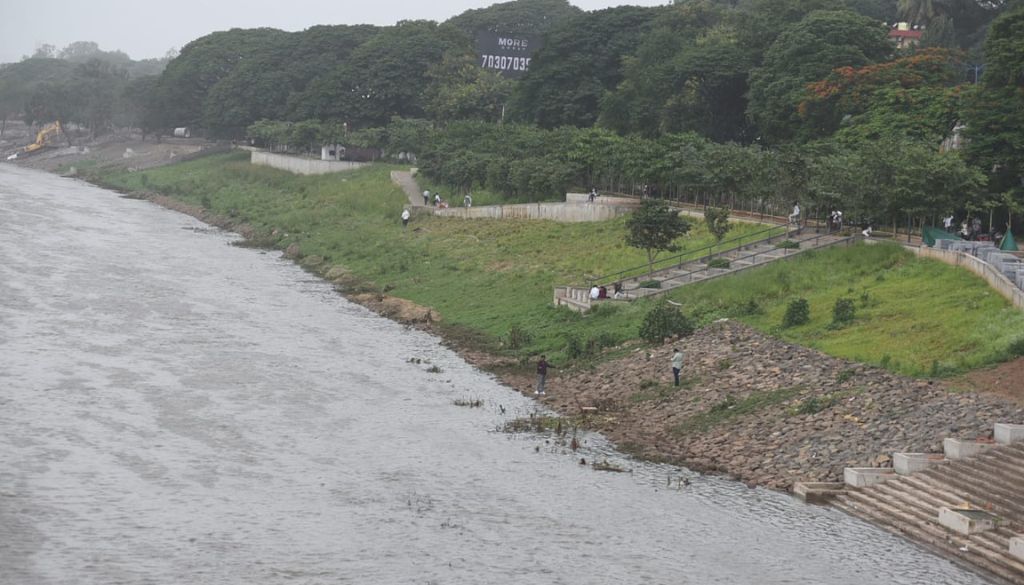
Yerawada, 10th July 2025: The Mula-Mutha Riverfront Development (RFD) project, touted as one of Pune’s most ambitious urban transformation plans, is facing serious challenges even before its full completion. Despite a budget of ₹4,700 crore and promises of a clean, inclusive, and vibrant public space spanning 44.4 km across both riverbanks, on-ground realities are marred by safety concerns, drug abuse, and lack of law enforcement.
The RFD initiative, spearheaded by the Pune Municipal Corporation (PMC), is designed to offer landscaped promenades, open-air theatres, cycling tracks, gardens, and wellness zones — aimed at positioning the riverfront as a landmark for recreation and tourism. However, citizen groups and residents warn that without immediate policing and surveillance, the vision risks being reduced to glossy brochures and architectural models.
Alarming Ground Situation
A recent spot visit by this reporter to the riverbank near the Yerawada Bridge revealed disturbing scenes: trash scattered across the ghats, young men smoking weed, drinking alcohol, and consuming drugs in broad daylight — all in the absence of any police patrol or visible civic monitoring.
“There is absolutely no security presence here. It’s a free zone for anti-social elements,” said Rajesh Pardeshi, a civic activist based in Yerawada. “We’ve demanded CCTV cameras, emergency response systems, and drone-based surveillance. If such a massive public project cannot guarantee safety, it fails its very purpose.”
Residents also point to the lack of basic infrastructure such as lighting and controlled access. Maria Fernandes, who lives near the Bund Garden stretch of the riverfront, voiced her concern: “I love what they’re trying to do with the riverfront, but I wouldn’t feel safe going there alone — not even during the day. There are no lights, no police, and no assurance for women or children. It’s a scary space right now.”
Police and PMC Respond
Following public complaints, senior city police officials have acknowledged the issues. Assistant Commissioner of Police (IT), Vivek Pawar, said, “We are in the process of integrating the riverfront zones into our citywide CCTV surveillance network. High-risk spots will be prioritized for monitoring, and steps are being taken to deploy police presence. Citizen safety remains our foremost priority — especially for women.”
On the civic side, the Pune Municipal Corporation claims that security planning is already underway. “We are building fencing walls and regulating entry-exit points to prevent misuse,” said Bipin Shinde, the PMC Executive Engineer heading the RFD project. “Coordination with the police department has been initiated, and we’ve requested regular patrolling by beat marshals.”
Immediate Action Ordered
In a significant move, Additional Commissioner of Police (Eastern Region) Manoj Patil has directed the zonal DCP to immediately begin regular patrolling along the RFD stretch. Officials have been instructed to take stringent action against anti-social activities and ensure visible law enforcement in vulnerable areas.

Citizens Demand 24×7 Vigilance
Activists and residents maintain that inter-departmental coordination is crucial. Without 24-hour surveillance, on-ground policing, and public awareness campaigns, they fear that the RFD might become another underutilized urban project.
“The riverfront should be a symbol of pride and community,” said Pardeshi. “But without safety, all this investment will just be cement and tiles — not a living, thriving space.”