With Rs 60 Lakh Model Y, Tesla Targets India’s Luxury EV Segment
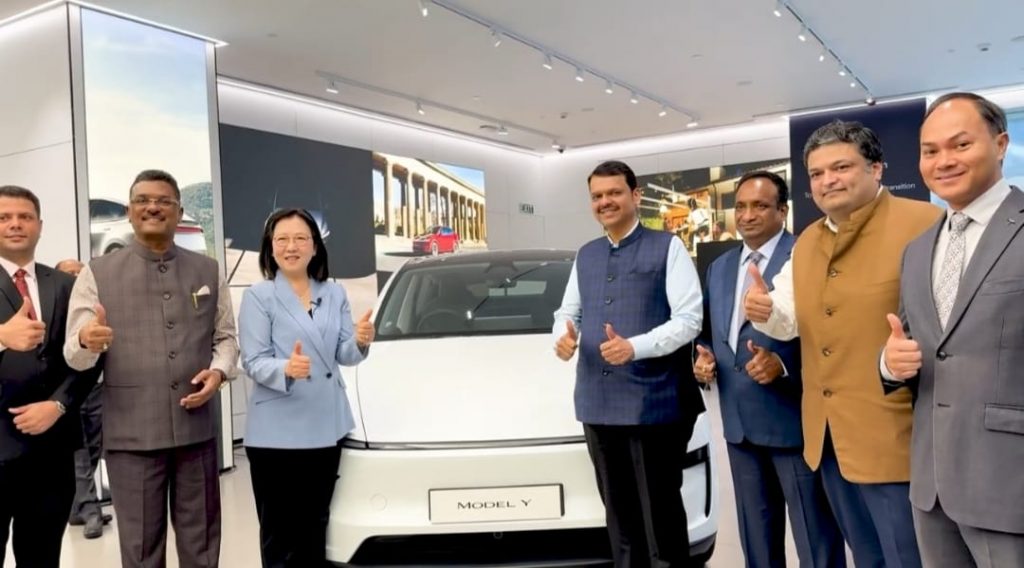
Mumbai, 16th July 2025: Tesla has officially entered the Indian market with the launch of its first showroom in Mumbai’s Bandra-Kurla Complex (BKC). The electric vehicle (EV) giant marked the occasion by introducing its popular compact SUV, the Model Y, priced at ₹60 lakh (ex-showroom) for the base variant.
The showroom will function as an experience center, allowing prospective buyers to explore Tesla’s technology, design, and features first-hand. Alongside the store, Tesla has also opened a service center and warehouse about 6 kilometers away.
As part of its India launch strategy, Tesla announced the setup of eight supercharging stations across Mumbai and Delhi. These stations will collectively support the simultaneous charging of 252 electric vehicles, a significant step toward improving EV infrastructure in India.
Two Variants Launched
Tesla’s Model Y will be available in two variants:
Rear-Wheel Drive (RWD): ₹60 lakh (ex-showroom)
Long Range Rear-Wheel Drive: ₹68 lakh (ex-showroom)
Globally, the Model Y is also available in an All-Wheel Drive version, though it is not yet confirmed for India. The company claims a range of up to 622 km on a full charge. Key features include eight airbags and Level-2 Advanced Driver Assistance Systems (ADAS).
Tesla’s Entry Signals Aggressive EV Push
With this strategic move, Tesla has sent a clear signal to existing auto manufacturers that it is prepared to compete aggressively in the Indian market. The company plans to expand further by launching additional models and opening more showrooms in major cities.
According to India’s revised EV policy of 2024, Tesla can benefit from a reduced import duty—from 70% to 15%—if it commits to investing ₹4,150 crore and begins local manufacturing within three years. Currently, Tesla is only selling imported vehicles (CBU units), while evaluating future factory locations in Gujarat, Maharashtra, Tamil Nadu, and Telangana.
Why Tesla is Entering India Now
Search for New Markets Amid Global Sales Decline: Tesla’s global sales, particularly in the US, Europe, and China, have declined significantly in 2024. In Germany and Italy, sales reportedly dropped by 76% and 55%, respectively. India, now the world’s third-largest auto market, presents new growth opportunities—especially with EV sales rising nearly 20% year-on-year.
Favorable Government Policy: The government’s new EV policy lowers import duties if automakers commit to local manufacturing and investment, giving Tesla a pathway to offer more competitively priced products in the future.
Rising Demand for Luxury EVs: There is growing interest in premium electric vehicles among Indian consumers. Tesla’s Model Y will compete directly with models like the BMW iX1 and Mercedes-Benz EQA in the ₹60–70 lakh segment.
Impact on Indian EV Market
Tesla’s entry could be a game-changer for India’s EV ecosystem. While its initial impact may be limited to the premium segment, it is expected to drive innovation and competition across the sector. Brands like Tata Motors and Mahindra may not feel the immediate heat, but the long-term market dynamics could shift significantly.
Top Challenges Tesla Faces in India
High Import Duties & Pricing
Since the Model Y is a CBU import, it attracts heavy duties and taxes, limiting its appeal to mass-market buyers.
Limited Charging Infrastructure
Although Tesla is building superchargers in metros, Tier-2 and Tier-3 cities still lack EV charging facilities, which may limit adoption.
Customer Preferences
Indian consumers prioritize cost-effectiveness, resale value, and service support—areas where Tesla must build trust.
Service & Sales Network
Tesla’s direct-to-customer online sales model is new for India. Its service network is also in a nascent stage compared to legacy players like Mercedes, BMW, and Tata.
Delay in Local Manufacturing
Tesla’s proposed gigafactory may not be operational before 2026–27, meaning the company will rely on expensive imports in the interim.
Tesla’s Key Competitors in India
Tata Motors: Market leader in EVs with over 60% share. Models like Nexon EV are price-competitive.
Mahindra & Mahindra: Upcoming models like BE6 and XUV.e9 target similar segments.
MG Motor: Premium EVs like Windsor and Cyberster challenge Tesla on features and pricing.
BYD (China): Competing with Atto 3, SEAL, and e6, though brand recognition in India remains low.
Hyundai: Models like Ioniq 5 and Creta EV offer a strong alternative with a vast dealer network.
European Luxury Brands: BMW i4/iX, Audi e-tron, and Mercedes EQ series already cater to Tesla’s target buyers.
What’s Next?
Tesla’s aggressive launch in India is expected to shake up the luxury EV segment, push competitors to innovate, and possibly lead to greater affordability and better infrastructure in the long run.