How to Stay Safe From Monsoon Ailments in Pune
By Dr. Milankumar Patel (MBBS, DNB – Family Medicine)
Family Physician and Intensivist, Pimple Saudagar, Pune
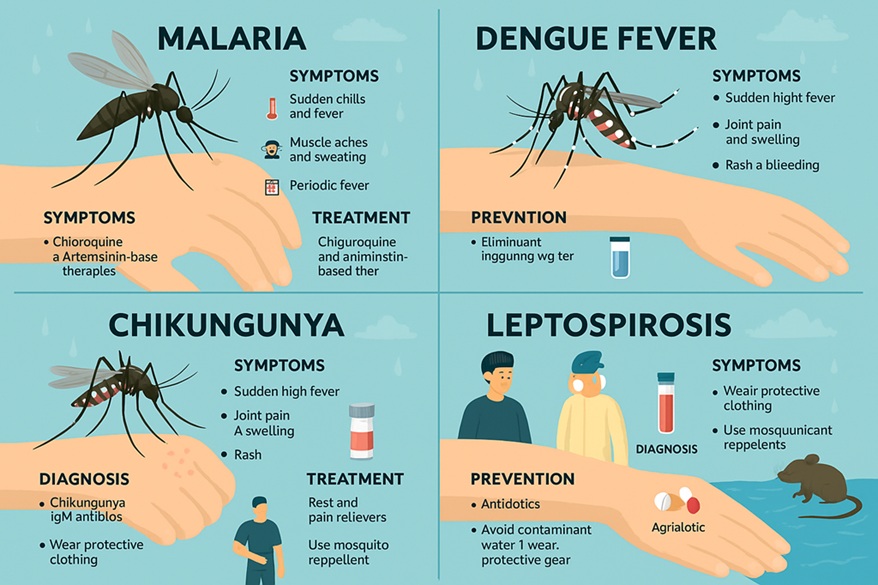
Malaria
Malaria is a common disease prevalent in tropical and subtropical countries, particularly during the rainy season. It is caused by a protozoan parasite of the Plasmodium genus, transmitted through the bite of infected mosquitoes.
The four main Plasmodium species that infect humans are Plasmodium falciparum, P. vivax, P. malariae, and P. ovale. Of these, P. falciparum is the most dangerous.
Symptoms:
- Sudden onset of chills and rigors, followed by high-grade fever, headache, body aches, and sweating
- Periodic fever every 48 hours (tertian fever) or 72 hours (quartan fever)
- P. malariae causes quartan fever
- P. vivax and P. ovale cause milder tertian fever
- P. falciparum causes malignant tertian fever
Some patients may present with gastrointestinal symptoms such as diarrhea and stomach upset. Severe malaria can result in impaired consciousness, anemia, low platelets, kidney and liver failure, respiratory distress, shock, jaundice, and bleeding.
Cerebral malaria is the most severe form, potentially leading to seizures, coma, and long-term neurological deficits.
Treatment:
- Chloroquine or artemether-lumefantrine combination
- Mefloquine for resistant strains
- Primaquine is used to prevent relapses in P. vivax and P. ovale (contraindicated in G6PD deficiency)
Prevention:
- Indoor residual spraying and larviciding in high-transmission areas
- Avoid mosquito exposure at dawn and dusk
- Use insecticide-treated mosquito nets (e.g., permethrin)
- Apply insect repellents and wear long-sleeved clothing
- Take chemoprophylaxis (Atovaquone-Proguanil, Doxycycline, Mefloquine, or Tafenoquine) before travel to endemic areas
Dengue Fever
Dengue is transmitted by the Aedes aegypti mosquito, which breeds in stagnant water and bites during the day. The incubation period is 4–10 days.
Symptoms:
- Sudden high-grade fever with chills and body aches
- Severe muscle and joint pain (“breakbone fever”)
- Skin rash, pain behind the eyes, sore throat
- Nausea, vomiting, and sometimes diarrhea
- Bleeding from gums, nose, or internal organs due to low platelet count
Severe forms include Dengue Hemorrhagic Fever (DHF) and Dengue Shock Syndrome (DSS), often requiring ICU care. These may lead to multi-organ failure, seizures (especially in children), respiratory distress, and dangerously low blood pressure.
Treatment:
- Supportive care: hydration with oral/IV fluids
- Platelet transfusions only if count <20,000 or active bleeding
- Vasopressors for blood pressure support
- Mechanical ventilation and dialysis may be required in critical cases
- Macrophage Activation Syndrome (MAS), a life-threatening inflammatory complication, may require steroids
Prevention:
- Use mosquito nets and repellents
- Wear protective clothing
- Eliminate stagnant water (pots, puddles, tires, etc.)
- Spray insecticides around homes
- Use electric mosquito racquets and stay in screened or air-conditioned rooms
Chikungunya
Chikungunya is a viral fever spread by the Aedes mosquito. With global travel, it is now found beyond Africa and Southeast Asia.
Symptoms:
- Sudden high fever (102–105°F) with chills
- Joint pain (especially small joints) and stiffness, worse in the morning
- Pharyngitis, conjunctivitis, body rash (including palms and soles)
- Saddleback fever pattern (recurrence after initial recovery)
- Rare complications: Chikungunya encephalitis (seizures, confusion, sensorimotor deficits)
Joint symptoms usually resolve in 1–2 weeks, though 10–12% may experience chronic arthritis.
Diagnosis:
- Chikungunya IgM antibodies
- RT-PCR for Chikungunya virus
In pregnant women, infection may cause birth defects or developmental delays in newborns.
Treatment:
- Supportive care: hydration, fever control, and pain management
- NSAIDs for joint pain
- Monitor blood sugar in diabetic patients
Prevention:
- Use mosquito repellents and nets
- Wear long sleeves and full-length pants
- Stay in screened or air-conditioned rooms
- Eliminate mosquito breeding grounds
- Avoid travel to outbreak zones
- Infected individuals should avoid mosquito exposure during the first week of illness to prevent further transmission
Leptospirosis
A bacterial infection transmitted from animals (zoonosis), Leptospira bacteria thrive in contaminated water, especially in flood-prone, unsanitary environments.
Symptoms:
- High fever, chills, headache, retro-orbital pain, photophobia
- Muscle pain, dry cough, nausea, vomiting, diarrhea
Severe Form (Weil’s Disease):
- Jaundice, kidney failure, decreased urine output
- Bleeding tendencies, low blood pressure (shock), respiratory distress
Diagnosis:
- Leptospira IgM antibody test
- PCR on blood, urine, cerebrospinal fluid, or tissue
Treatment:
- Mild cases may resolve without antibiotics
- Oral antibiotics: doxycycline, amoxicillin, azithromycin, etc.
- Severe cases: IV penicillin G, third-generation cephalosporins, or erythromycin for penicillin-allergic pregnant women
- ICU care may be necessary for multi-organ failure
- Dialysis for acute kidney failure; cardiac monitoring for arrhythmias
Prevention:
- Animal infection control via sanitation, immunization, and vet care
- Prevent urine contamination in shared water sources
- Use PPE when handling animals or contaminated water
- Agricultural workers and sewer workers should wear rubber boots
- Avoid swimming in contaminated lakes or streams
- Raise awareness about risks during monsoon recreational activities

(Dr. Milankumar C. Patel is a Family Physician & Intensivist in Pimple Saudagar, Pune. Qualifications: MBBS, DNB (Family Medicine), CTCCM, IDCCM)