Supreme Court Calls for End to Hand-Pulled Tourist Carts in Matheran, Seeks Alternative Transport Plan
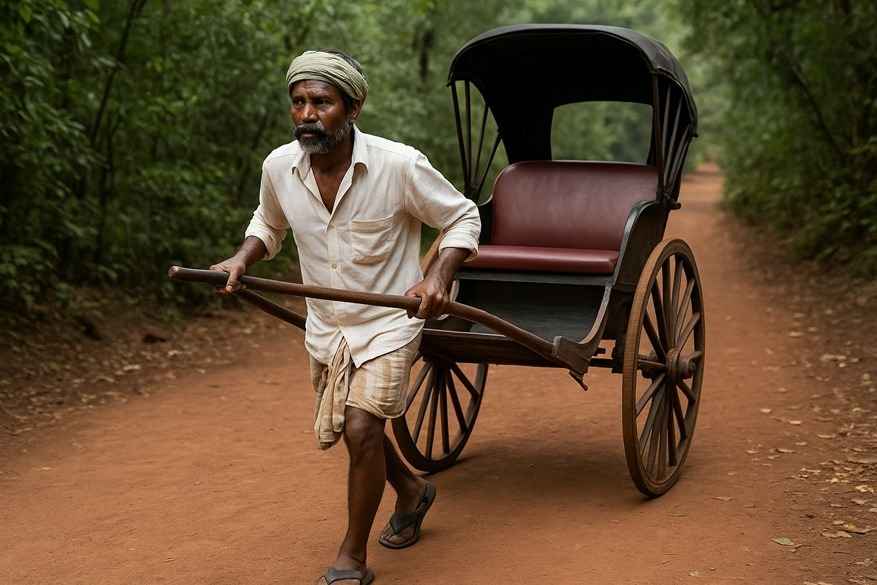
New Delhi/Matherna, 24th July 2025: The Supreme Court has raised serious concerns over the continued use of hand-pulled carts to transport tourists in Matheran, a popular eco-sensitive hill station in Maharashtra. The court emphasized the need for the state government to develop a humane and sustainable transport alternative that also safeguards the livelihoods of existing cart-pullers.
A bench comprising Chief Justice of India B R Gavai and Justices K Vinod Chandran and Joymalya Bagchi made the remarks while hearing a matter related to transportation practices in Matheran. The bench responded to submissions made by amicus curiae K Parameshwar, who pointed out that apart from Kolkata, Matheran remains one of the last places in the country where tourists are still ferried using hand-pulled carts.
“The use of such outdated and physically demanding transport methods for ferrying visitors — especially in a town that welcomes around 20 lakh tourists annually — cannot be justified any longer,” Parameshwar told the court.
The apex court reminded the Maharashtra government of a pilot project, initiated under its directions, to introduce 20 electric rickshaws in Matheran. The bench urged the state to explore innovative solutions, drawing attention to the model used at Gujarat’s Sardar Sarovar Dam.
Chief Justice Gavai noted, “At the Sardar Sarovar Dam, over 150 e-rickshaws operate exclusively by tribal women from nearby villages. Each morning, they pay a nominal amount — around ₹150 — to rent the vehicle for the day. Whatever they earn is theirs to keep.”
Highlighting this as a successful blend of eco-friendly tourism and local empowerment, the court encouraged Maharashtra to either adopt a similar framework or propose a distinct, well-researched plan within the next two weeks.
According to official data, motorized transport is completely banned within Matheran’s municipal limits, home to approximately 5,000 residents as per the 2011 Census. As a result, tourists primarily rely on walking, horse rides, or hand-pulled carts — the latter drawing increasing criticism over ethical and human rights concerns.