India’s Health Infra Needs Srgent strengthening: Dr. Soumya Swaminathan
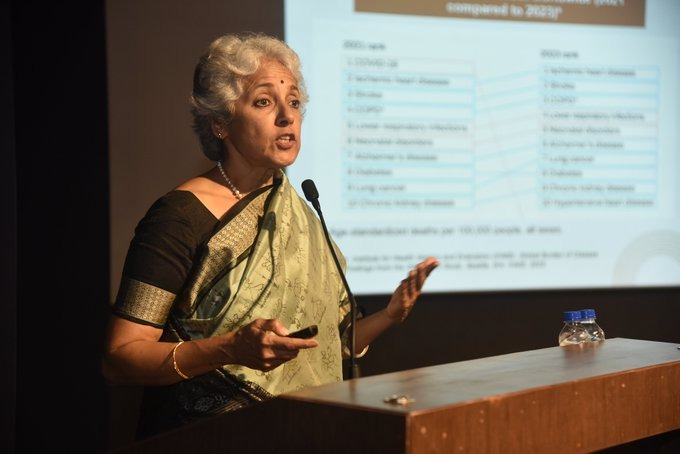
Pune, 1st November 2025: India must urgently strengthen its health infrastructure and shift from reactive care to preventive systems, said Dr. Soumya Swaminathan, Principal Advisor to the National Tuberculosis Elimination Programme (NTEP) and former Chief Scientist at the World Health Organization (WHO).
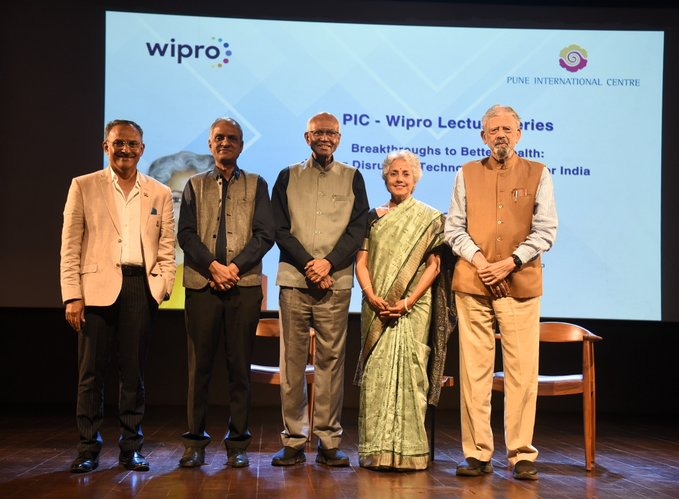
She was delivering the inaugural address on ‘From Basics to Better Health: Making Disruptive Technologies Work for India’ at the inaugural ‘PIC–Wipro Lecture Series on Science, Technology and Society’, hosted by the Pune International Centre (PIC) and supported by Wipro Limited.
She said disruptive technologies can transform healthcare only when paired with equity, strong systems, skilled people, and evidence-driven policies. “Science must not only innovate but also reduce inequality,” she added.
Dr. Swaminathan identified air pollution, climate change, antimicrobial resistance, and misinformation as major global health threats. She said non-communicable diseases in the south and maternal and child health issues in the north are India’s dual health challenges and called for decentralised, state-specific health strategies.
Highlighting recent advances such as AI-driven respiratory screening (Swaasa), mRNA vaccine platforms, and wearable health monitors, she urged ethical, interdisciplinary, and community-rooted research.
She commended the Ayushman Bharat Digital Mission (ABDM) for creating nearly 80 crore ABHA IDs, describing it as a step toward a unified digital health ecosystem. However, she warned that innovation would remain inequitable without a strong Primary Health Care (PHC) foundation.
Dr. Swaminathan also outlined challenges in PHC—care gaps, weak referral pathways, and limited monitoring—and called for greater investment in research capacity, ethical frameworks, and health data systems.
Acknowledging India’s strengths, she cited its large research workforce, digital infrastructure such as Aadhaar, UPI, and CoWIN, and a growing innovation ecosystem supported by public–private partnerships and philanthropy. She pointed to the Pune Knowledge Cluster as a model for locally driven innovation with national impact.
Quoting her father, Dr. M.S. Swaminathan, she said: “Do not worship a technology because it is new, nor discard it because it is old. Wisdom lies in combining the best in both.”
P.S. Narayan, Global Head of Sustainability and Social Initiatives at Wipro Limited, said Wipro is committed to supporting public institutions that foster democratic dialogue and uphold constitutional values. “Through this collaboration with PIC, we aim to bridge the worlds of science, technology, and humanity,” he said.
Opening the event, Dr. R.A. Mashelkar, President of PIC, underlined the Centre’s five guiding principles—independence, integrity, innovation, integration, and influence. He said partnerships linking science, governance, and citizen-centric policy are vital to social progress.
Maj Gen Nitin Gadkari (Retd), Director, PIC, introduced the speaker, and moderated the Q&A session, where he highlighted the need for collaboration to ensure innovation benefits every citizen.