Seizures led him to India: Somali patient recovers fully after brain tumour surgery in Pune
Pune, 3rd February 2026: A middle-aged man from Somalia, Abdulla Ali Yousuf, who had been suffering from recurrent headaches for nearly three to four years and later developed episodes of generalised tonic-clonic seizures, travelled to India for specialised neurosurgical care and underwent a complex brain tumour surgery at Inamdar Multispecialty Hospital in Pune. Doctors said he has recovered fully, was discharged without any neurological deficit, and is expected to fly back home in the first week of January after completing two scheduled follow-up reviews.
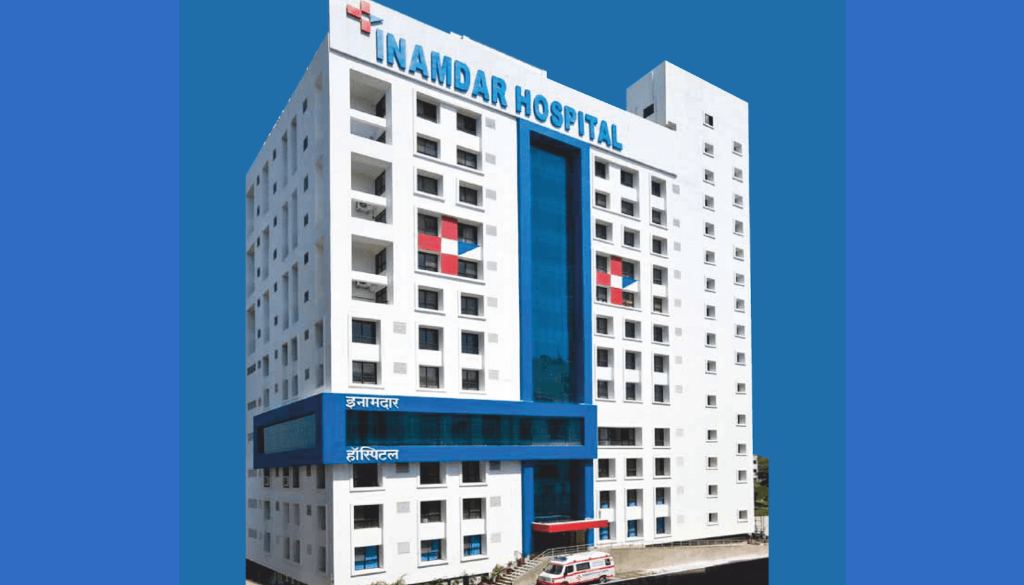
Inamdar Multispecialty Hospital is a multi-specialty tertiary care facility in Pune, known for advanced surgical care, ICU-backed peri-operative management and coordinated services for complex cases. With 24×7 emergency support, round-the-clock critical care and integrated specialty departments, the hospital treats patients from Pune and across regions, while also supporting international patients who travel to India seeking timely treatment and predictable care pathways.
A message to international patients
Hospital officials said international patients often arrive after a long period of suffering, carrying pain, uncertainty, anxiety and the emotional burden of making healthcare decisions far away from home.
“We understand that the journey to seek treatment internationally is never easy,” the hospital’s international patient team said. “Many patients wait for months or years while symptoms worsen. When they come to us, we try to reduce not just the medical risk but also the stress, by offering clear guidance, compassionate support and the best possible clinical care at every step.”
Hospital officials said the patient’s family connected with Inamdar Hospital through the patient’s uncle, Adam, who had visited the facility in 2016. Based on that earlier experience, the family reached out again in October 2025 after an MRI in Somalia suggested a well-circumscribed lesion in the right frontal region of the brain that appeared aggressive and vascular.
In the weeks that followed, the hospital coordinated documentation and the medical-visa process through its international patient support team, which assists families with report collection, case summaries, cost estimates, invitation letters for medical visas, appointment scheduling and coordination during admission and discharge. The passport and medical reports were sent from Somalia, after which the hospital prepared an invitation letter for visa purposes.
According to the hospital’s timeline, the first discussion with the family took place on October 22, 2025. The passport was received on October 27, and the medical-visa process was initiated. Medical reports were received on November 1, when the surgical plan and estimated cost were discussed with neurosurgeon Dr Abhinandan Magdum.
Dr Magdum specialises in brain and spine tumour surgery and complex cranial neurosurgery, and has performed over 200 complex neurosurgical procedures. The patient arrived in India on November 10 and visited the hospital on November 12 for consultation and investigations. A complete health check-up was carried out on November 14 to assess fitness for surgery. He was admitted on November 21 under Dr Magdum for definitive treatment and was discharged on December 1.
Doctors said the MRI had shown a lesion dangerously close to a critical structure — the superior sagittal sinus, a large vein responsible for draining blood from the brain.
“The most challenging part was the location. The tumour was abutting the superior sagittal sinus, and operating in that region requires meticulous technique because even a small injury can lead to major bleeding,” Dr Magdum said.
Given the symptom pattern — seizures and long-standing headaches — and the vascular appearance of the tumour on imaging, the team recommended surgical excision. The patient and family were counselled about the suspected pathology, the need for surgery, expected outcomes and possible complications.
“For international patients, this counselling focuses strongly on clarity and reassurance, because families are navigating not only medical decisions but also travel, finances and being away from home support systems,” hospital officials said.
During the procedure, surgeons performed a craniotomy and carried out careful, step-by-step dissection to remove the lesion in its entirety.
“The tumour was highly vascular, which demands sustained haemostasis throughout. The goal is complete excision while keeping the superior sagittal sinus uninjured,” Dr Magdum said.
Post-operatively, the patient was monitored in the ICU for seizures and early complications. Doctors said he remained stable and did not have further seizure episodes. He was later shifted to the ward and continued recovery without weakness, speech disturbance or other neurological deficits.
The histopathology report confirmed a Grade 1 meningioma with a high mitotic index, and the patient was advised regular surveillance.
The hospital said two follow-up consultations are being conducted as part of the post-surgery protocol, after which the patient is expected to travel back to Somalia in the first week of January, subject to clinical clearance for flying. Hospital officials said this structured follow-up is especially important for international patients to ensure safe travel readiness, medication planning and continuity of care once they return home.
Sharing his experience, the patient said, “When my headaches and seizures started, we were worried and unsure where to go. From the first call to the day I walked out, everything was handled with care. I feel fully recovered, and I’m grateful to the doctors and team in Pune for giving me my life back.”
Hospital officials said such cases show why India continues to be a preferred destination for international patients, combining specialist expertise, structured pre-surgical assessment, safe anaesthesia and ICU support, and coordinated assistance for travel and documentation.
Doctors reiterated that persistent headaches, new-onset seizures, vision changes, vomiting or sudden neurological symptoms should never be ignored.
“Early diagnosis changes outcomes,” Dr Magdum said.