JEE Main 2026 Analysis: Decoding the “Chemistry Trap” and the Strategic Path to Session 2
PUNE, 17 February 2026: The National Testing Agency (NTA) has officially released the results for JEE Main 2026 Session 1, marking a historic chapter in Indian engineering entrance exams. With a record-breaking 1,304,653 candidates and a staggering 96.26% attendance rate, the competition has reached an all-time high. While 12 candidates achieved a perfect 100 NTA percentile, the real story lies in the shifting pattern of the paper itself.
The “Chemistry Trap”: Why Stability Trumps Speed
Traditionally, Mathematics has been the “rank decider,” but Session 1 of 2026 introduced a new variable. Many shifts featured a surprisingly lengthy Chemistry section, dominated by multi-statement and assertion-reasoning questions that disrupted the traditional strategy of finishing Chemistry in 30 to 35 minutes, leaving less time for the other sections. This proved crucial for overall performance, as it demanded strong mental toughness to quickly adapt the right strategy for the remaining duration of the exam.
Lalit Kumar, CMD of Prime Academy Pune and a seasoned educational expert, warns that the biggest mistake students made was reacting to this difficulty with “raw speed.”
If a section takes longer than usual, it signals a tougher paper. In such cases, sticking to your natural speed is vital,” says Mr. Lalit. “Increased speed under stress is a recipe for negative marks. The best way to gauge and improve natural speed is through more mock tests followed by thorough test analysis. Many students chase an ‘illusion of perfection’ by delaying tests to study more concepts. In low-scoring exams like JEE, perfection in a subject is an illusion, and students must understand the importance of mock tests.
The “Mentor-Led” Edge: A Case Study in Results
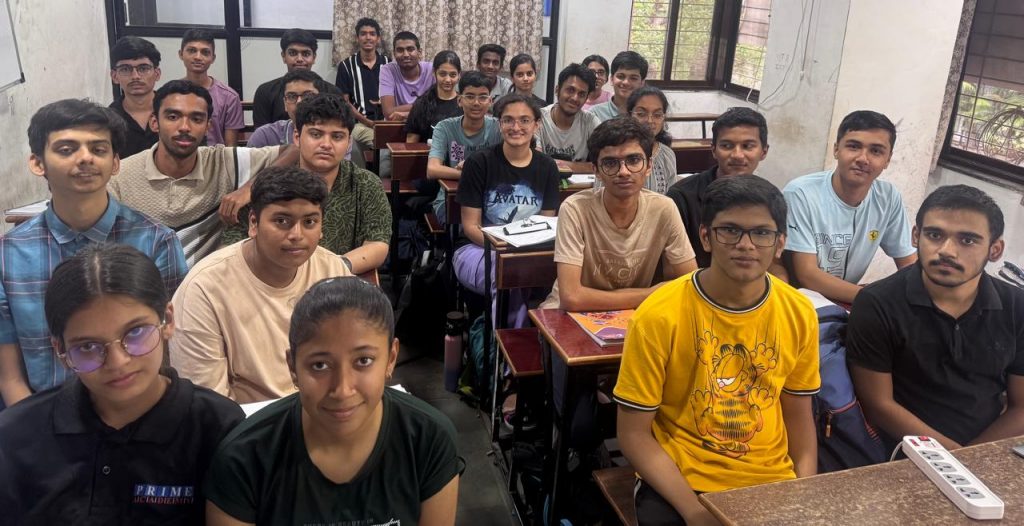
The results from Prime Academy Pune serve as powerful proof of concept for the “mid-sized coaching” model. From a total student strength of fewer than 200 across all batches, 13 crossed the coveted 99th percentile mark, with more than 60% qualifying for JEE Advanced based on previous trends.
This success highlights a growing trend in education: the Teacher-Led Leadership Model. Unlike large institutional chains where bureaucratic layers delay academic shifts, a mentor-led environment allows an experienced team of IITians to identify preparation gaps in real-time. This agility ensures that corrective measures are implemented instantly, saving students’ most precious resource: time.
Expert Strategy: The Roadmap to the April Session
With JEE Mains 2 scheduled for April 2 to April 9, 2026, the focus moves to recalibration. Mr. DC Pandey, the renowned Physics author and HOD at Prime Academy, suggests a tailored approach for subsequent exams:
- For the 98+ Percentilers: They stand a strong chance of clearing JEE Advanced and must now prioritize rigorous Advanced-level mock testing. “JEE Mains-2 should be treated purely as an experience-builder, with just one or two Mains-style mocks taken in the final days to get into Mains mode,” says Mr. Pandey. Prime Academy has launched a customized JEE crash course in which each student is discussed individually to assess their strengths and weaknesses, and personalized guidelines are suggested accordingly, keeping the limited preparation window in mind.
- For those with a lower percentile: Historically, many students have increased their percentile by as much as 15 to 20 points in JEE Main Session 2. Mr. Pandey offers a powerful analogy: “JEE Main 1 was merely the first few kilometers of a marathon. Success isn’t determined by the early leader, but by the runner with the resilience to maintain pace and finish strong in the final stretch.” These students should now focus entirely on JEE Main Session 2.
Integrating Board Exams with JEE Preparation
As the 12th Board exams have already started, Lalit Kumar strongly advises students not to put JEE preparation on hold. Instead of viewing Boards and JEE as competing priorities, he recommends a smart strategy called “Topic Integration.” The idea is simple yet powerful. If a student is preparing a topic like Capacitors for the Board exam, they should immediately solve 5 to 10 JEE-level problems on the same topic. This keeps the JEE mindset active while strengthening conceptual clarity.
Rather than increasing stress, this approach builds confidence. It ensures continuity in preparation, sharpens application skills, and prevents the loss of momentum during the Board phase. Almost all 12th Board topics are also part of the JEE syllabus. With the right strategy, preparation for one can reinforce the other.
Technical Corner: Bonus Marks and Dropped Questions
The NTA has confirmed the removal of 9 questions (7 in Physics and 2 in Mathematics) from the final evaluation after candidate challenges. As per the evaluation policy, full marks (+4) have been awarded to all candidates who appeared in those specific shifts, providing a significant “score cushion” for thousands of aspirants.
However, such compensatory marks do not necessarily help in a competitive exam where relative grading is the key, and they tend to increase randomness in the final outcome. The NTA must ensure that in such sensitive examinations, such mistakes are avoided, and strict accountability is fixed for those responsible. This episode also led to a 4-day delay in result declaration, increasing anxiety among students and other stakeholders. At the same time, students must focus on what is within their control rather than using such errors by the NTA as an excuse for their performance.