
Ingredients to Look for in Oil & Acne Control Face Wash
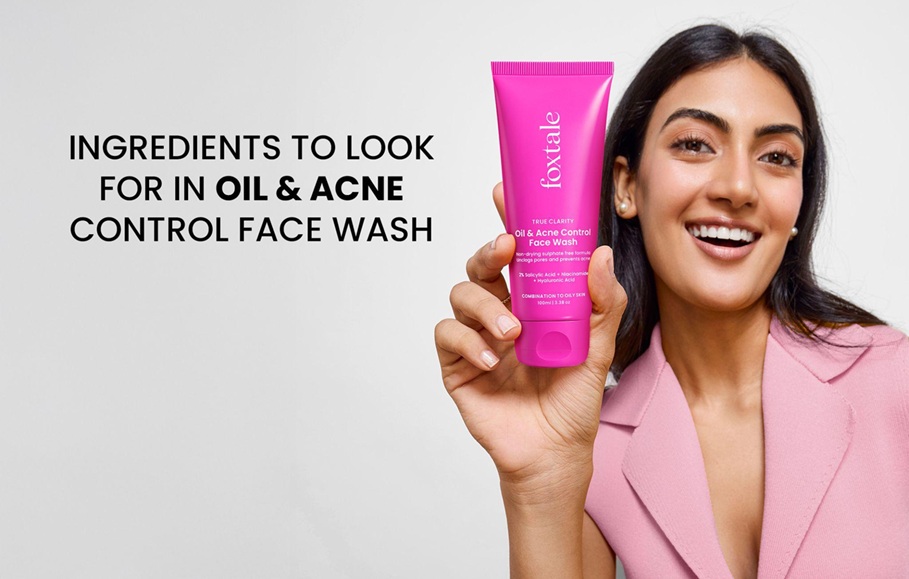
Mumbai, 21st April 2026: Oily and acne-prone skin can be challenging to manage due to clogged pores and breakouts. You will need a simple routine to manage this concern. Your skincare should include an acne face wash and a Niacinamide serum. You do not have to switch between products, but understanding the ingredients in face wash will help you choose what works for you.
This guide explains the active ingredients that control oil and acne. You will also know what to avoid to have clear skin.
Why Choosing the Right Ingredients Matters
Your cleanser is not just for removing dirt when you have oily and acne-prone skin. It sets the foundation for oil and breakout control.
The right face wash ingredients help to:
- Regulate sebum (oil) production
- Remove dirt, sweat, and acne-causing bacteria
- Unclog pores and prevent blackheads
- Calm inflammation and redness
A good oil control face wash should cleanse deeply without stripping your skin. Your skin may produce more oil if you over-cleanse it or use harsh ingredients.
Top Ingredients in Face Wash to Look For Oily, Acne-Prone Skin
1. Salicylic Acid (BHA): A salicylic acid face wash for acne is one of the most recommended options for oily skin.
How does it work?
It deeply penetrates the pores while eliminating excess sebum and dead skin cells.
Benefits
- Deep pore cleansing
- Reduces blackheads and whiteheads
- Prevents future breakouts
Ideal concentration: 0.5%–2% in cleansers
2. Niacinamide (Vitamin B3): This ingredient addresses multiple skin concerns when it comes to oil control and skin repair.
Benefits
- Regulates sebum production
- It reduces the appearance of pores
- Reduces redness and inflammation
- Improves uneven skin tone
Why does it matter?
A salicylic acid and niacinamide face wash exfoliates with barrier repair, making it suitable for daily use. You can also pair it with a Niacinamide serum for better oil control and spot reduction.
3. Hyaluronic Acid: Oily skin needs more hydration as it easily glides away moisture, which leads to excess oil production and stickiness on the skin.
Benefits
- Attracts and maintains moisture
- Prevents dehydration-induced stickiness/oiliness
- Maintains skin balance
Hydrated skin produces less excess oil over time.
4. Cica Extracts (Centella Asiatica): Cica is widely used in formulations made for sensitive and acne-prone skin.
Benefits
- Soothes redness and irritation
- Supports skin healing
- Strengthens the skin barrier
Best for inflamed acne and sensitive oily skin
5. Tea Tree Oil: It is a powerful and natural antibacterial ingredient, which is common in anti acne face wash, helping you treat acne and pigmentation.
Benefits
- It reduces acne-causing bacteria
- Soothes inflammation
- Heals active acne
Best suited for mild to moderate acne
6. Glycolic Acid (AHA): It removes dead cells from the skin’s surface and improves texture.
Benefits
- Gently cleanses and exfoliates
- Brightens dull and dead skin
- Prevents clogging of pores
The powerful combination of AHA and BHA provides exfoliation at the surface and deeper layers.
7. Zinc: It regulates oil and allows acne healing.
Benefits
- Controls sebum production
- Reduces bacterial growth
- Speeds up healing
It is paired with Niacinamide in face wash as an advanced ingredient blend.
| Ingredient | Main Function | Best For |
| Salicylic Acid | Exfoliation deep within the pores | Acne, blackheads |
| Niacinamide | Oil control and calming | Oily, sensitive skin |
| Hyaluronic Acid | Hydration balance | Dehydrated oily skin |
| Cica | Soothing and repair | Inflamed acne |
| Tea Tree Oil | Antibacterial | Active pimples |
| Glycolic Acid | Surface exfoliation | Dull and rough texture of the skin |
| Zinc | Oil regulation | Frequent breakouts |
Which Face Wash is Best for Acne?
Go with oil-controlling, exfoliating, and soothing face wash ingredients if you are wondering which face wash is best for acne.
It is essential to choose the right face wash to treat acne. The best face wash for acne helps you:
- Gently cleanse while unclogging pores
- Reduce acne visibly within a few days
- Control oil for extended hours
- Calm redness and irritation
- Fade post-acne dark spots
The best face wash for acne and dark spots is one that treats breakouts and also supports skin recovery.
Ingredients to Avoid (Highly Important)
Not all ingredients in face wash are suitable for acne-prone skin. Some can make oiliness worse or cause breakouts.
Avoid these:
- Denatured Alcohol (Alcohol Denat.)
- Strips away natural oils
- Causes rebound oil production
- Artificial Fragrances (Parfum)
- Can irritate sensitive skin
- May worsen acne
- Sodium Lauryl Sulfate (SLS)
- Disrupts the skin barrier
- Leads to dryness and irritation
- Coconut Oil
- Highly comedogenic, so it can clog pores
- Heavy Silicones
- May trap oil and dirt
- Not ideal for acne-prone skin
- Parabens (for sensitive users)
- Irritates in some cases
How to Choose the Right Face Wash
When you think about face wash for oily skin, observe your skin’s needs and check acne severity.
Follow these steps
- Look for non-comedogenic, oil-free formulas.
- Choose actives based on your concern.
- Salicylic acid for acne
- Niacinamide and zinc for oil control
- Cica for redness
- Avoid over-cleansing, as two times a day is enough.
- Always patch test new products.
Final Thoughts
The right face wash ingredients can make a remarkable difference in your skin. Salicylic acid, Niacinamide, Zinc, and Cica do not damage your skin barrier. They all work to unclog pores, control oil, and calm inflammation.
Simple Routine
Use a gentle oil control face wash twice daily, follow with a Niacinamide serum, and always apply sunscreen during the day.
You will notice fewer breakouts, controlled oil, and fading of acne marks with consistent use of the right actives, over a few weeks.