One in six Pune youths tried alcohol, 20% report drugs in locality: Survey Report Released by Police
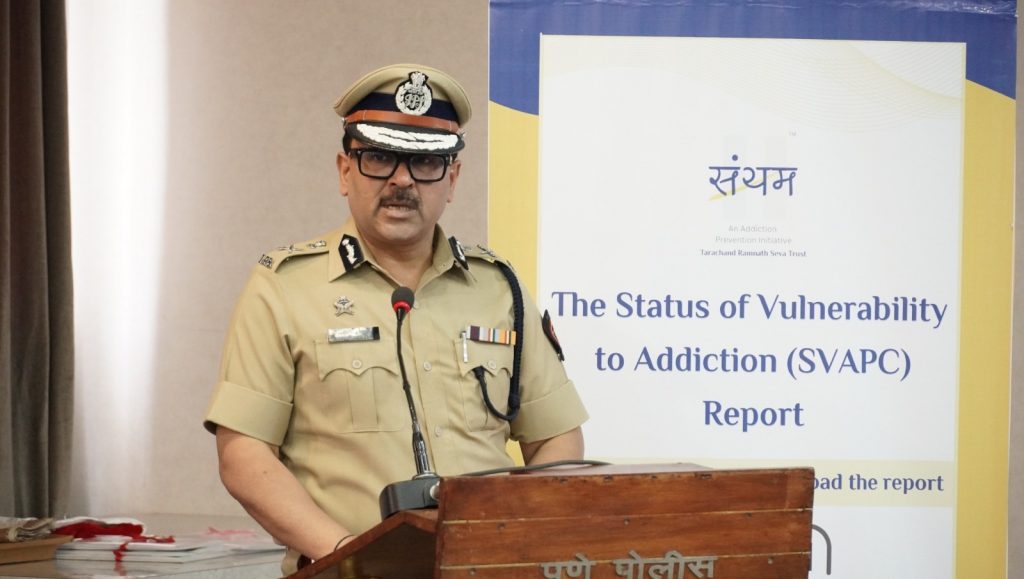
Pune, 24th April 2026 : One in every six adolescents and young adults in Pune has consumed alcohol at least once in their lifetime, while nearly 20 per cent reported the presence or easy availability of drugs in their locality, according to a first-of-its-kind citywide survey report released by Pune police on Friday.
Titled SAIYAM (The Status of Vulnerability to Addiction), the report was formally launched at the Pune Police Commissioner’s office by Police Commissioner Amitesh Kumar on Friday. The study was jointly conducted by Tarachand Ramnath Seva Trust and the Pradnya Manas Research Department of Dnyan Prabodhini. Senior police and civic officials were present at the launch.
Among the key findings, one in six respondents said they had tried alcohol at least once. Despite 92 per cent being aware of the harmful effects of tobacco, nearly 40 per cent admitted to having used tobacco products. Around 20 per cent said drugs were available in their area.
The report also highlighted rising digital dependency, stating that nearly one-third of adolescents showed symptoms of digital addiction. Among respondents aged 20 to 22 years, nearly 60 per cent reported spending three to six hours daily on screens.
The survey was carried out during the 2024-25 academic year across Pune city and covered 1,887 adolescents and young people in the 13 to 22 age group. Inputs from 77 adults, including parents, teachers, counsellors, doctors and social experts, were also included.
The study focused on five major forms of addiction and dependency — alcohol, tobacco, drugs, energy drinks and digital usage. Researchers said the report examined not only visible behaviour but also the emotional, psychological and social factors that make young people vulnerable to addiction or help them stay away from it.
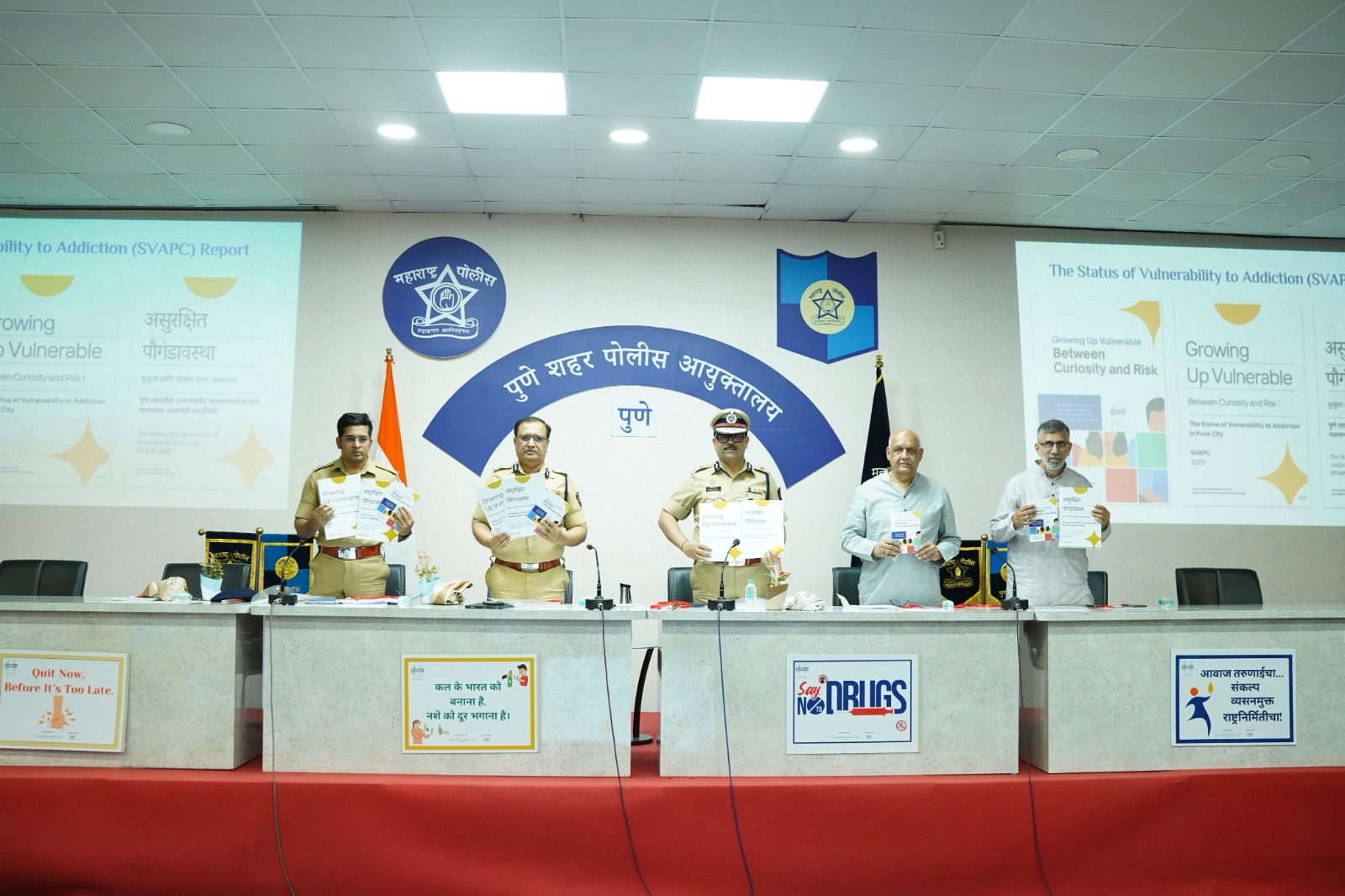
Police Commissioner Amitesh Kumar said protecting youth from addiction requires collective action by schools, families, communities and institutions. He said identifying vulnerabilities early, strengthening awareness and introducing preventive measures at the right time were essential.
He added that booklets and awareness material prepared as part of the report would be presented in colleges, while workshops for school principals would also be organised. Special sessions and awareness programmes on addiction prevention are planned in schools.
The report recommended stronger law enforcement around schools and sensitive areas, greater focus on adolescent mental health and emotional resilience in education systems, recognition of digital addiction as an emerging public health issue, and timely preventive intervention before substance abuse escalates.
Trustee Nandkishore Rathi of Tarachand Ramnath Seva Trust said the report marks an important step towards understanding addiction risks among Pune’s youth and enabling timely intervention. Dr Anagha Lavlekar of Dnyan Prabodhini said the study would help build a stronger foundation for prevention, awareness and action.