Balgandharva Bridge Completes 50 Years: A Key Lifeline in Pune’s Urban History
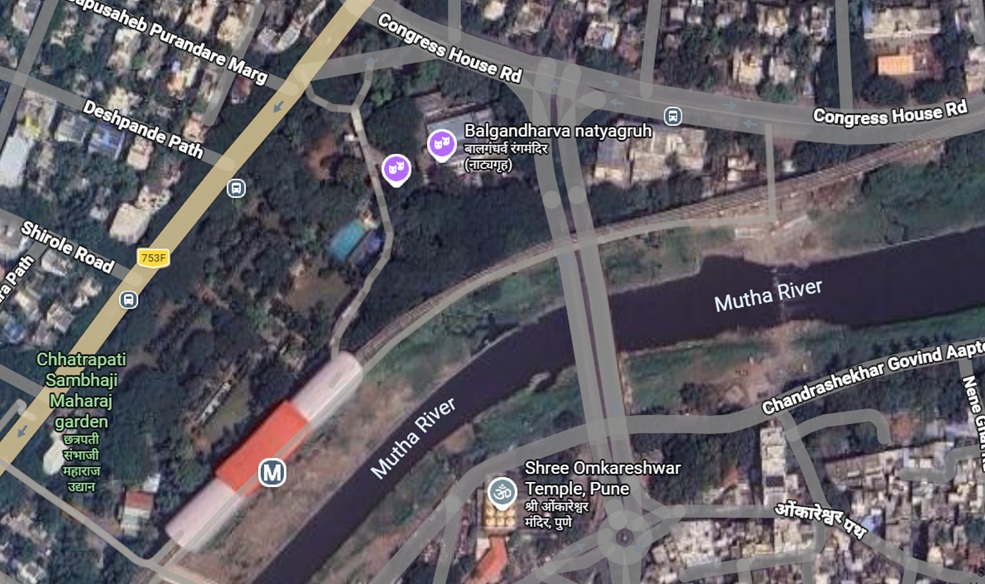
Shaniwar Peth, 25th April 2026: One of Pune’s most widely used bridges, the Maharshee Vitthal Ramji Shinde Bridge, popularly known as the Balgandharva Bridge, has completed 50 years since it opened to traffic, marking a significant milestone in the city’s urban history.
Connecting key areas such as Jungli Maharaj Road, Deccan Gymkhana, and central localities like Shaniwar Peth, the bridge has long served as a vital link across the Mutha River. While landmarks like Omkareshwar Temple and Balgandharva Rangmandir define the surrounding area, the bridge has established its own identity as a crucial connector for daily commuters.
The bridge was inaugurated on April 24, 1976, by noted writer Dr Shankarrao Kharat, in the presence of then mayor Vasantrao Thorat and municipal commissioner R. G. Gupte. The foundation stone was laid in 1971, and the bridge became operational five years later, significantly easing traffic movement between the older parts of the city.
Before its construction, citizens largely depended on the Chhatrapati Shivaji Maharaj Bridge and Lakdi Bridge to cross the river, often taking long detours. The new bridge provided a more direct route, improving connectivity between residential and commercial areas.
Over the years, the bridge also evolved into a social space. With wide footpaths and scenic river views, it became a popular spot for residents to relax, especially during summer evenings. Families, youngsters, and children would gather here, giving it an almost promenade-like character.
The bridge is often informally referred to as the “Balgandharva Bridge,” a name inspired by the nearby theatre. Cultural references also link the location to a remark by renowned writer P. L. Deshpande, who had once envisioned a bridge connecting the cultural and spiritual landmarks along the river.
However, despite its rich legacy, the bridge today shows signs of neglect. The once-inviting space has been affected by litter, including religious waste, while illegal parking on both sides has diminished its charm and usability for pedestrians.
The bridge also holds a sombre place in the city’s memory, as it was near this location that anti-superstition activist Dr Narendra Dabholkar was assassinated, an incident that deeply shook Pune.
Having witnessed decades of change—from easing traffic congestion to becoming a cultural and social landmark—the Maharshee Vitthal Ramji Shinde Bridge remains an integral part of Pune’s identity. As it completes 50 years, many citizens believe it deserves renewed attention and preservation.