Pune to Launch India’s First Low Emission Zone in Shivajinagar From June 5
Reported by Mubarak Ansari
Pune, 14th May 2026: In a major step towards improving urban air quality, the Pune Municipal Corporation (PMC) is set to introduce India’s first Low Emission Zone (LEZ) in parts of central Pune beginning June 5. The initiative will focus on restricting highly polluting and older vehicles from entering designated areas in an effort to reduce vehicular emissions.
The proposed LEZ will initially cover Shivajinagar and nearby localities, making Pune the first city in the country to adopt such a pollution-control model on a city level.
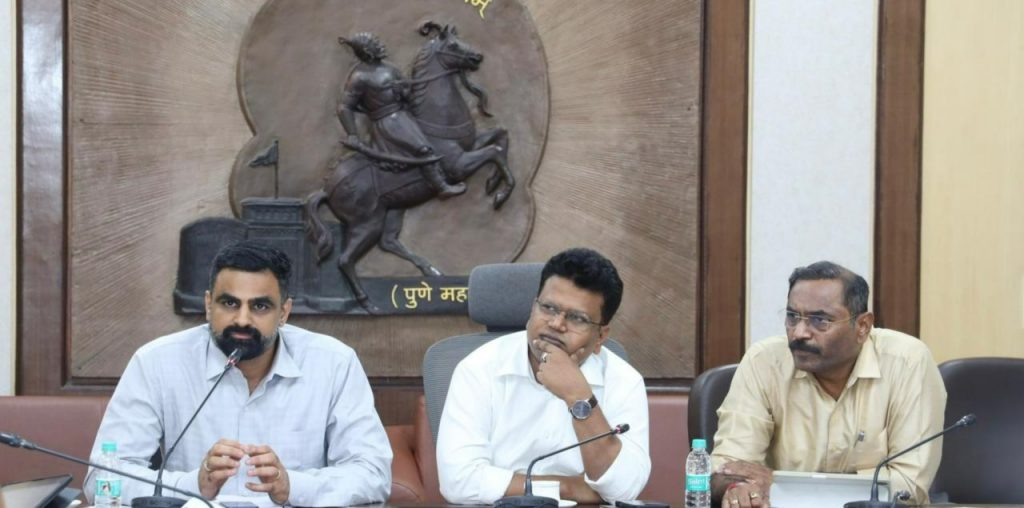
PMC Commissioner Naval Kishore Ram recently chaired a review meeting with various departments and instructed officials to speed up preparations for the rollout. The civic administration is currently finalising locations for Automatic Number Plate Recognition (ANPR) cameras, which will be used to monitor vehicles entering the zone and identify violators.
District Collector Jitendra Dudi stressed the need for coordination between the Pune Municipal Corporation, Maharashtra Pollution Control Board (MPCB), Regional Transport Office (RTO) and city police for smooth implementation and enforcement.
Officials said the civic body is considering penalties or special charges for vehicles that fail to meet prescribed emission standards. The proposed Low Emission Zone is expected to cover around 7 to 10 percent of Pune city, extending from Shivajinagar to Swargate and from Senapati Bapat Road to East Street.
Speaking about the project, Commissioner Ram said the administration is targeting implementation within the next two months and is already working closely with the police and transport authorities, whose cooperation will be crucial for enforcement.
The project is part of a larger clean-air initiative undertaken by PMC over the past three years in partnership with the Institute for Transportation and Development Policy (ITDP). The concept aligns with Maharashtra’s Electric Vehicle Policy introduced in 2021, which recommended the creation of Low Emission Zones in six major cities under the National Clean Air Programme (NCAP).
A Low Emission Zone is an urban area where entry of heavily polluting vehicles is restricted or regulated in order to reduce harmful pollutants such as particulate matter (PM2.5) and nitrogen oxides (NOx). Similar systems are already operational in several European cities, including London’s Ultra Low Emission Zone (ULEZ).
Preliminary studies conducted as part of Pune’s LEZ planning suggest that restricting BS-III and older vehicles in the proposed 14.5-square-kilometre zone could significantly reduce PM2.5 pollution levels.
The PMC has already granted preliminary approval for infrastructure and implementation work related to the project. Civic officials believe Pune’s initiative could become a model for other Indian cities looking to tackle rising vehicular pollution and improve public health through cleaner air policies.