The Cockroach Janta Party: India’s Most Unlikely Political Uprising
By Sneha Deb
Pune, 23rd May 2026: There is a certain irony in the fact that one of India’s most talked-about political movements of 2026 appears to have emerged from a single remark made during a court hearing.
During a hearing before the Supreme Court, Chief Justice Surya Kant reportedly compared certain sections of young people to “cockroaches,” describing them as parasites. Although the remarks were later clarified, the statement quickly spread across social media and triggered widespread reactions among young Indians already grappling with unemployment, examination controversies, and growing frustration with institutions.
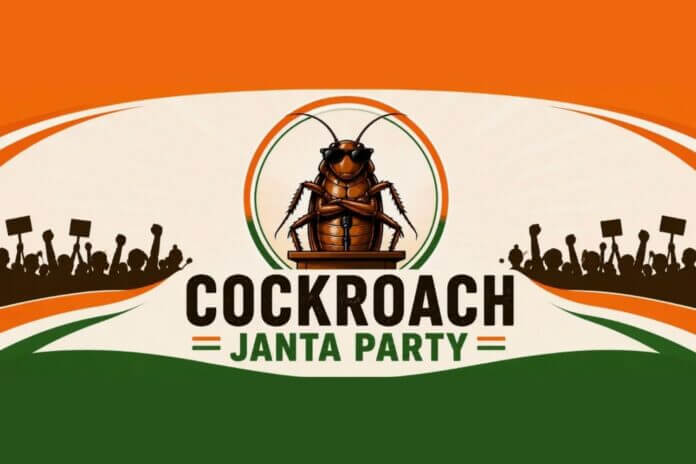
What followed was the rapid rise of the “Cockroach Janta Party” (CJP), a political movement and online campaign that has generated intense debate across the country.
The Insult That Became an Identity
On May 16, 2026, a day after the remarks gained traction online, political communications strategist Abhijeet Dipke launched the Cockroach Janta Party, a name widely seen as a satirical play on the Bharatiya Janata Party (BJP).
Dipke, who has previously worked with political campaigns associated with the Aam Aadmi Party (AAP), positioned the movement as a voice for frustrated youth and citizens disillusioned with the political establishment.
The movement quickly gained momentum online, with memes, slogans, and user-generated content spreading rapidly across platforms such as Instagram and X.
Viral Growth on Social Media
Within days of its launch, the CJP reportedly witnessed a dramatic surge in online support. Its Instagram following crossed several million users in less than a week, while hundreds of thousands of people reportedly signed up through its website.
The movement’s rapid digital growth drew attention from political observers, supporters, and critics alike, with many questioning whether the campaign reflected a genuine grassroots uprising or a highly organised political communication strategy.
Youth Frustration and Public Anger
The movement appeared to tap into broader public dissatisfaction, particularly among young Indians facing unemployment, rising competition, and concerns over examination systems.
Issues such as the NEET examination controversy became symbolic of deeper frustrations regarding accountability, transparency, and opportunities for the youth.
The CJP’s messaging, largely spread through social media rather than formal press conferences or policy papers, focused on themes such as employment rights, educational reforms, and institutional accountability. Among the demands circulating online were calls for a right-to-employment law and the resignation of Union Education Minister Dharmendra Pradhan.
Government Action and Online Restrictions
As the movement gained traction, government action against some of its online platforms intensified scrutiny around the issue.
On May 21, the Ministry of Electronics and Information Technology reportedly directed the withholding of the CJP’s X account within India. While the account remained visible internationally, users in India were unable to access it. Authorities reportedly cited national security concerns for the action.
The move further fuelled debate around digital expression, political dissent, and the growing influence of online movements in Indian politics.
Political Backing and Questions Over Strategy
The movement also drew support from several opposition figures. Trinamool Congress MP Mahua Moitra and Congress leader Kirti Azad publicly associated themselves with the campaign, while Congress MP Shashi Tharoor criticised the government’s decision to block the movement online.
At the same time, critics questioned whether the campaign was entirely spontaneous. Observers pointed to Dipke’s political communications background and the speed with which the campaign infrastructure, including websites, social media pages, and membership systems, appeared to have been established.
These developments led to speculation that the movement may have been strategically designed to channel public anger in a politically beneficial direction for opposition parties.
Conclusion
Whether the Cockroach Janta Party represents a genuine expression of youth frustration, a carefully crafted political campaign, or a combination of both, it has already become a significant talking point in India’s political discourse.
Its rise highlights the growing role of social media-driven political movements and the deep frustrations felt by sections of India’s younger population over unemployment, education, and institutional trust.
Like the metaphor at the centre of the controversy, the movement has proven difficult to ignore.