Goat Prices Jump Up to 40% in Pune Before Bakrid, Traders Cite Supply Issues
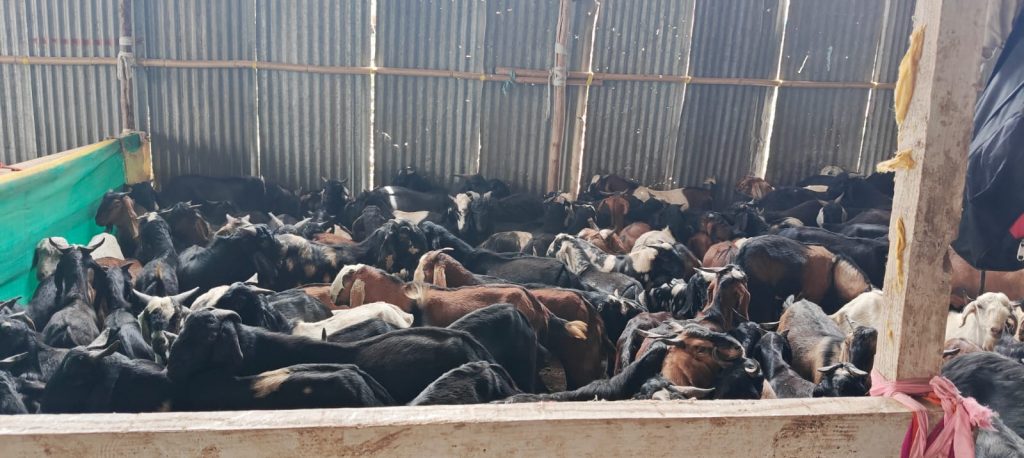
Kondhwa, 25th May 2026: As Bakrid or Eid-ul-Adha approaches on May 28, goat prices have surged sharply across Pune and nearby livestock markets, leaving many middle-class Muslim families struggling to afford sacrificial animals this year.
Traders, transporters and community members attributed the steep rise in prices to inflation, rising fodder and transportation costs, shortage of animals in urban mandis and tightening restrictions linked to beef bans in several states, which they said disrupted the traditional livestock supply chain ahead of the festival.
Seasonal goat markets in Camp, Kondhwa, Kausarbaug, Bhavani Peth, Hadapsar and Yerawada have witnessed heavy footfall over the past week, but buyers said rates this year were significantly higher compared to previous years.
According to traders, small goats are currently being sold for around Rs 15,000 onwards, while medium and premium breeds are fetching anywhere between Rs 30,000 and Rs 3 lakh depending on breed, weight and appearance.
Compared to last year’s Bakrid season, traders estimated that prices had increased by nearly 20% to 40%.
Indicative comparison provided by traders showed:
Small goats: Last year: Rs 10,000–12,000 This year: Rs 15,000 onwards
Medium goats: Last year: Rs 18,000–25,000 This year: Rs 30,000–50,000
Premium breeds: Last year: Rs 70,000–1.5 lakh This year: Rs 1 lakh–3 lakh
Suhaib Ansari, a trader who brought goats from Uttar Pradesh to the Kausar Baug mandi, said tightening restrictions surrounding cattle and meat transport had severely affected animal movement into metropolitan markets.
“Transportation costs have increased substantially and because of tightening restrictions linked to beef control, many traders avoided bringing large consignments to Pune and Mumbai. A large number of goats were sold in smaller towns itself because transporters feared complications during movement,” Ansari said.
He added that fear among transporters over interception of vehicles and action by right wing Hindutva vigilante groups had also discouraged traders from entering large urban markets.
“Many transporters are scared their vehicles may be stopped or animals seized during transit. This has directly affected supply into Pune and other cities. When arrivals reduce and demand rises before Bakrid, prices automatically shoot up,” he said.
Traders claimed that arrivals from Rajasthan, Uttar Pradesh and Madhya Pradesh — traditionally major suppliers for Bakrid markets in Maharashtra — were comparatively lower this year.
Javed Shaikh, a trader at Bhavani Peth market, said customers were shocked by the sudden rise in rates.
“Last year, customers could comfortably buy a decent goat within Rs 20,000 to Rs 25,000. This year, even average animals are crossing Rs 30,000. Supply has reduced while expenses have increased sharply,” Shaikh said.
Manguram Chaudhary, a goat seller from Rajasthan who arrived in Pune earlier this week, said traders themselves were under severe pressure.
“Fodder prices, diesel expenses and transport charges have all increased. Earlier we could bring more animals at a lower cost, but now expenses are very high. Customers feel goats are expensive, but traders are also struggling because maintaining and transporting livestock has become much costlier,” Chaudhary said.
Community members said the rising prices had especially affected lower and middle-income Muslim families who save throughout the year for the annual sacrifice.
Nadeem Qureshi, a resident from Kondhwa visiting the market, said many families had been forced to revise their budgets.
“Middle-class families are under pressure this year. Many people who earlier planned a budget of Rs 25,000 are now forced to spend Rs 40,000 or settle for much smaller animals,” Qureshi said.
Saleem Mulla, a social worker from Kondhwa, said the market was witnessing an “unprecedented” rise in prices due to a combination of animal shortage and policy restrictions.
“The market is seeing an unprecedented rise due to goat shortage and also strictures linked to the beef ban. Muslims buy sacrificial animals according to their purchasing power, but prices have gone up sharply this time because supply is much lower and demand is very high,” Mulla said.
“The state animal husbandry department must step in to ensure that prices remain stable and affordable. The government can facilitate smoother transportation and ensure more sacrificial animals reach urban markets so that ordinary families are not burdened,” he added.
Arif Patel, a transporter associated with livestock movement into Pune markets, said transporters were increasingly hesitant to take risks during the Bakrid season.
“Diesel rates, toll charges and fodder costs have all gone up. In several places transporters are also hesitant because of checking and fear during animal movement. This has affected supply into major cities,” Patel said.
Anas Qureshi , a social worker from Kondhwa, also alleged that fear created by anti-constitutional vigilante groups targeting transporters and sacrificial animals had disrupted the livestock supply chain ahead of Bakrid.
“Anti-constitutional vigilante groups targeting transporters and sacrificial animals are creating fear among traders and ordinary citizens. No individual or organisation has the right to take law into their own hands or interfere with constitutionally protected religious practices. Such harassment has directly affected livestock supply and pushed Bakrid prices beyond the reach of common families,” Qureshi said.
Many buyers said soaring prices had forced them either to purchase smaller animals or to jointly participate in sacrifices with relatives and friends this year.
“Bakrid comes only once a year and it is an important religious obligation for many families. But this year rates are beyond the reach of ordinary people,” said a resident from Camp visiting the Kausar Baug market.
Eid-ul-Adha, also known as the festival of sacrifice, commemorates Prophet Ibrahim’s devotion and willingness to sacrifice his son Ismail in obedience to Allah’s command. According to Islamic tradition, Allah replaced Ismail with a ram at the moment of sacrifice. The festival coincides with the completion of the annual Hajj pilgrimage and holds deep religious significance for Muslims worldwide.