Pune: I Urged Modi, Student Leaders to Talk; Dialogue Led to Breakthrough, Says Sharad Pawar
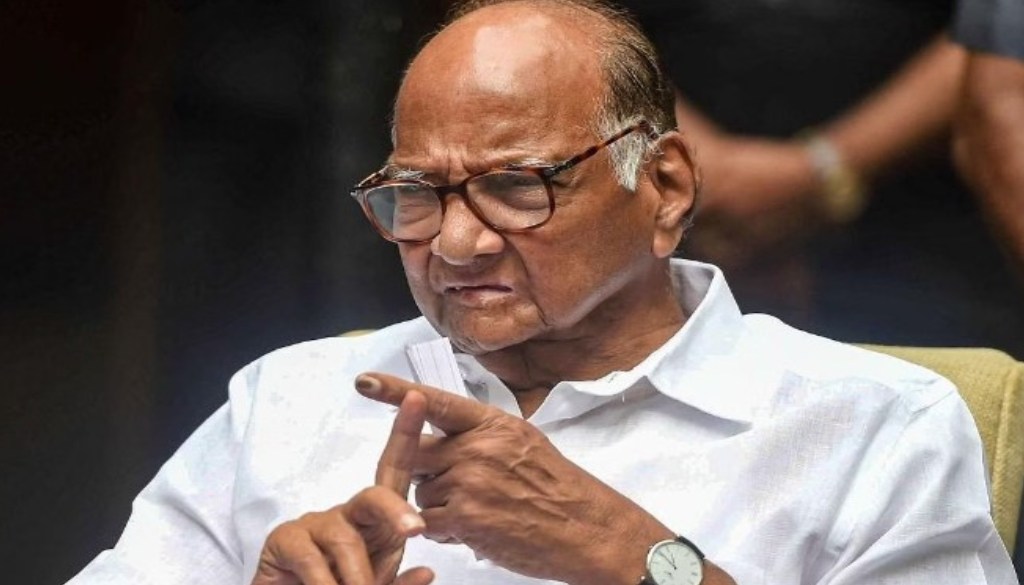
Pune, 25th July 2026: Nationalist Congress Party (Sharadchandra Pawar) president Sharad Pawar on Saturday said the resignation of Union Education Minister Dharmendra Pradhan was the result of dialogue between the Centre and student protesters demanding action over the NEET paper leak and other alleged irregularities in the education sector.
Addressing a press conference in Pune after Pradhan’s resignation, Pawar described it as “a victory of the country’s youth” and said the government had ultimately bowed to public sentiment.
Pawar said he had urged Prime Minister Narendra Modi to immediately open a dialogue with the students protesting at Jantar Mantar in New Delhi. At the same time, he had also advised Cockroach Janta Party founder Abhijeet Dipke, to engage with the government.
“I had told the Prime Minister that dialogue is the only way to resolve issues in a democracy. Instead of resorting to lathi-charge and police action against students, the government should speak to them. Avoiding dialogue can have serious consequences,” Pawar said.
He added that he had similarly advised Dipke and other student leaders not to insist on refusing talks with the Centre. “I told them not to take the position that they would not speak to the government,” Pawar said.

According to Pawar, two rounds of discussions were subsequently held between government representatives and the protesters. He claimed that while the Centre had initially refused to consider one of the protesters’ key demands—the resignation of Pradhan—it eventually relented in the face of mounting public pressure.
“Prime Minister Modi had personally told me that Dharmendra Pradhan would not resign. But the nationwide public outrage ultimately forced the government to change its stand and accept his resignation,” Pawar said.
Pawar alleged that the Centre had initially attempted to suppress the agitation through police action, including lathi-charge, the use of tear gas and restrictions on Delhi Metro services, causing inconvenience to commuters.
“However, the protest did not remain confined to Delhi. It spread across the country, generating widespread public anger, and the government had no option but to take the education minister’s resignation,” he said.
Rejecting claims that the resignation was prompted by concerns over external forces exploiting the situation, Pawar said the issue should be resolved through dialogue rather than politicisation.
Responding to criticism over his meeting with Prime Minister Modi during the agitation, Pawar said the focus should be on whether the issue was resolved rather than on who facilitated the dialogue.
“It is not important whom I helped. What matters is whether the issue was resolved. If dialogue leads to a solution, then it is the right approach,” he said.
Pawar also cautioned that unless the Centre changed its approach to handling such issues, similar situations requiring mediation could arise again.

Asked whether the agitation would benefit the Opposition politically, Pawar said it had demonstrated the power of public opinion and forced the government to reconsider its position.
“The government was initially opposed to Dharmendra Pradhan’s resignation, but nationwide anger compelled it to change its decision. The 2029 Lok Sabha elections are still some time away, and it would be premature to comment on the political impact of this movement,” he said.