Pune Police Issue Crucial Route and Queue Guidelines for Palkhi 2026: Separate Queues, Inter-Temple Routes, and 5 Police Help Centers Established
Reported by Mubarak Ansari
Pune, 7th July 2026: In anticipation of the massive influx of devotees for the annual Palkhi procession of 2026, the Pune City Police and local administration have released a comprehensive safety, queue management, and route advisory.
DCP (Zone 1) Krushikesh Rawale said, “To ensure a smooth, secure, and hassle-free darshan (sacred viewing) of the palanquins of Sant Dnyaneshwar Maharaj and Sant Tukaram Maharaj, authorities have established separate queues for men and women, defined specific entry and exit routes, and designated key sections of the city as ‘No-Hawker Zones’.”
He added, “The darshan queue has been designed to ensure smooth movement, enabling easy and orderly darshan for all devotees. The arrangement is intended to prevent overcrowding and eliminate criss-cross crowd movement, enhancing both safety and convenience.”
The guidelines aim to prevent stampedes, streamline crowd movement, and manage traffic at the two main halts: the Palkhi Vithoba Temple in Bhavani Peth and the Nivdungya Vithoba Temple in Nana Peth.
1. Sant Dnyaneshwar Maharaj Darshan (Palkhi Vithoba Temple, Bhavani Peth)
To streamline the crowds visiting the Sant Dnyaneshwar Maharaj Palkhi:
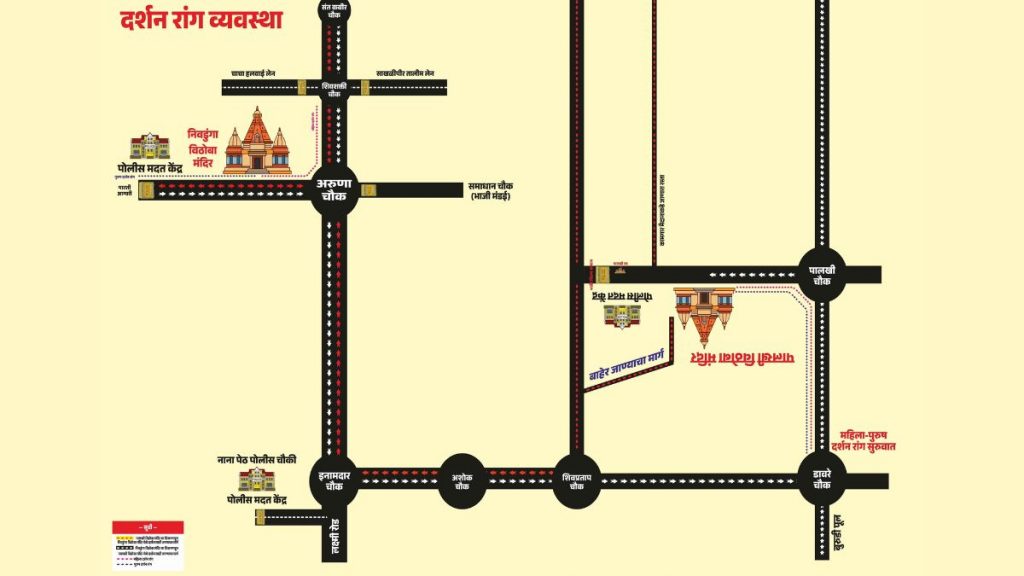
Main Darshan Queues: Separate queues for male and female devotees will commence at Davare Chowk. After completing their darshan, devotees must exit through Shivpratap Chowk, located on the road directly behind the temple.
Mukh Darshan: Devotees seeking only Mukh Darshan must do so at the designated chowk and exit via the Bhakti Shilpa Kaman.
Closed Entry Points: General entry for darshan from the Bhakti Shilpa Kaman and Hamal Talim will remain strictly closed.
2. Sant Tukaram Maharaj Darshan (Nivdungya Vithoba Temple, Nana Peth)
For devotees visiting the Sant Tukaram Maharaj Palkhi:
Queue Entry Points: The queue for male devotees will start from the Lakheri Maruti Temple, while the queue for female devotees will begin at Aruna Chowk.
Mukh Darshan & Exit: Devotees opting for Mukh Darshan should proceed via Aruna Chowk and exit toward the Lakheri Maruti Temple.
3. Inter-Temple Pedestrian Transit Routes
To assist devotees wishing to travel between both major temples safely, the administration has mapped out specific one-way pedestrian transit routes:
From Nivdungya Vithoba to Palkhi Vithoba Temple: Devotees must use the following route:
Aruna Chowk – Inamdar Chowk-Ashoka Chowk – Shivpratap Chowk – Davare Chowk
From Palkhi Vithoba to Nivdungya Vithoba Temple: Devotees must follow this reverse route:
Bhakti Shilpa Kaman – Shivpratap Chowk – Ashoka Chowk – Inamdar Chowk – Aruna Chowk
4. Police Help Centers and Strict Local Regulations
To ensure quick assistance and crowd management, Pune Police are setting up five dedicated Police Help Centers at key intersections:
Nanapeth Police Chowky
Palkhi Vithoba Temple
Nivdungya Vithoba Temple
Ramoshi Gate Chowk
Sant Kabir Chowky
Additionally, the entire Palkhi route and surrounding temple areas have been declared official “No-Hawker Zones” (No-Street Vendor Zones) to maintain clear, unobstructed pathways for the thousands of walking pilgrims.
5. Devotee Code of Conduct
The Pune Police have made a strong appeal to all citizens and visiting Warkaris to strictly adhere to the following rules:
Follow Instructions: Strictly follow all directives issued by on-duty police officers, official volunteers, and administrative personnel.
Avoid Chaos and Rumors: Devotees are strictly advised to avoid pushing in crowded spots and must not spread or believe in any unverified rumors.
Queue Discipline: Maintain decorum in the queues and cooperate fully with fellow devotees.
No Special Darshan Demands: Devotees are strictly requested not to demand or pressure the police for “Special” or prioritized darshan; all devotees must obtain darshan through the established queue system.