What Will Online Shopping Look Like in 2030?
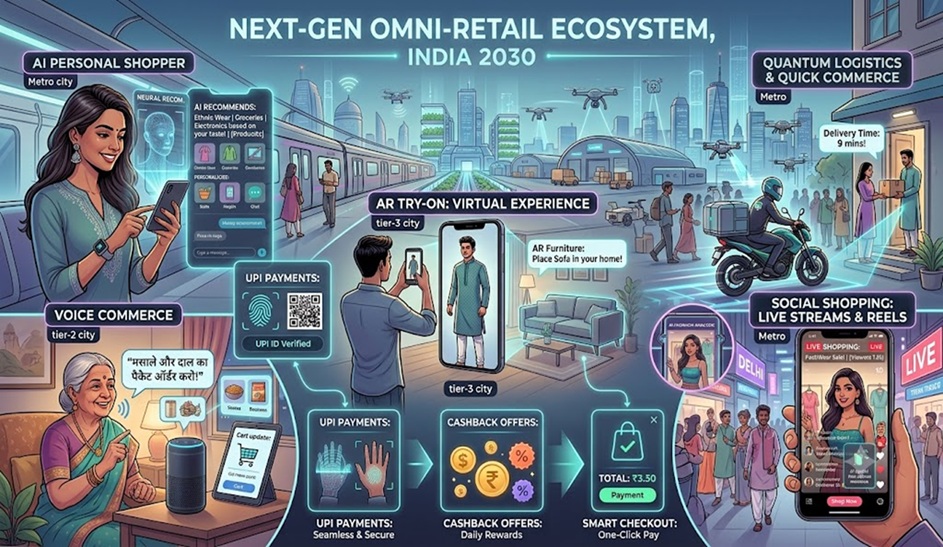
Mumbai, 8th July 2026: Online shopping in India is set to become faster, smarter, and far more personalised by 2030. AI-powered recommendations, voice shopping, immersive product experiences, and near-instant deliveries will reshape how people discover, compare, and buy products.
As technology becomes a bigger part of everyday shopping, consumers can expect greater convenience along with new challenges around privacy, trust, and spending habits. In this guide, we’ll explore the biggest trends expected to define online shopping over the next few years and what they could mean for Indian shoppers, brands, and the future of e-commerce.
How Big Will India’s Online Shopping Market Get by 2030
Estimates vary across research firms, but the direction is the same: strong, sustained growth led by smaller cities rather than metros.
| Metric | 2026 | 2030 (Projected) |
| Market size | $159.25 billion | $250 billion |
| Online shoppers | 220 to 300 million | 420 to 440 million |
| Rural share of online shoppers | Around 30% | Rising steadily |
| Women shoppers | Around 45% | Continuing to grow |
These figures come from industry reports tracking India’s e-commerce growth, with tier-2 and tier-3 city adoption identified as a major driver, and the number of online shoppers expected to rise significantly by 2030.
Key Trends Shaping Online Shopping in India by 2030
Online shopping in India is expected to evolve rapidly over the next few years. Advances in AI, digital payments, quick commerce, and immersive shopping experiences will reshape how people discover, compare, and purchase products. Here are the key trends likely to define e-commerce by 2030.
AI Shopping Assistants Will Replace the Search Bar
Typing keywords into a search box will feel outdated. Shoppers will increasingly describe what they want in plain language, and an AI assistant will handle comparison, filtering, and even negotiation on their behalf.
- Conversational assistants inside shopping apps that ask follow-up questions before suggesting products
- AI-generated comparison summaries instead of scrolling through dozens of listings
- Personalised recommendations based on past purchases, budget, and occasion
- Automatic price tracking, so shoppers get notified when something they wanted drops in price
Voice and Vernacular Commerce Will Go Mainstream
With smartphone and internet penetration deepening in smaller towns, voice search in regional languages will become a standard way to shop, not a novelty feature.
- Voice-based product search in Hindi, Tamil, Telugu, Bengali, and other regional languages
- Voice-assisted checkout for users who find typing on small screens inconvenient
- Regional language customer support chatbots
- Growth in shopping from users who are online for the first time through voice-first interfaces
Augmented Reality Try-Ons Will Cut Down Returns
Returns remain a costly problem for Indian e-commerce, particularly in fashion and footwear. AR is expected to close that gap by letting shoppers preview fit and appearance before buying.
- Virtual try-ons for clothing, eyewear, and footwear using a phone camera
- AR-based room previews for furniture and home decor
- Size prediction tools using body measurements instead of standard size charts
- Fewer returns and exchanges, which also brings down delivery costs for sellers
Quick Commerce Will Expand Beyond Groceries
Quick commerce started with groceries but is already moving into categories like beauty, electronics, and fashion. Non-food categories such as beauty, fashion, and electronics are projected to account for a significant share of total quick commerce spend by 2030.
- 10 to 30-minute delivery windows for small electronics and personal care items
- Dark stores expanding into tier-2 cities, not just metros
- Same-day delivery becoming standard even for non-grocery categories
- Subscription-based quick commerce memberships for frequent shoppers
Social Commerce Will Transform How People Shop
Shopping will increasingly start on social platforms rather than marketplace apps. A product seen in a reel or livestream will be purchasable within the same screen, without redirecting to another app.
- Livestream shopping events hosted by creators and brands
- In-app checkout directly from short videos and reels
- Creator affiliate links driving a growing share of fashion and beauty sales
- User-generated reviews weighted more heavily than brand descriptions
Payments Will Get Faster and More Flexible
India’s UPI-first payment culture will keep evolving, with credit and short-term financing becoming more embedded into the checkout process itself.
- UPI-linked credit lines allowing “buy now, pay next month” style flexibility
- One-tap checkout using saved UPI IDs across multiple platforms
- Wider EMI options extending to lower-ticket purchases, not just electronics
- Loyalty points and cashback stacking automatically at checkout
Shoppers who want to make the most of this shift can already get a head start. Before checking out on any platform, it is worth comparing prices through deals and offers so festive sales, bank discounts, and cashback offers are not left on the table.
Sustainability Will Become a Real Purchase Filter
Environmental concerns are moving from marketing copy to an actual filter shoppers apply while browsing.
- Carbon footprint labels shown alongside product listings
- Reusable and minimal packaging becoming a selling point, not an afterthought
- Resale and refurbished product sections built directly into major marketplaces
- Local and small-seller products surfaced more prominently to cut delivery distances
Wrapping Up
Online shopping in India will become more intelligent, personalised, and convenient by 2030. AI assistants, voice search, AR experiences, and faster deliveries will simplify every stage of the buying journey, while social commerce will make product discovery more interactive. As these technologies become mainstream, smart shoppers will continue to compare prices, verify reviews, and look for the best deals before purchasing. Staying informed and adapting to these changes will help consumers make better shopping decisions in the years ahead.