NTKMA Conducts Extensive Monsoon Field Assessments Across Nashik and Trimbakeshwar to Strengthen Simhastha Kumbh 2027 Preparedness
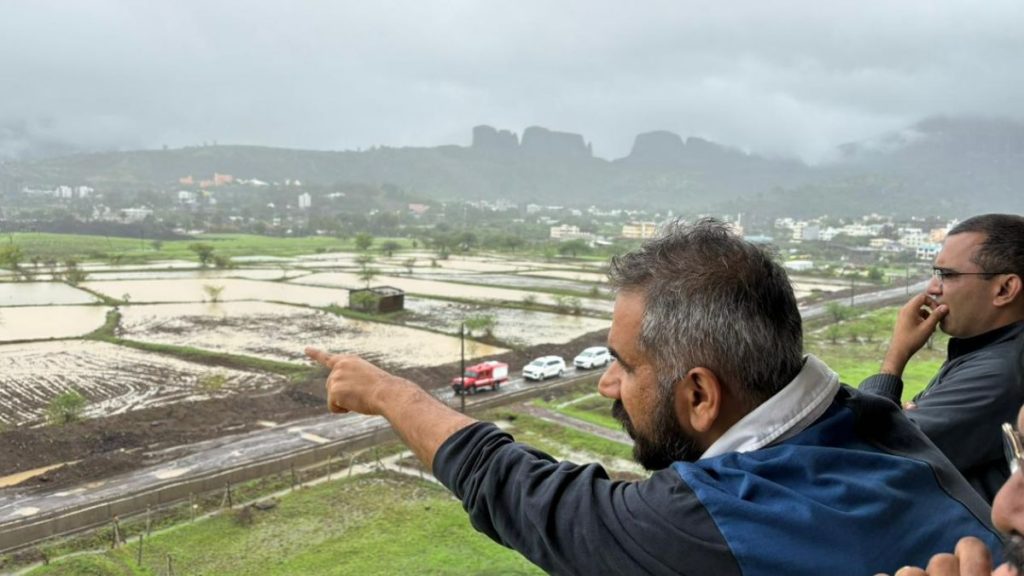
Nashik, 8th July 26: With Simhastha Kumbh Mela 2027 coinciding with the monsoon season, the Nashik-Trimbakeshwar Kumbh Mela Authority (NTKMA) has launched a series of on-ground inspections across Nashik city and Trimbakeshwar to assess how heavy rainfall impacts critical infrastructure and movement, enabling the administration to implement corrective measures well in advance of the mega event.
On Tuesday, NTKMA Commissioner Shekhar Singh along with additional commissioner Kamlakar Randive, deputy collector Minakshi Rathod, Chief officer Amol Chaudhari, Trimbak Municipal Council Chief officer Govind Jadhav and concerned department representatives visited Trimbakeshwar and inspected the proposed Sadhugram site, ghat areas and other key locations. The inspection focused on identifying low-lying areas vulnerable to waterlogging, assessing natural surface water flow, evaluating drainage performance and reviewing the suitability of the proposed Sadhugram under heavy rainfall conditions. Safe access and evacuation routes for pilgrims and emergency services, as well as the need for additional drainage, pumping arrangements and ground-level improvements, were also examined. The team also reviewed the ongoing construction of new ghats, with emphasis on safety, accessibility and flood resilience.
On Wednesday, Additional Commissioner Kamlakar Randive, deputy collector Minakshi Rathod, Chief officer Amol Chaudhari, Tehsildar Makrand Diwakar along with other departments, carried out inspections across Nashik city to study the impact of continuous rainfall on major roads, junctions, railway station approaches and other critical movement corridors associated with the Kumbh Mela.
The inspection covered waterlogging locations affecting vehicular and pedestrian movement, traffic congestion and bottlenecks during peak rainfall, and the impact of ongoing Kumbh infrastructure works on road safety and mobility. Officials also assessed the performance of stormwater drains, culverts and road outfalls, while reviewing pedestrian connectivity, footpaths and emergency vehicle accessibility.
The team also inspected the Godavari riverfront and ghat areas to evaluate river water levels, accessibility of ghats during heavy rains, slippery stretches, drainage performance along the riverfront, movement bottlenecks at entry and exit points, queue management areas and the availability of emergency access and evacuation routes.
Sanitation infrastructure was another key focus area. Officials reviewed flood-prone locations identified for temporary toilets and sanitation facilities, assessed risks of drain overflow, sewage backflow and wastewater stagnation, examined solid waste accumulation at critical drainage points and evaluated the accessibility of desludging and waste collection vehicles during the monsoon. Potential public health risks arising from stagnant water, foul odour and mosquito breeding were also assessed.
Based on the observations from these inspections, NTKMA will prepare location-specific mitigation measures and coordinate with the concerned departments to strengthen drainage systems, improve mobility, enhance sanitation infrastructure and ensure uninterrupted movement and public safety during Simhastha Kumbh 2027.
NTKMA Commissioner Shekhar Singh said, “Since Simhastha Kumbh Mela will be held during the monsoon, it is essential to understand the actual behaviour of our infrastructure under heavy rainfall conditions. These field inspections are helping us identify vulnerabilities in drainage, mobility and public infrastructure well in advance. Every observation made during the current monsoon will be translated into engineering improvements and operational planning so that pilgrims, saints and citizens experience a safe, seamless and resilient Kumbh in 2027.”