Government Debunks Myths Around E20 Petrol, Says Fuel Is Safe for Vehicles and Backed by Scientific Studies
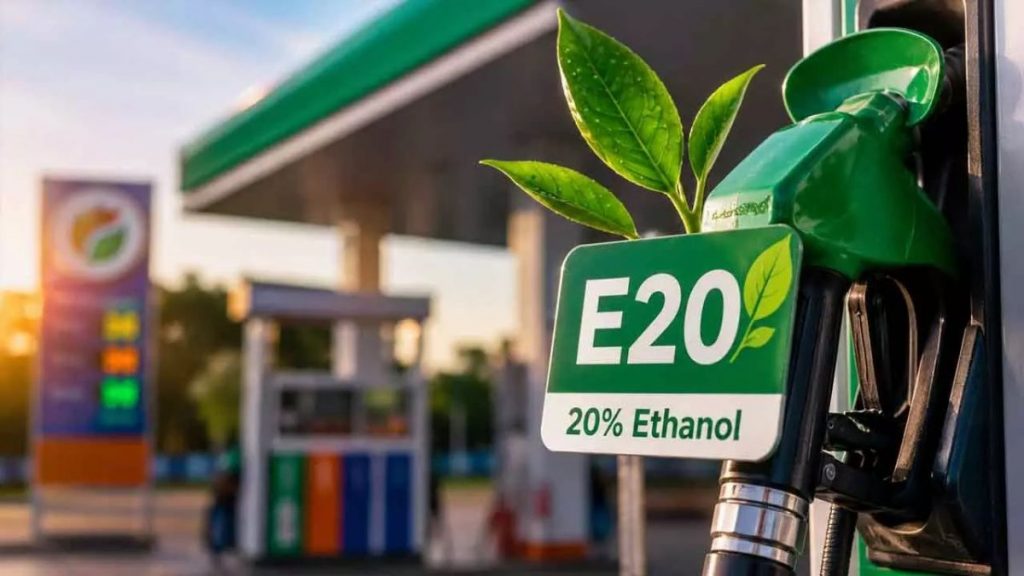
New Delhi, 10th July 2026: Amid growing concerns and misinformation circulating on social media over E20 petrol, the Centre has issued a detailed clarification dismissing several viral claims related to the ethanol-blended fuel. The government has maintained that E20 is scientifically tested, safe for use in compatible vehicles, and does not cause engine damage or invalidate vehicle warranties.
In a 10-point clarification issued by the Ministry of Petroleum and Natural Gas, the government rejected claims that E20 fuel damages engines, corrodes vehicle components, attracts insects, allows water into fuel tanks, or is produced by mixing sugarcane juice directly with petrol. It said these assertions are misleading and have no scientific basis.
Addressing concerns over engine safety, the ministry said extensive studies conducted by the Automotive Research Association of India (ARAI), Indian Oil Corporation, the Indian Institute of Petroleum and the Society of Indian Automobile Manufacturers (SIAM) found no evidence that E20 fuel causes engine damage or significantly affects vehicle performance. While some vehicles may experience a marginal drop in fuel efficiency of around 3–5%, the government said the overall benefits of ethanol blending outweigh this impact.
The government also dismissed claims that E20 fuel voids vehicle warranties or insurance coverage. It clarified that automobile manufacturers have been preparing vehicles for higher ethanol blends in line with the country’s ethanol blending roadmap and that consumers using E20 need not worry about insurance-related issues arising solely from the fuel.
On concerns about water contamination, the ministry explained that while ethanol naturally absorbs moisture, modern vehicles and fuel dispensing infrastructure are designed to prevent water ingress into fuel systems. It added that water contamination is undesirable for any type of fuel, not just ethanol blends.
The clarification also addressed viral videos claiming that ants are attracted to E20 because of its sugar content. According to the government, fuel-grade ethanol contains no residual sugar, as it undergoes multiple industrial processes before being blended with petrol. The denaturants added during production are, in fact, repellent to insects.
Highlighting the broader objectives of the Ethanol Blending Programme, the ministry said the initiative has helped India reduce crude oil imports, lower greenhouse gas emissions and save over ₹1.9 lakh crore in foreign exchange. It added that the programme has also generated significant income for farmers by creating demand for agricultural feedstocks such as sugarcane, maize and damaged food grains used in ethanol production.
The government reiterated that India’s E20 programme has been rolled out after years of scientific evaluation and consultations with automobile manufacturers, oil marketing companies and testing agencies, urging consumers to rely on verified information instead of viral social media claims.