PBMA’s H V Desai Eye Hospital Performs Split-Cornea Transplant to Restore Sight for Two Patients
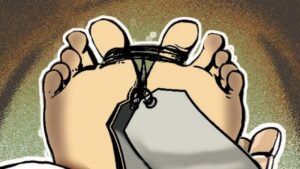
Pune, 28th July 2026: In a remarkable feat of surgical precision and resource optimization, the Cornea Department at PBMA’s H V Desai Eye Hospital in Mohammedwadi, Pune, has successfully restored the vision of two patients using a single donor cornea. This included a 76 year old farmer and 67 year old female . This was after the family of a sixty year old patient decided to donate his eyes after his death on 17th June 2026. The eye donation call was successfully coordinated and executed at the Yashwantrao Chavan Memorial (YCM) Hospital. The retrieved donor corneas were safely transported to Eye Bank PBMA’s H.V. Desai Eye Hospital. The cornea was transplanted on the recipients on 19th June 2026.
Faced with a chronic shortage of available donor tissues, a specialized team of ophthalmic surgeons performed a “component corneal surgery.” This technique splits the donor tissue into specific anatomical layers, maximizing the utility of a single noble donation.
Traditionally, a full-thickness corneal transplant (Penetrating Keratoplasty) replaces the entire cornea, meaning one donor tissue can only help one patient. However, modern medical advances allow surgeons to selectively replace only the diseased layers of the eye while preserving the patient’s healthy tissue.
Dr. Shilpa Joshi, (HOD Cornea & Eye Bank Medical Director) at H V Desai Eye Hospital said that we identified two waiting recipients with entirely different corneal pathologies, enabling them to split the single donor cornea into two functional grafts.
Out of the two patients one is 76 year old male who was diagnosed with left eye Herpes Simplex keratitis, a condition caused by viral infection.Antiviral oral tablets and topical drops, till the eye became non inflamed and developed corneal scarring . Then he was operated for DALK (Deep Anterior Lamellar Keratoplasty) surgery. since scarring was partial thickness and in anterior layers of cornea. Only that part with the donor cornea’s healthy anterior layers was replaced. While the second patient is a 67 year old female patient who was suffering from corneal decompensation or pseudophakic bullous keratopathy.
Dr. Joshi added that the advanced component surgery can effectively halve the waiting times for select patients on transplant lists. Furthermore, because these partial-thickness lamellar surgeries leave a large part of the patient’s native eye intact, the risk of graft rejection is drastically lower, and postoperative visual recovery is significantly faster than standard transplants.
The entire process of cornea retrieval and transportation was successful due to swift counselling and coordination. The eye donation call was successfully coordinated and executed at the Yashwantrao Chavan Memorial (YCM) Hospital. Mrs. Manisha Pandhare, an experienced counselor from PBMA’s H.V. Desai Eye Hospital, worked closely alongside Mr. Apte, a dedicated representative from the social organization ‘V for Organ’. Together, they counselled the grieving family, helping them understand how the noble gesture could transform lives. The retrieved donor corneas were safely transported to Eye Bank PBMA’s H.V. Desai Eye Hospital.
Congratulating the team Dr. Rahul Deshpande, Dr. Rahul Deshpande – Chief Medical Director (Network) said that India faces a steep deficit in quality donor corneas, with hundreds of thousands of patients currently on waiting lists. Incidents of eye donations fluctuate, making maximum utilization of every tissue absolute critical.By successfully splitting the tissue, the our team demonstrated how advanced component surgery can effectively halve the waiting times for select patients on transplant lists. Furthermore, because these partial-thickness lamellar surgeries leave a large part of the patient’s native eye intact, the risk of graft rejection is drastically lower, and postoperative visual recovery is significantly faster than standard transplants.
Both patients are recovering well under close postoperative care, with their visual clarity expected to show steady improvement over the coming weeks.