He Opposed DJs in Ganeshotsav. Then He Questioned Dhol-Tasha Too: Pune Resident Explains Why
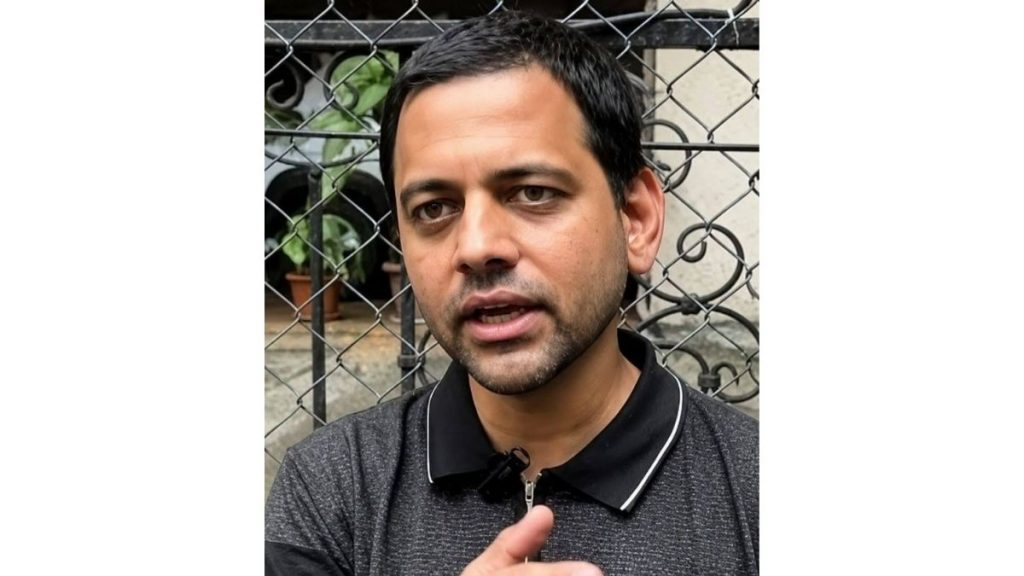
Reported by Shoaib Tadvi
Pune, 31st August 2026: As Pune prepares for Ganeshotsav, a festival deeply associated with the city’s cultural identity, a Narayan Peth resident has raised a contentious question: can the celebrations retain their spirit without loud music, DJs and Dhol-Tasha pathaks taking over public roads?
Vidyanand Bapat, who has emerged as a vocal critic of high-decibel celebrations during the festival, says his objection is not to Ganeshotsav or to people’s right to celebrate. Instead, he wants authorities and organisers to reconsider practices that, according to him, contribute to noise pollution, traffic congestion, road obstruction and inconvenience to residents.
What makes Bapat’s position particularly contentious is that his criticism is not limited to DJs and loudspeaker systems. He has also questioned the use of Dhol-Tasha pathaks in public spaces, arguing that cultural tradition alone should not prevent a practice from being reviewed when it affects other citizens.
Speaking to Punekar News, Bapat said public celebrations should take into account the fact that roads and other public spaces are shared by everyone.
“Those celebrating festivals publicly must maintain the awareness that it is being celebrated in a public space. They must not play loudspeakers in public areas under the pretext of festivals. Musical instruments must not be played loudly in public spaces,” he said.
He also objected to mandaps being erected in ways that encroach on roads and to processions being conducted on roads designated for vehicular traffic.
According to Bapat, festivals can be celebrated publicly only after taking such concerns into consideration. Otherwise, he argued, people should celebrate privately.
‘Why Should the Debate Be Limited Only to DJs?’
Bapat’s position goes beyond the ongoing debate over DJs and sound systems during Ganeshotsav.
When asked directly whether his opposition extended to both DJs and Dhol-Tasha pathaks, he replied, “Yes, correct. Absolutely, because both cause noise pollution.”
The argument is likely to be particularly sensitive in Pune, where Dhol-Tasha performances have become closely associated with Ganeshotsav and the city’s cultural traditions.
Bapat, however, believes that being described as a tradition should not automatically place a practice beyond scrutiny.
“Just because something is labelled ‘culture’ or ‘tradition’ does not justify something that is wrong,” he said.
He cited historical social practices such as Sati and child marriage to argue that societies have, over time, reconsidered and legally restricted practices that were once accepted.
“Society evolves, and certain practices are changed or regulated with time,” he said.
Using this argument, Bapat said public Dhol-Tasha performances should also be reconsidered if they are found to cause excessive noise or disturbance to citizens.
His argument is not that cultural celebrations should disappear, but that their form should change if they interfere with the rights and convenience of others.
‘The Excitement Will Remain Without Dhol-Tasha’
Would Pune’s festive spirit remain the same if DJs and Dhol-Tasha performances were removed from public celebrations?
Bapat believes it would.
He rejected the argument that enthusiasm during Ganeshotsav necessarily depends on loud music, large processions or celebrations conducted on public roads.
To illustrate his point, he referred to Marathi theatre.
“Tell me, if a theatrical play is staged inside an auditorium versus in an open space, does the enthusiasm of the performers fluctuate?” he asked.
Bapat recalled attending a performance of Natsamrat, a celebrated Marathi play originally associated with Dr Shreeram Lagoo. He said only a small number of spectators were present at the performance he attended, but the performers continued to deliver a strong performance.
His broader argument is that the scale or location of a celebration does not necessarily determine its emotional value.
“Celebration does not mean creating a nuisance on roads. It can happen in many different ways,” he said.
From Ratnagiri to Pune
Bapat is originally from Ratnagiri, where he completed his schooling. He has been living in Pune for around eight years after moving to the city for employment.
He currently works at a business process outsourcing (BPO) company. Alongside his job, he says he has increasingly raised issues concerning public inconvenience in his neighbourhood and the wider city.
His opposition to high-decibel celebrations stems, he said, from his experience of living in Pune and witnessing the impact of loud celebrations during Ganeshotsav.
The issue becomes particularly significant in the older parts of Pune, where densely populated neighbourhoods, narrow roads and closely spaced buildings can amplify the impact of sound and crowd movement.
Residents affected by prolonged noise can include senior citizens, children, students, people working night shifts and those seeking a quieter environment, Bapat said.
What Happened at the PMC Meeting?
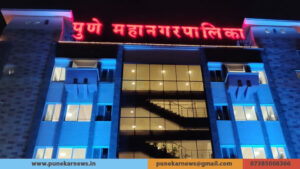
Bapat’s views came into sharper focus during a meeting held at the Pune Municipal Corporation as part of preparations for Ganeshotsav.
According to Bapat, his remarks about DJs and high-volume sound systems were met with opposition from some Ganesh mandal representatives and attendees.
He claimed that the atmosphere became heated soon after he began putting forward his arguments.
“As soon as I started raising my voice and putting forward my points, people started shouting at me. Instead of listening to what I had to say, there was shouting and commotion,” he said.
According to the account provided by Bapat, he was subsequently taken out of the meeting hall by security personnel.
He maintains that the opposition has not changed his position.
Bapat also criticised the response from those opposing his views, claiming that several people spoke simultaneously and that the discussion became disorderly.
His comments, however, represent his account of the meeting and the response to his position.
His Concerns Go Beyond Noise
For Bapat, the Ganeshotsav debate is not solely about decibel levels.
He has also raised concerns about traffic congestion, pandals occupying roads and public spaces, processions and other forms of temporary obstruction during the festival.
According to him, authorities should assess the cumulative impact of such activities on citizens before permitting public celebrations.
“Traffic, noise pollution, pandals, encroachments and other issues affecting citizens should be kept in mind. Only after considering these factors should celebrations take place. That, according to me, is a real celebration,” he said.
The issue highlights a recurring challenge during major public festivals: balancing cultural and religious celebrations with traffic management, public access and residents’ concerns.
Representations Submitted to Authorities
Bapat said he has already approached public representatives and government and civic officials regarding the issue.
According to him, he has submitted memorandums to several representatives and bureaucrats, with some sent in writing and others through email. He also said he personally met some officials.
His next step, he said, will depend on what action authorities take during the upcoming festival.
“If I do not see any enforcement or action being taken during the upcoming festivals based on that, I intend to pursue legal recourse through the courts,” Bapat said.
He reiterated that he is prepared to pursue the matter legally if he believes public roads are being obstructed or citizens are being subjected to excessive disturbance.
‘Celebrate, But Without Troubling Others’
Despite his opposition to DJs and Dhol-Tasha pathaks in public spaces, Bapat repeatedly emphasised that he is not against Ganeshotsav itself.
His central argument is that the right to celebrate should be balanced against the rights of other citizens.
“Celebration can happen in many ways and in different places. But traffic disruption, noise pollution, encroachments and inconvenience to citizens must be considered. When celebrations happen without troubling others, that is a real celebration,” he said.
His position places him on the less popular side of a debate in a city where Ganeshotsav is closely intertwined with public celebrations, processions and cultural performances.
At the heart of the controversy is a larger question for Pune: where should the line be drawn between preserving a festival’s traditions and ensuring that public celebrations do not adversely affect residents?
For Bapat, the answer is clear — tradition cannot be the only consideration when a public activity affects others.
Whether Pune’s Ganeshotsav organisers, civic authorities and citizens agree with that argument remains a matter of debate. But by challenging not only DJs but also Dhol-Tasha performances, Bapat has brought the question of noise, public roads and the limits of festive celebrations back into the spotlight ahead of Ganeshotsav 2026.