Why Are More PMC Workers Suddenly Cleaning Pune Roads? Here’s What Changed
Reported by Shoaib Tadvi & Mubarak Ansari
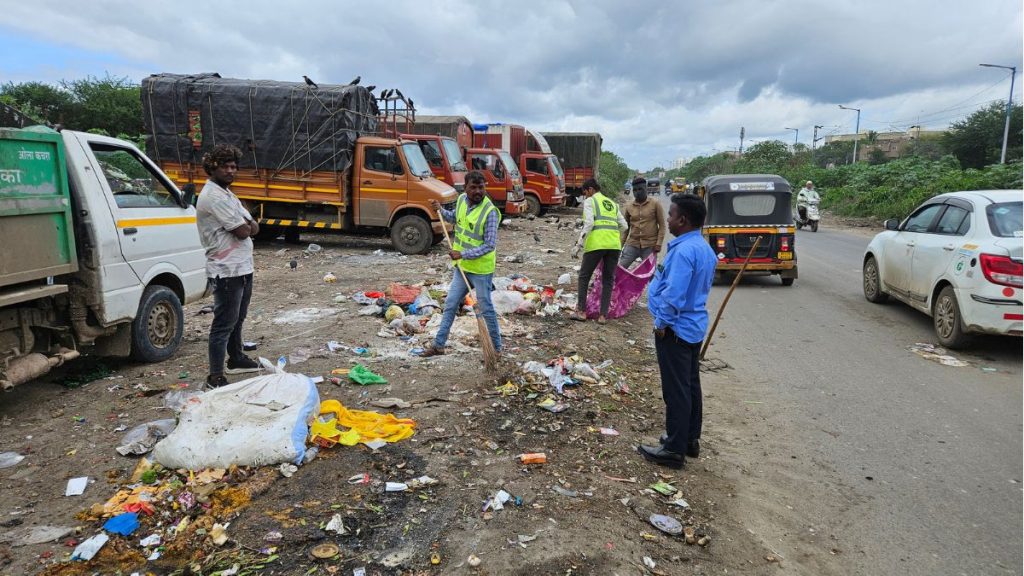
Pune, 3rd September 2026: Residents across several parts of Pune have noticed a significant increase in the number of Pune Municipal Corporation (PMC) sanitation workers deployed on city roads, with dedicated teams carrying out sweeping and cleanliness work in areas that have long faced complaints over irregular maintenance.
From Mohammedwadi and Undri to Baner-Balewadi, Keshavnagar, Camp, Saif and Kondhwa, residents say civic cleaning teams are now more visible on roads and in areas that were often neglected for extended periods.
The increased deployment follows a restructuring of the PMC’s road-cleaning system amid complaints that contractors were showing sweeping work as completed on paper despite allegedly failing to carry it out on the ground.
Speaking to Punekar News, PMC Additional Commissioner Prajit Nair confirmed that the civic body has deployed more than 9,000 sanitation workers, nearly twice the earlier manpower.
“Yes, we have deployed over 9,000 staff (almost double what there were earlier). We found that the staff was less compared to the length of roads to be covered under PMC. Hence, five agencies have been given the task. To keep their performance in check, we have put stringent norms, including termination of contract,” Nair said.
Under the revised system, contractors have been made responsible for both providing manpower and ensuring cleanliness outcomes on designated road stretches. The PMC has also introduced stricter performance and accountability provisions, including the possibility of contract termination.
Residents Welcome Increased Manpower
The increased presence of sanitation workers has been welcomed by residents, although many stressed that the improvement must be sustained rather than remain limited to a temporary cleanliness drive.
Sunil Iyer, a member of the Mohammedwadi Undri Residents Welfare Development Foundation, said residents had been raising concerns over roadside garbage, dust and irregular sweeping for a long time.
“For a long time, residents of Mohammedwadi and Undri have been raising concerns about roadside garbage, dust and irregular cleaning. In recent days, we have definitely noticed more PMC cleanliness workers on the ground, wearing dedicated uniforms and actively cleaning several stretches. This is a welcome development. However, cleanliness cannot be treated as a temporary activity. Roads should remain clean every day, and PMC must ensure proper monitoring and accountability so that this system continues permanently,” Iyer said.
Baner-Balewadi Residents Notice Change
Ameya Jagtap of the Baner Balewadi Nagrik Manch said residents have also noticed increased cleaning activity in the area.
“There is certainly a visible difference in recent days. Earlier, residents would frequently complain about garbage accumulation and irregular sweeping, but now we are seeing cleaning workers deployed more actively on roads. The question is whether PMC has finally strengthened its manpower or introduced a new operational system. Whatever the reason, this is the kind of basic civic service citizens expect. The focus should now be on maintaining the same momentum throughout the year,” Jagtap said.
Balewadi resident Meghna Bhandari said regular cleanliness should not depend on complaints from citizens.
“It is good to finally see workers regularly cleaning roads. But residents should not have to complain repeatedly or wait for a special drive before basic cleanliness work happens. PMC needs a structured system where every road has regular monitoring and cleaning schedules. Clean roads and footpaths are not a luxury; they are basic civic necessities,” Bhandari said.
Keshavnagar Residents Seek Accountability
Sudhir Shrivastav of the Keshavnagar Association said the increased workforce was encouraging but called for greater transparency about the new system.
“Keshavnagar and several rapidly developing areas have seen tremendous population growth, but civic services have struggled to keep pace. Seeing more sanitation workers on the roads is definitely positive. But PMC should clearly communicate its plan — whether additional workers have been appointed, which areas are being covered and how cleanliness standards will be monitored. Residents want continuity, not a temporary improvement,” Shrivastav said.
Camp Residents Seek Equal Coverage
Camp resident Diana Cruz said the increased cleaning activity should extend beyond major roads and selected localities.
“We are seeing increased cleaning activity, which is encouraging. But PMC must ensure that every locality receives equal attention. Interior roads, market areas and residential lanes should be cleaned with the same seriousness as prominent roads. A clean city is created through daily maintenance, not occasional drives,” Cruz said.
Residents have also welcomed the increased deployment, particularly as rapid urbanisation has put additional pressure on civic infrastructure. The larger presence of cleaning teams has therefore generated optimism among residents, but questions remain over whether the improvement will continue in the long term.
The PMC’s restructuring comes as the civic body seeks to address longstanding concerns over road cleanliness and contractor accountability. Under the revised arrangement, the responsibility for manpower and cleanliness outcomes has been placed with the agencies assigned to specific areas.
For residents, the immediate increase in sanitation workers is a visible change. However, the effectiveness of the new system will ultimately depend on whether roads and public spaces remain consistently clean and whether contractors are held accountable for lapses.