Pune, Pimpri-Chinchwad Auto Fare Hike: Commuters Welcome Revision, Raise Meter Concerns
Reported by Radhika Sharma and Shoaib Tadvi
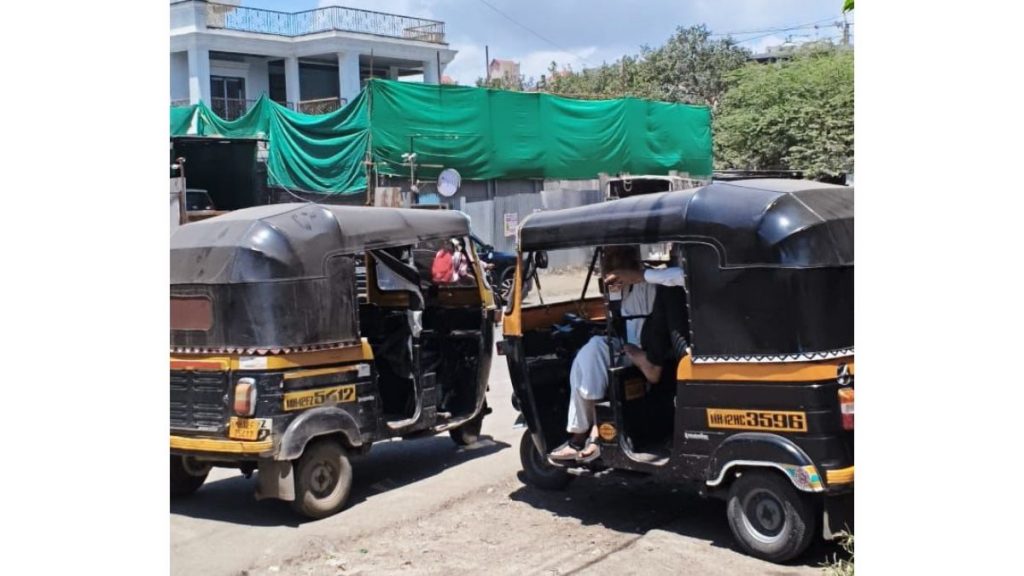
Pune, 3rd September 2026: With auto-rickshaw fares increasing after the revised rates introduced by the Pune District Regional Transport Authority (RTA) came into effect in Pune and Pimpri-Chinchwad, commuters are now having to adjust to higher travel costs.
According to the revised tariff, authorised auto-rickshaw drivers in the region will charge passengers Rs 30 for the first 1.5 kilometres, up from the earlier Rs 25. For every additional kilometre, passengers will now be charged Rs 20 instead of Rs 17. The revised fares came into effect from 1st September.
The fare revision has been attributed to rising operating costs for auto-rickshaw operators, including fuel, vehicle maintenance and insurance premiums. The latest hike is the fourth revision of auto-rickshaw fares in Pune since 2021, with the minimum fare increasing from Rs 18 in 2021 to Rs 30 now.
While auto-rickshaws remain an important mode of transport across Pune and Pimpri-Chinchwad, the increase directly affects commuters who depend on them for daily travel. To understand how the revised fares are being received on the ground, commuters and auto-rickshaw drivers shared their experiences and concerns.
Suhani, a third-year student at Symbiosis University, says, “When we go from the hostel to the college (old Viman Nagar Campus), the auto stand people charge us around Rs 40; this has been the same since last year. We have noticed, though, that they charge us fixed rates for short distances, but want to go by the meter when it is a longer distance.”
She explains that she knows, through her seniors, that the rates used to be Rs 30 from her hostel to the college, approximately a distance of 1.1 km. The prices increased when auto-rickshaw stand operators felt that fuel prices and maintenance charges had gone up.
“I think it is fair; we see prices for everything go up these days, so I mean if this revision means it helps them (auto-rickshaw drivers) out, so why not, granted it is implemented correctly, and measures are taken to ensure customers don’t get ripped off,” says Arjun, 23, a Koregaon Park-based entrepreneur.
However, not all commuters feel the fare increase will be easy to absorb, particularly those who rely on auto-rickshaws for regular travel.
Asif Ali, a resident of NIBM, said his domestic helper usually travels by auto-rickshaw but has now started walking following the fare increase. “When even daily essentials are becoming expensive, an increase in transportation costs creates an additional burden, especially for people with limited incomes,” he said.
Anil Bhavsar, another NIBM resident, said he depends on auto-rickshaws for daily travel due to his age.
“Earlier, my round-trip travel would cost around Rs 30 to Rs 40, but now it may increase to Rs 50 or Rs 60. During the monsoon, I prefer travelling by auto, but Rs 30 for just 1.5 kilometres is a significant amount for middle-class people like us,” he said.
A Kondhwa resident who regularly travels to Pimpri-Chinchwad for work said he tries to use the Metro wherever possible to keep his commuting costs manageable. “From Swargate, the Metro journey costs me around Rs 50, whereas travelling by auto can cost between Rs 120 and Rs 140. With the revised auto fares, the daily cost of commuting will increase further, creating an additional financial burden for people travelling to work every day,” he said.
For some commuters, however, the concern is less about the increase itself and more about whether the revised fares will actually be followed consistently.
“I don’t mind paying the revised fare if the meter is being used properly. The problem is when there is already a fixed amount being quoted before the ride, and you don’t really have a choice, especially for short distances,” said a 26-year-old IT professional who regularly travels by auto-rickshaw in the city.
Another commuter, who uses autos for travelling between her home and workplace, said the increase could add up for people who depend on rickshaws every day. “Rs 5 or Rs 10 may not look like a huge amount for one ride, but if someone takes an auto twice a day, every working day, it becomes an additional monthly expense,” she said.
A college student from Kharadi also said that clarity around the revised fare would be important for passengers. “If the fare chart is clearly displayed and the meter shows the correct amount, there should be fewer arguments between drivers and passengers. People should know exactly what they are supposed to pay,” he said.
Auto-rickshaw drivers, meanwhile, say the fare hike needs to be viewed against the rising cost of running their vehicles and the difficulties they face in attracting passengers.
Ajay Chaudhary, an auto-rickshaw driver from Kondhwa, said the increase in fares may not necessarily translate into higher earnings for drivers if passengers begin avoiding autos.
“Honestly, passengers are already becoming difficult to find because many people now have their own private vehicles. The RTO has increased the fare, but passengers are not willing to pay Rs 30 for just 1.5 kilometres. On 2nd September, I hardly had any passengers travelling by the meter. It has become very difficult to run an auto-rickshaw on meter-based fares,” he said.
Chaudhary also raised concerns about illegal sharing autos and their passenger capacity. “Some sharing autos carry up to six passengers, whereas the permitted capacity is only three. This needs serious attention from the RTO.
With fewer passengers opting for regular autos, I am also considering starting a sharing auto service,” he said.
Irfan Ibrahim Shaikh, an auto-rickshaw driver from Mohammedwadi, said the increase needs to be considered in the context of the costs faced by drivers.
Shaikh has been driving an auto-rickshaw since 2006.
“I have been driving an auto-rickshaw since 2006, for almost 20 years now. While I understand that passengers may feel burdened by the increase, the operating costs for drivers have also gone up significantly. CNG prices have increased by around Rs 2.50 to Rs 3, while fuel and other vehicle-related expenses have also risen.
The Rs 5 increase in the minimum fare should be seen in the context of these increasing costs,” he said.
The revised fares have therefore left both passengers and drivers looking at the increase from different sides. While commuters are concerned about the additional expense, particularly for short and frequent journeys, drivers say the higher tariff is necessary to offset the increasing cost of operating an auto-rickshaw.
As per the RTA’s revised arrangements, auto-rickshaw meters will have to be recalibrated to reflect the new fares, with drivers given time until 28th February to complete the process. Until the meters are updated, drivers are required to keep the official fare chart displayed inside their vehicles.
For commuters, the fare hike may be easier to accept if the revised tariff is implemented uniformly and passengers are charged according to the approved rates. For auto-rickshaw drivers, however, the challenge remains whether the higher fares will translate into better earnings when passengers are increasingly turning to private vehicles, Metro and other modes of transport.
With the new minimum fare now at Rs 30, the issue is no longer just about the fare increase but also about how consistently the revised rates are implemented on the ground and whether the change manages to balance the rising operating costs of drivers with the affordability concerns of daily commuters.