Alphox-200 Chemical Found in Milk Ahead of Ganeshotsav; Maharashtra FDA Warns Against Adulterated Sweets
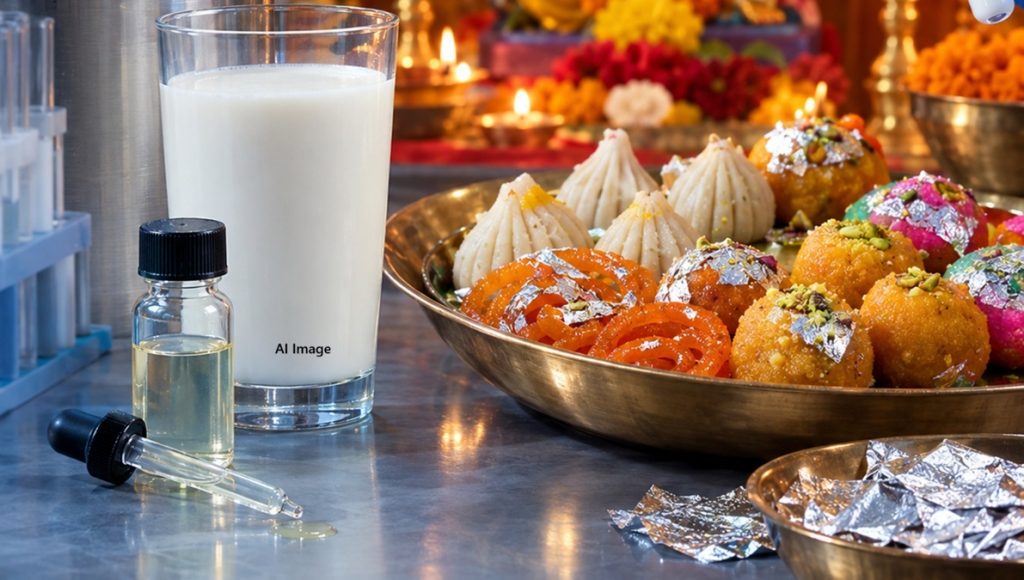
Pune, 13th September 2026: Ahead of the Ganeshotsav festival, concerns over food adulteration have increased after Alphox-200, an industrial chemical, was reportedly detected in milk samples in Maharashtra, according to information from the Maharashtra State Public Health Laboratory.
Laboratory sources said this is the first reported instance in the state of Alphox-200 being detected as an adulterant in milk. Until now, substances such as detergent and urea were commonly associated with milk adulteration.
According to scientists associated with the laboratory, Alphox is a chemical liquid primarily used in the textile and leather industries and in industrial detergents. The chemical has properties that allow water and oil to remain mixed.
Laboratory sources said adulterators may exploit this property by mixing water, a small quantity of oil and Alphox to produce a white liquid that resembles milk. The laboratory is reported to have detected the chemical in milk a few days ago.
FDA Warns Consumers About Adulterated Silver Foil and Colours
The Food and Drug Administration (FDA) has also urged consumers to remain cautious while purchasing sweets during Ganeshotsav, when demand for various types of traditional sweets increases.
Silver foil, or varakh, is commonly used to decorate sweets. However, officials have warned that some sellers may use aluminium foil as a cheaper substitute for genuine silver. The adulteration can be difficult to identify with the naked eye and may pose health risks.
According to the FDA, genuine silver varakh is thin and tends to stick to the hand when touched, with its layers separating easily. Aluminium foil is comparatively thicker and does not readily separate into thin layers. Genuine silver foil also dissolves, whereas aluminium foil does not.
The FDA has also cautioned consumers about the possible use of non-food-grade colours in sweets. Such colours may be used to make sweets appear more attractive but are not intended for human consumption.
Officials Urge Consumers to Remain Alert
D. V. Bhogawade, Joint Commissioner of the FDA, Pune Division, said the possibility of adulteration in sweets during the festival season cannot be ruled out.
“Consumers need to be more vigilant, particularly about the use of non-food-grade colours, which do not provide any nutritional value. If consumers notice any irregularities, they should immediately lodge a complaint with the authorities,” Bhogawade said.
Family physician Dr Avinash Bhondwe said consumption of non-food-grade colours and adulterated varakh could have adverse effects on health. According to him, prolonged exposure to certain harmful substances may affect organs such as the liver and kidneys and may also carry other serious health risks.
He added that the FDA’s recent enforcement drives against food adulteration could help reduce the use of adulterated ingredients in sweets during this year’s festival season.
Another expert said that consumers and food businesses have become more aware of food-safety requirements, including the need for food businesses to comply with Food Safety and Standards Authority of India (FSSAI) regulations.
He said packaged food and sweets sold during the festive season are increasingly being sourced from registered businesses, while some traditional sweets such as laddus and jalebis are also being sold without artificial colours.
With Ganeshotsav approaching, authorities have urged consumers to purchase milk and sweets from reliable sources, check packaging and FSSAI details where applicable, and report suspected cases of food adulteration to the FDA.