Why Is Pune Still Struggling With Cleanliness? Civic Workers List Problems Before PMC Commissioner
Pune, 21st October 2026: Pune Municipal Commissioner Naval Kishore Ram has assured sanitation workers that changes in the city’s solid waste management policies and working systems will be visible within seven days after employees highlighted problems ranging from political interference and inadequate garbage collection vehicles to staff shortages, threats of violence and poor working conditions.
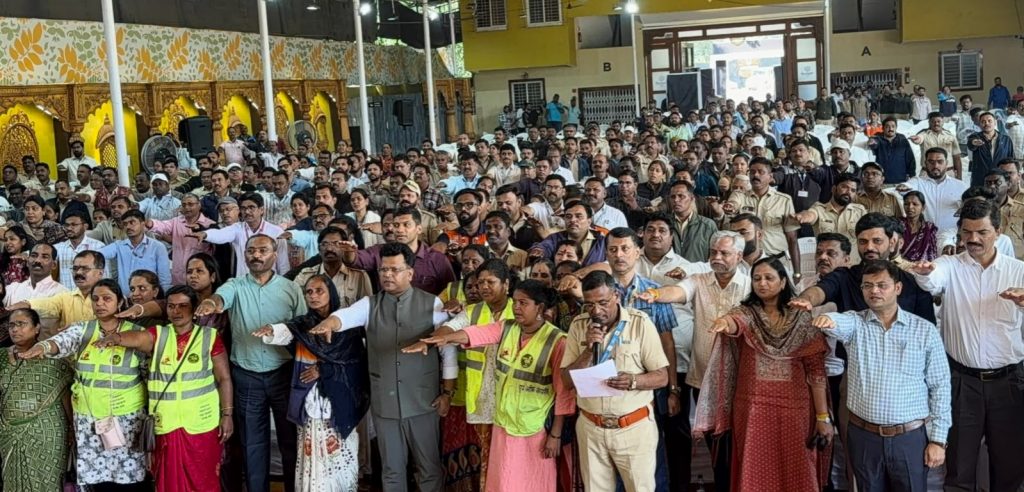
The concerns were raised during a dialogue meeting titled Swachh Samvad – Ekjoot Karmacharyanchi, Olakh Swachh Puneyachi (Clean Dialogue – Unity Among Workers, the Identity of a Clean Pune), organised by the Pune Municipal Corporation’s (PMC) Solid Waste Management Department on Wednesday.
Senior civic officials present included Additional Municipal Commissioners Prajit Nair and Omprakash Divte; City Engineer Aniruddha Pawaskar; Deputy Municipal Commissioner Santosh Warule, who oversees solid waste management; and deputy commissioners responsible for various administrative zones, along with officials from the encroachment, unauthorised construction, land acquisition and disaster management departments.
During the meeting, sanitation workers told the commissioner that their responsibilities for keeping the city clean were not matched by adequate institutional support. They complained that they faced physical assaults while on duty, political pressure when taking action against encroachments, threats of dismissal over minor delays and frequent transfers that disrupted their work.
Taking note of the grievances, Ram called for changes in working methods, better prioritisation of civic tasks and greater accountability across the administration. He also questioned why Pune, with its educational institutions, technology companies and scientific community, should have to look to Indore for lessons in cleanliness.
Workers report assaults, threats and political interference
Sanitation workers deployed on night shifts said they were sometimes assaulted by citizens while performing their duties. They alleged that even after complaints were submitted to senior officials, they did not receive adequate support in getting police action initiated.
Some workers also raised concerns about being threatened with removal from duty by inspectors and sub-inspectors if they arrived a few minutes late. They explained that travelling from their homes to distant work locations could sometimes cause delays and sought reasonable consideration from supervisors.
“We do not take our salaries without working. Give us some flexibility to manage our work,” was the plea made by the workers while describing their difficulties.
Employees also complained about frequent transfers, saying disagreements among local elected representatives often left officials uncertain about whose instructions to follow. This, they said, contributed to administrative disruption and affected sanitation operations.
The workers urged the administration to ensure that employees could perform their duties without intimidation and that complaints concerning workplace safety received appropriate attention.
Political calls allegedly obstruct action against encroachments
Sachin Ladkat highlighted the difficulties faced by sanitation staff while taking action against roadside handcarts, vendors and shops occupying public spaces.
According to Ladkat, political workers and elected representatives sometimes contacted officials during enforcement drives, resulting in action being stopped or delayed.
He called for a dedicated enforcement mechanism on the lines of the police system. He also proposed that employees involved in enforcement activities be given a 20% incentive, citing the model followed by the Pimpri-Chinchwad Municipal Corporation.
Ladkat further pointed out that differences in the levels of roads and central dividers created difficulties for mechanical sweeping machines. He sought compensation for workers deployed on holidays, including Dussehra.
Workers from newly incorporated villages also reported resistance and intimidation from local residents when civic authorities attempted to establish new sanitation arrangements.
They demanded that garbage bins be reintroduced at locations where door-to-door collection facilities were not available. Concerns were also raised over the deployment of permanent women employees to toilet cleaning and garbage collection vehicles instead of sweeping duties.
Garbage collection hit by vehicle shortages and planning gaps
Sanitation Inspector Naidu drew attention to shortcomings in the city’s garbage collection system and called for better planning based on actual waste generation.
He suggested preparing checklists to track the number of households from which waste was collected daily and classifying commercial establishments to organise collection according to their requirements.
Workers said a substantial amount of manpower was being spent clearing long-standing garbage accumulation points, commonly referred to as chronic spots. They attributed the increase in such locations partly to irregular sanitation work during night shifts.
A shortage of garbage transportation vehicles was another major concern. Workers said that, in some instances, they were forced to collect garbage and water in sacks because suitable vehicles were unavailable.
They also pointed out that certain lanes were missing from the geographical boundaries marked for sweeping using Google Maps.
Parked vehicles frequently obstructed road cleaning, while the lack of designated arrangements for construction and demolition waste led to debris being dumped in open spaces.
The workers called for the removal of abandoned and unused vehicles that obstructed cleaning operations.
Responding to the concerns, Ram said the civic body needed approximately 1,000 additional vehicles for waste management. The estimated expenditure would be around ₹250 crore to ₹300 crore.
He also observed that the PMC’s spending on waste management was lower than that of several other cities, indicating a need to examine resource allocation and operational requirements.
Public toilets face water shortages and maintenance issues
The condition of public toilets and the availability of water emerged as another concern during the meeting.
Workers acknowledged that public toilets were not being cleaned regularly at some locations but said the timely availability of water and vehicles was essential to maintain hygiene.
They pointed out that water shortages on Thursdays, when the water supply was suspended, affected cleaning operations. They called for an increase in the capacity of water storage tanks to ensure that toilets could be maintained during supply interruptions.
Workers also observed that public toilets where maintenance staff had been specifically assigned were generally in better condition.
Ram expressed dissatisfaction with the state of sanitation facilities and stressed that the administration needed to improve its working methods.
“If we cannot maintain public toilets properly, it is not a good reflection on us,” he said, emphasising the need for greater responsibility and accountability.
Civic staff raise issues over Yerawada operations and departmental responsibilities
Employees raised concerns about alleged political interference, collection-related irregularities and difficulties arising from interactions with Right to Information (RTI) activists in the Yerawada ward office area.
Disputes over responsibilities between engineers and sanitation staff, particularly concerning circular and square chambers, were also highlighted.
Workers suggested that all chamber-related work be assigned to the drainage and sewage department to avoid jurisdictional conflicts. They also proposed transferring responsibility for the sterilisation of stray dogs and cats to the health department.
Sushma Mundhe drew attention to the dumping of construction debris at night in the gairan, or common grazing land, area of Hadapsar. She said providing vehicles and manpower for night-time monitoring would help the civic body identify offenders and take stronger action against illegal dumping.
‘Why go to Indore? Pune can become clean too’
Addressing the gathering, Commissioner Ram expressed dissatisfaction with the continued gaps in the city’s sanitation system and called for a change in the administration’s approach.
“Our competition is with the best cities in the world. Pune has made progress in every field. This is a city of freedom fighters, information technology companies, scientists, colleges and universities. Why should Pune have to go to Indore to learn about cleanliness? We can make Pune clean too,” he said.
Questioning the pace of progress, he noted that sanitation awareness campaigns had been taking place for decades without achieving the desired transformation.
“In 2000, we were creating awareness about cleanliness, and in 2026, we are still doing the same. Will we be delivering the same speech in 2047 as well?” he asked.
Ram said the administration needed to change its working methods, identify priorities and ensure that important tasks were completed rather than repeatedly relying on awareness campaigns.
He also questioned the lack of reliable information about the quantity of construction and demolition waste generated in Pune, despite the availability of processing facilities.
If builders and contractors were involved in disposing of construction debris, the commissioner asked, why was responsibility for its proper disposal not being fixed on them?
The civic body, he indicated, needed to improve monitoring and accountability to prevent waste from being dumped in open areas.
Commissioner says sanitation workers will not be treated as secondary
Ram said sanitation workers were an integral part of the municipal administration and should not be treated as subordinate to other employees.
“We do not give sanitation workers a secondary position. Everyone must perform their duties honestly. Nobody has the right to insult another person,” he said.
He added that meaningful improvement in the city’s cleanliness would require collective responsibility from civic officials, sanitation staff and residents.
The commissioner also highlighted the public health benefits of a cleaner city, saying improved sanitation could help reduce illnesses and, consequently, the need for medicines and surgical procedures.
He assured workers that their concerns would be examined through further discussions and that corrective measures would be taken. He reiterated that changes in policies and working practices should become visible within seven days.
Civic administration holds dialogue, felicitates sanitation staff
The meeting was organised at the initiative of the municipal commissioner to strengthen coordination between the administration and sanitation workers and provide employees with an opportunity to express their concerns directly.
As directed by the commissioner, senior health inspectors, health inspectors, mukadams and sanitation workers representing different ward offices were invited to share their experiences, suggestions and expectations.
Employees who had performed noteworthy work in their respective wards were also felicitated with certificates of appreciation.
Assistant municipal commissioners, senior health inspectors, health inspectors, mukadams and sanitation workers from different ward offices also attended the programme.
The commissioner later joined the sanitation workers for a meal as part of the initiative to strengthen relations between frontline employees and the civic administration.
The administration’s challenge now will be to translate the workers’ grievances and the commissioner’s seven-day assurance into measurable improvements in garbage collection, public toilet maintenance, employee safety, enforcement and the overall cleanliness of Pune.