A String of Events: Tributes to Beenkar Bande Ali Khan
By Dr. Subroto Roy
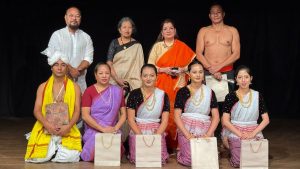
Pune, 26th December 2024: The fledgling Bande Ali Khan Art Foundation (BBAK) of Pune-based young Dhrupad music enthusiasts comprising film-makers, percussionists, and engineers among others, paid rich tributes, through its annual music concert, second time in a row to the undisputed father of all modern ‘gharanas’ of Bharatiya Shastriya Sangeet (BSS). It was held on Saturday, the 21st December, 2024 at the Raja Dinkar Kelkar Museum (RDKM) famous for its collection of old musical instruments and antiques.
The curation of this series of concerts was clearly superior to many much-hyped music concerts which have, over time, reduced to eateries with classical music in the background.
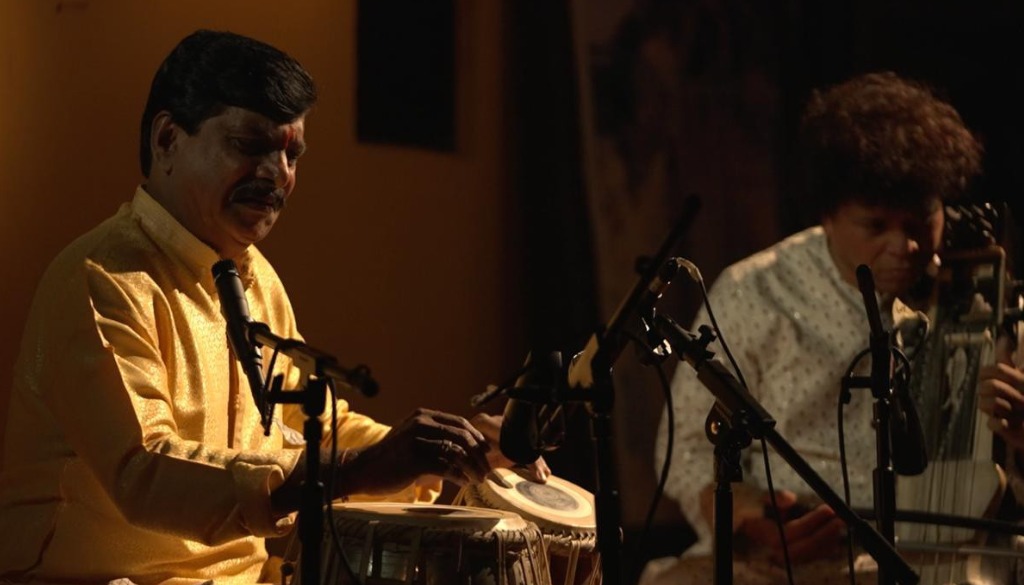
The concert started with a superlative tabla solo by Pandit Dattatray Bhave of Pune, accompanied on Sarangi by Mumbai-based Farooque Latif Khan. This was followed by a leisurely jugal bandi by Pdt. Pushparaj Koshti and Ustd. Mohi Bahauddin Dagar in the Dagarvani Dhrupad tradition.
Truly heartening is the enthusiasm with which the next generation has picked up a thread of an ancestor of BSS who breathed his last 134 years back. Many among this group have been initiated in Dhrupad music in the city itself.
The late Ustad was connected to the Dagar family through his sister who was married to Behram Khan Dagar or Baba Gopal Das Pande (see Dagar Family Tree). Bande Ali Khan was the son of Ghulam Zakir Khan or Sadiq Ali Khan of the Saharanpur.
Important to mention here is that, it was the maestro’s indirect descendant Late Ustad Hussein Sayeeduddin Dagar (alias Satyadev Pande) who lived and died in Pune and taught Dhrupad to many students like this author who could then pass it on to the current generation of enthusiasts.
Dhrupad traces its origins to the pre-historic Sama Veda. The Dagarvani tradition traces its roots to Girdharilal Pande & his ancestors of around the 11th CE of the Vasishta Gotra of Panch Gaud Brahmins of northern Bharat.
Review
For a journalist and a Dhrupadiye (Dhrupad singer & teacher) like this author, it is all the more difficult to strike the golden balance and do justice to both at the same time. Yet, thestalwarts whose renditions that will be discussed briefly later, will definitely take the analyses constructively.
This, is not merely a music review of a successful BSS concert held in the very city the divine Beenkar’s mortal remains rest inside a Dargah on the banks of the highly neglected Mula-Mutha river. Present is, in fact, an article which somewhere reflects the pollution manifest in the overall musical conduct of today’s musicians like the river itself.
Less said the better, but the ray of hope comes from BBAK and is sincerely working towards bringing what is, even today, pristine in BSS, especially Dhrupad.
I can’t resist stating here that the event was led by the ambience and contextualisation at the RDKM, a venue where the late maestro’s Rudra Veena sits untouched by the vagaries of time and is beautifully displayed, thanks to the curators of the museum. The lighting of other ancient and medieval artefacts which tell us a long story of change and that of continuity, was unprecedented as presented to my senses. I cannot but help mentioning Saurebh Shindde who made this happen with active collaboration with film-maker and Dhrupad vocal music student Ameya Gore, both residents of Pune.
The other thing which made the programme memorable was the great lineages of artistes. The superlative Teentaal rendition by Pdt. Bhave – a disciple of the late Lalji Gokhale who learnt under the immortal Ustd. Ahmad Jaan Thirakva Khan.
Firstly, the very selection of Pdt. Bhave for his excellent tabla rendition served as a whiff of fresh air considering the usual star-studded flashy tabla ‘performers’- a uniformity which has nearly become mechanical.
The tonal changes which Bhave employed in Teentaal and the way he reached the sam or the beginning of the 16 beat negotiation, struck the author most as a layman as far as percussion is concerned. Importantly, he brought to the audience memories of his param Guru, the late Ahmad Jaan Thirakva. His control over lay and especially while navigating complex patterns within the overarching 16 beat pattern had an old-world charm, absent on professional platforms today.
Sarangee as the accompanying reference (lehra) is rarer to see today. Farooq Latif Khan displayed a marvellous sense of raga mood and adherence to lay.
Next was the rendition of Raga Shankara, suited for the time it started around at 8.00 p.m. The three tier alap, jod, and jhala were tonally, truly meditative as the largely learned audience of around 120, remained mesmerized and managed to express ineffable feelings with just an “aaaah”. The gat was disappointing (“to state the least”) to those who spoke to this author.
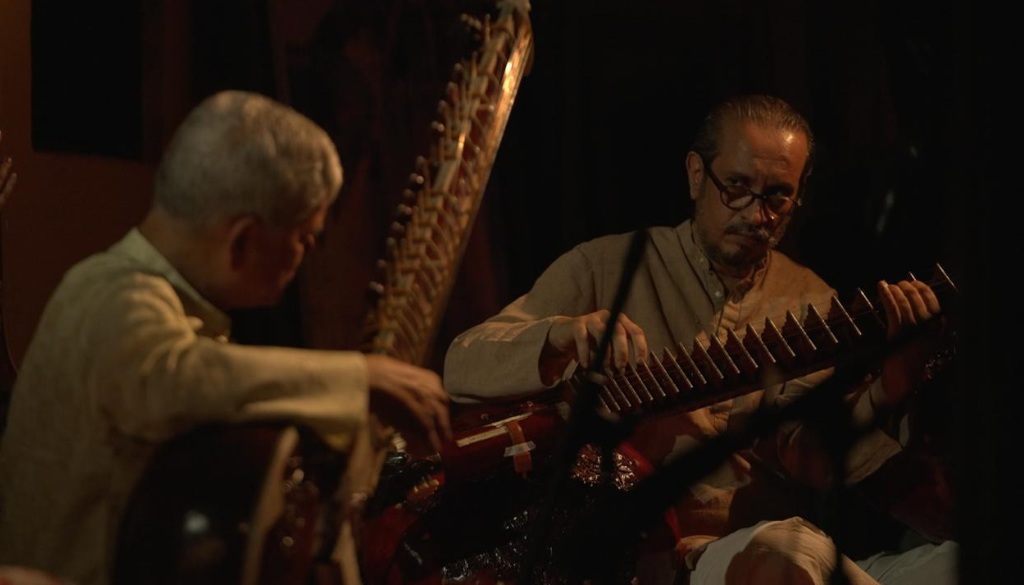
Alap was so nicely poised that many did not care for the sweet deviation which the artistes deliberately indulged in from the Raga Shankara. Pdtji. led this deviation with a re-ni-sa which was close to Behag followed by a dha-ga combination perhaps drawn from its Shankaraabharnaam (Viravali/Bilaval) mooring of Rag Shankara. He also employed the re-ga…sa sequence was another deviation, because re although allowed it is like the Gandhar permission in Kedar – alpatva. Among the dashak niyamas of raga rendition, these tiny deviations were a treat for the common listener.
It must be noted that the employment of the above sequences are ideally unmanifested (avyakta) in Shankara Raga as a rule, and to the trained ear it becomes unacceptable if they’re manifested to the extent they were in the alap section. Learned listeners found these unnecessary “corruptions” of the raga. Some said it that the raga should be named after the artiste and not called Shankara at all.
Speaking to the author Pdt. Koshti, agreed that the above were deviations, but not disallowed in the raga traditionally. “For expansion (vistar) we needed to do this”, was his response. “These svara-s (re, dha, etc) are after all not disallowed,” he argued.
A question that will naturally follow is; can we manifest the unmanifested svaras of allragas that have four svara-s? Another learned musician would differ. To him looking at a raga from the middle saptak key (shadaj) to the upper is myopic. In such raga-s, many would argue, that the starting point could well be nishad or the svara allowed below the key svara. We see this often in Carnatic sangeet.
Nikhil Ghorpadkar, the grandson of the great Panse tradition Pakhvaaj maestro the late Pdt. Vasantrao Ghorpadkar, accompanied the artistes on the pristine Pakhavaj. He could do more than a nice stage presence.
(The author is a city-based Dagarvani Dhrupad singer and Guru, and an award winning Senior Journalist.)