Wombs for Wages: The Crisis of Hysterectomies Among Maharashtra’s Women Sugarcane Workers.
Reported by Sneha Deb
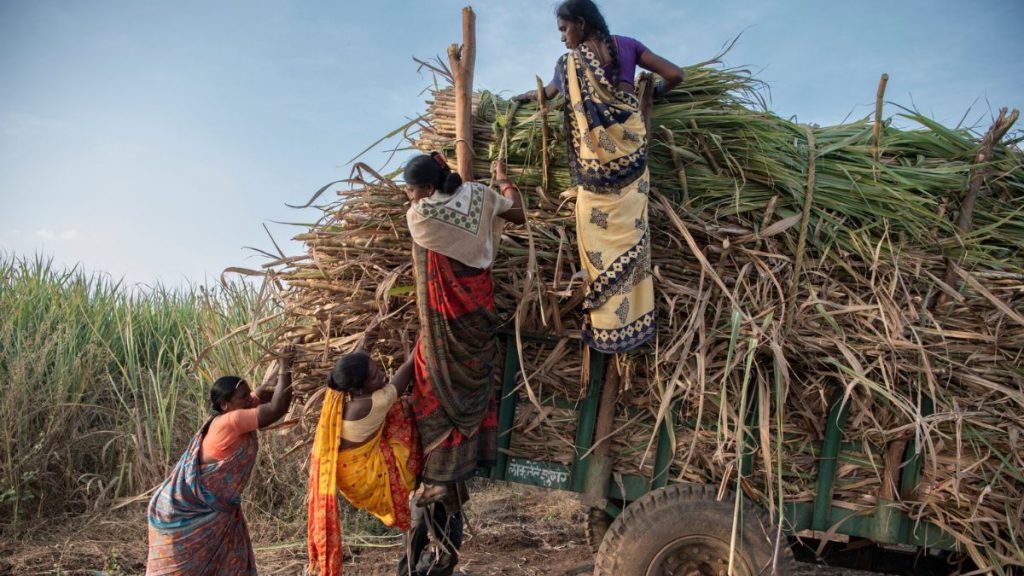
Beed, 30th June 2026: Jayashree Owhal, 45, is a cane cutter from Kathawada village in Beed district, Maharashtra. When her menstrual cramps became unbearable from years of lifting 50 kilogram bundles of sugarcane — 12 to 16 hours a day, on fields she did not own, for a contractor she was indebted to — she went to see a gynaecologist. The doctor did not suggest rest, or leave, or medication. He suggested she stop lifting heavy bundles. But heavy bundles were the only source of income she had. So Jayashree made a different calculation.
She had her uterus removed. “I decided to get the hysterectomy done,” she told researchers from the International Institute for Environment and Development (IIED), “and get rid of this every month ‘pain and stain.'”
Jayashree’s story is not an anomaly. It is, across vast stretches of Maharashtra’s drought prone interior, a pattern one that has been documented, investigated, condemned, and investigated again, without yet being stopped.
In Beed district alone, a study by the Maharashtra State Commission for Women found that 36% of female sugarcane labourers had undergone a hysterectomy — against a national average of just 3%. A government survey covering 82,309 women who had migrated for sugarcane work found over 13,500 hysterectomy cases in a single decade. In late 2024, an official health department report recorded that 843 women from Beed underwent hysterectomies specifically before migrating for the harvest season. In most Beed villages, there is at least one woman per household who has had her womb removed.
This is not a medical crisis. It is a human rights crisis
The despair
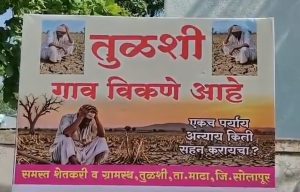
On October 31, 2018, the Government of Maharashtra identified Beed as one of the country’s most severely drought-affected districts, citing factors such as a significant rainfall deficit, poor soil quality, and a declining groundwater index. The prolonged agrarian crisis, coupled with limited alternative employment opportunities, has pushed many farmers to the brink of despair, with some resorting to suicide.
Number of farmers suicides in Marathwada region
YEAR 2010- 79, 2011-73, 2012-91, 2013-98, 2014-152, 2015-301, 2016-222, 2017-207
TOTAL-1223
(Source: Divisional Commission rate Office, Aurangabad)
In such conditions, labourers and farmers are forced to migrate from several districts of Marathwada, primarily Beed, to the sugar belt regions of Western Maharashtra and Karnataka to work on sugarcane farms during the harvesting season (October till May).
Sugarcane farming is considered to be relatively more economically profitable as state-sponsored sugar cooperatives buy produce directly from farmers at a price fixed by the government, thus guaranteeing a local market. India became the world’s largest sugar producer in 2021–22, producing 35.9 million tonnes.
Wages are paid per tonne of cane harvested approximately ₹250 (about $3) per tonne. To earn that wage, workers are on the fields for 12 to 18 hours. Breaks are not formally permitted. Contractors fine workers for absence. Missing a day due to illness can result in penalties that swallow several days of earnings.
Since migration takes place for a temporary period of seven to eight months, labourers working as cane-cutters reside in small makeshift huts, or cane fields or sugar mills. Since these are temporary shelters, there is a lack of toilets, clean drinking water and proper sanitation facilities. Such poor living conditions adversely impact the health of these labourers, especially women who are forced to practice unsafe menstrual hygiene practices that lead to rashes and infections, causing severe reproductive health-related problems.
The Problem of Being a Woman
Menstruation in the sugarcane fields of Maharashtra is a layered catastrophe. Physically, the work itself makes periods worse, aggravating gynaecological conditions — uterine fibroids, cysts, endometriosis, pelvic inflammatory disease. One woman in research interviews described using the cloths she carries cane bundles with as sanitary products — cloths that are soaked in pesticides and embedded with sharp cane particles.
Financially, menstruation becomes a direct threat to the family’s survival. A woman who must rest during her period, or whose cramping is so severe she cannot work, does not just lose that day’s wages. She risks the entire contracted season
The Contractors, the Clinics, and the Corruption
Contractors who hire migrant workers for sugarcane farms extend advances — typically ₹15,000 to ₹30,000 — to families at the start of the season, which the family is expected to repay through their labour. This advance creates an immediate debt relationship that traps the family on the farm for the duration of the harvest. It is the fear of contractors extracting hefty fines, along with constant precarity surrounding their jobs, which pushes these women to get their uterus removed – since menstruation, illness and pregnancy might require them to skip labour intensive work.
The Private Clinics
In Beed district, there are approximately 120 private hospitals. The average cost of a hysterectomy in Maharashtra is approximately ₹35,000. For a private clinic in a poor rural district, hysterectomies are highly profitable procedures targeting a population with limited medical literacy, no second-opinion access, and intense financial pressure to find a fast solution to their symptoms.
Rukmini Vithal Varouri, 48, told researchers: “Doctors often create fear among us, warning that if we don’t remove the uterus, it could damage the kidneys or lead to cancer.” Families with women who have already had children are frequently told the uterus is a “vestigial organ” no longer necessary after childbearing and can simply be removed. This is medically false and deliberately deceptive.
Dr. Ganesh Tondge, head of the gynaecology department at the Civil Hospital in Ambajogai, put it plainly: “The uterus serves a larger function than just childbirth. Removing it triggers surgical menopause, which can reduce the overall life expectancy of the woman.”The Human Cost Beyond Bodies
Debt that surgery creates.
Most women take loans from the contractors who encouraged the surgery creating a cycle in which the surgery, meant to secure their employment and income, instead deepens the debt that traps them in servitude.
Children in the fields
The complete absence of any childcare provision means that nursing mothers often bring infants to the sugarcane fields. One researcher documented the case of a mother who put her newborn daughter down on the field while stacking cane bundles. The child was struck and killed by a tractor.
Sexual harassment and assault
Women working in the sugarcane fields report widespread sexual harassment and assault. Because these women are completely dependent on the contractor for their housing, income, and debt management, they have almost no power to report or resist. Their isolation from their home communities makes this exploitation near total.
The loss of bodily autonomy
Perhaps the most fundamental harm is what the crisis represents for the principle of informed consent. These women are not choosing hysterectomies from a position of medical knowledge and free choice. As activist Revita Sakhre, who has spent decades working with the Sugarcane Workers Association, said: “Women don’t get to be decision makers of their own bodies.”
How the World Turned Its Attention to Beed’s Women Sugarcane Workers
International Media Raises Questions
In 2024, an investigation by the Thomson Reuters Foundation highlighted how recurring droughts, crop failures, and economic distress in Beed were forcing thousands of women to migrate for sugarcane harvesting work. The report revealed that many women believed undergoing hysterectomies would allow them to work longer hours without interruptions caused by menstruation, pregnancy, or reproductive health problems.
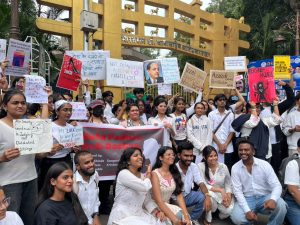
The global coverage framed the issue not merely as a health concern but as a symptom of systemic exploitation affecting some of India’s most vulnerable workers.
Pressure on the Maharashtra Government
In 2025, Maharashtra Health Minister Prakash Abitkar announced the creation of vigilance committees to investigate reports of illegal or medically unnecessary hysterectomies. These committees were tasked with monitoring hospitals and doctors suspected of carrying out questionable procedures.
The Bombay High Court also intervened, directing authorities to improve working conditions for sugarcane labourers and ensure access to basic facilities such as sanitation, water, and electricity.
The Central Government Steps In
The issue eventually reached Parliament. In July 2025, the Union Government acknowledged reports and research. Responding to questions in the Rajya Sabha, the Ministry of Women and Child Development stated that the Centre had advised Maharashtra to ensure strict oversight of all hysterectomy procedures and to guarantee that surgeries were conducted only after proper medical examination and approval.
The Spotlight Shifts to Global Corporations
As investigations continued, attention moved beyond labour contractors and local authorities to the multinational corporations that purchase sugar from India.
Companies such as PepsiCo, Coca-Cola, Nestlé, Unilever, and Mondelēz were mentioned in discussions surrounding the origin of sugar used in various products.
COCA-COLA:
After international reports highlighted the exploitation of women sugarcane workers in Maharashtra, Coca-Cola stated that it was “deeply troubled” by the findings and condemned human rights abuses in its supply chain. The company said it would investigate the issue, engage with suppliers and stakeholders, and work to improve conditions for sugarcane workers.
PepsiCo:
Following international reports on the exploitation of women sugarcane workers in Beed, PepsiCo described the allegations as “deeply concerning” and stated that it would work with its franchisee partners to assess labour conditions in its sugar supply chain.
Cinema Gives Voice to Beed’s Women
The plight of women sugarcane workers in Beed has not only attracted the attention of journalists and policymakers but has also inspired filmmakers to bring their stories to a wider audience.
Bittersweet (Marathi: Kadu God)
One of the most notable films on the subject, directed by Anant Mahadevan. Bittersweet gained international recognition after being selected for the prestigious Busan International Film Festival, where it was nominated for the Jiseok Award. The film was later selected by the Government of Maharashtra for the Marche du Film section at the Cannes Film Festival, further bringing global attention to the issue.
Koos (The Womb)
written and directed by Dr. Dnyaneshwar Jadhawar. Based on his award-winning novel of the same name. The film won the Third Prize for Best Short Film at a state-level competition that featured over 350 entries from across Maharashtra. Actor Vitthal Kale, who starred in the film, also received the Best Actor Award.
CONCLUSION
The women of Beed were told, repeatedly and systematically, that their bodies were the problem — that a uterus was an inconvenience, that menstruation was an obstacle, that the most rational thing a woman could do in their circumstances was to surgically remove the part of herself that cost the contractor a day’s work. And many of them, because the alternative was destitution, agreed.
That is not consent. That is coercion at the intersection of climate collapse, labour exploitation, predatory medicine, and corporate indifference. And coercion, sustained over decades, normalised across thousands of villages, embedded in the supply chains of some of the world’s most profitable companies, does not end because the world finally started paying attention.
It ends when the people who profit from it are made to stop. That reckoning — the real one, the one with consequences — is not yet over.
“It’s about survival.” — Savita, farmer and mother of two, Beed. Age at hysterectomy: 28.