Activists slam Transgender Rights Amendment Bill, hold protest in Pune
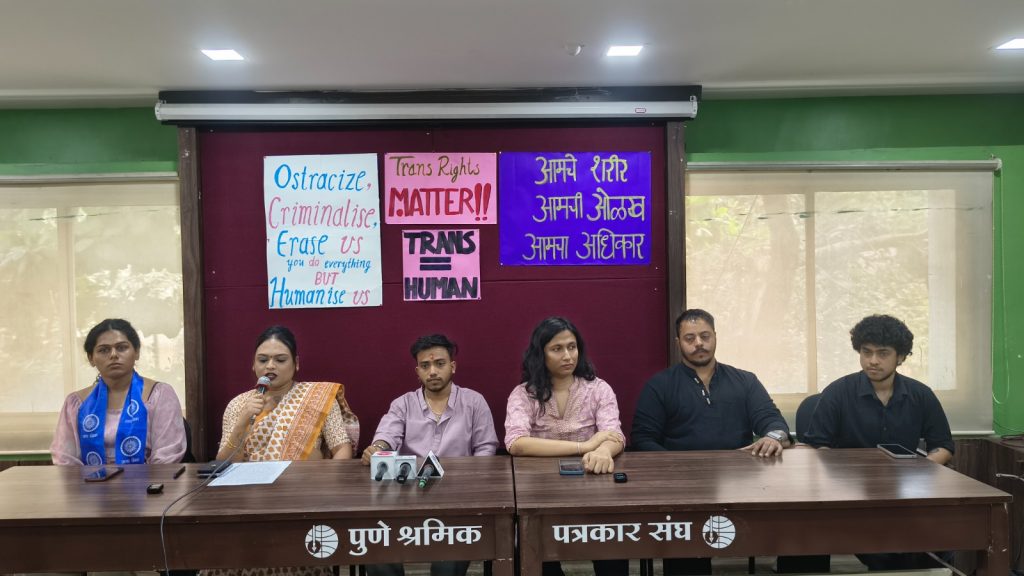
Pune, 19th March 2026: Transgender rights activists, queer collectives and allies on Thursday raised concerns against the Transgender Persons (Protection of Rights) Amendment Bill, 2026, calling it “regressive” and a rollback of rights guaranteed under the landmark NALSA v. Union of India judgment.
The Bill, introduced in the Lok Sabha on March 13 by Union Minister for Social Justice and Empowerment Virendra Kumar, has triggered protests in several cities across the country.
Addressing a press conference at Patrakar Bhavan in Pune, members of the transgender community and activists alleged that the proposed amendments dilute the provisions of the 2019 Act by narrowing the definition of transgender persons. They claimed the Bill focuses largely on socio-cultural identities such as Hijra, Kinnar, Aravani and Jogta, while excluding trans men, trans women (outside these groups), non-binary and other gender-diverse individuals.
A key concern raised by protesters was the removal of the right to self-identification, which had been recognised by the Supreme Court in the NALSA judgment as a fundamental right under Articles 14, 19 and 21. Activists said the proposed requirement of certification by a government-appointed medical board and approval from district authorities to establish gender identity was “invasive” and “violative of dignity”.
“The identity of an individual cannot be determined by the State or any authority. It is intrinsic to one’s dignity and liberty,” said Smit Vadan of the National Network of Sex Workers (NNSWW), which issued a statement opposing the amendments.
The group said the 2019 Act had adopted an inclusive definition of transgender persons, covering intersex individuals, gender non-conforming persons and traditional socio-cultural identities. The proposed changes, they alleged, restrict this scope and risk erasing lived realities.
Activists also expressed concern over provisions criminalising “forcing” or “inducing” a person to become transgender, warning that vague wording could be misused to target support systems, including community networks, shelters and NGOs working with transgender persons.
Similar protests have been reported in cities such as Delhi, Hyderabad, Kolkata and Thiruvananthapuram since the Bill was introduced, with activists demanding its withdrawal and wider consultations with stakeholders.
The activists said they would continue to oppose the Bill through demonstrations and legal means if necessary. “We will pursue all democratic avenues — from protests to legal intervention — to safeguard the rights of the transgender community,” a representative said.