AI Surveillance, Facial Recognition & Drone Restrictions: Pune Police Deploy 8,500+ Personnel for Ashadhi Wari Palkhi 2026
Reported by Mubarak Ansari
Pune, 7th July 2026: In an unprecedented move to ensure a safe, disciplined, and technologically advanced environment, the Pune City Police have announced a massive multi-tier security and crowd management plan for the upcoming Ashadhi Wari Palkhi procession.
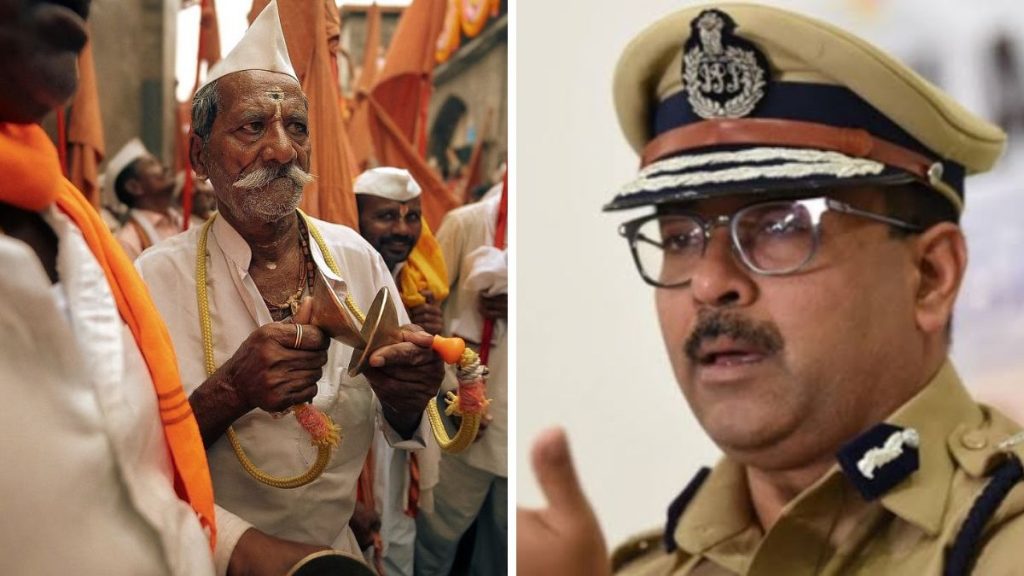
Addressing a press conference at the Police Commissioner’s Office in Camp today, Pune Police Commissioner Amitesh Kumar detailed the elaborate security blueprint. He highlighted the integration of Artificial Intelligence (AI)-enabled cameras, Face Recognition Systems, strict drone regulations, and the deployment of over 8,500 security personnel to safeguard millions of devotees arriving in the city between July 9 and July 12, 2026.
Commissioner’s Address & Safety Objectives
“The Ashadhi Wari Palkhi is a revered, historic tradition of Pune and Maharashtra, attracting lakhs of devotees and visitors from across the country and abroad,” Pune Police Commissioner Amitesh Kumar told reporters. “Our top priorities are to prevent any sabotage, eliminate stampede-like situations, avoid inconvenience to the citizens, and protect the property of devotees. To achieve this, we have drawn up a comprehensive, tech-backed security protocol.”
Highlighting the introduction of state-of-the-art surveillance this year, Commissioner Kumar stated:
“For the first time, we are extensively utilizing Artificial Intelligence (AI) to monitor the crowds and routes in real-time. We have installed 125 AI-linked cameras along the Sant Tukaram Maharaj Palkhi route and 101 AI-linked cameras along the Sant Dnyaneshwar Maharaj Palkhi route. Additionally, 28 cameras equipped with Facial Recognition Systems (FRS) and 36 Advanced Video Analytics cameras across 24 strategic locations will help us spot any suspicious activities or known offenders instantly.”
Massive Security Force and Deployment Statistics
To maintain absolute law and order, the Pune City Police have mobilized an imposing force of officers, constables, and specialized squads. This massive security apparatus will be supervised directly by 4 Additional Commissioners of Police, 13 Deputy Commissioners of Police, and 30 Assistant Commissioners of Police. Ground operations will be managed by 182 Police Inspectors and 570 Assistant Police Inspectors and Police Sub-Inspectors.
The core of the deployment consists of 6,552 Police Amaldars (constables) who will be stationed along the routes and at crucial junctions. To assist the local police, 3 platoons of the State Reserve Police Force (SRPF) and 1,250 Home Guards have been requisitioned. Furthermore, high-readiness tactical units, including 12 Quick Response Team (QRT) hits, will be strategically positioned at crowded and sensitive locations. Specialized safety operations will be bolstered by 6 Bomb Detection and Disposal Squad (BDDS) and dog squad teams, who are tasked with continuously sanitizing the entire route and halt locations. Commissioner Kumar also added that special plainclothes squads from the Crime Branch and investigation units are actively on the ground to prevent pickpocketing, chain snatching, and to strictly ensure women’s safety.
Drone Flight Restrictions and Permission Policy
As part of the stringent security protocols, Pune Police have announced a strict regulatory policy regarding the operation of unmanned aerial vehicles (drones) during the Palkhi procession. To eliminate any security risks or disruption to the massive crowds, unauthorized drone flights are strictly prohibited along the procession routes, temple sites, and halt zones.
Individuals, media houses, or digital creators who wish to operate drones for filming, reporting, or surveillance purposes must obtain formal prior clearance. Under the newly implemented security rules, those seeking permission are required to submit a formal application to the Deputy Commissioner of Police (DCP), Special Branch, for verification and official approval before deploying any drone equipment.
The Palkhi Schedule and Routes within Pune City Limits
The Commissioner detailed the specific itinerary of the dual processions within the Pune Police Commissionerate limits, which begins on July 9, 2026. On this day, the Sant Dnyaneshwar Maharaj Palkhi will enter Pune limits at Bopkhel Phata, halt for lunch at Phulenagar, and proceed to Sri Vithoba Mandir in Bhawani Peth for its night halt, covering a total distance of 16 kilometers. Simultaneously, the Sant Tukaram Maharaj Palkhi will enter via Harris Bridge in Khadki and proceed to Sri Nivdungya Vithoba Mandir in Nana Peth for its night halt, covering a distance of 12 kilometers.
On July 10, 2026, both Palkhis will halt in Pune, allowing devotees to take darshan (sacred viewing). The departure phase will commence on July 11, 2026. The Sant Dnyaneshwar Maharaj Palkhi will leave Bhawani Peth, pass through Hadapsar Gadital, take a rest at Divaghat, and proceed towards Saswad under Pune Rural limits, covering 22 kilometers. Meanwhile, the Sant Tukaram Maharaj Palkhi will depart from Nana Peth, pass through Hadapsar Gadital, rest at Loni Kalbhor near the Cadbury company, and halt there for the night, covering 16 kilometers. Finally, on July 12, 2026, the Sant Tukaram Maharaj Palkhi will resume its journey from Loni Kalbhor towards Naigaon Fata via Yawat under Pune Rural limits, covering the remaining 2 kilometers within Pune city limits.
Darshan Routing & Crowd Control Regulations
To prevent stampede-like situations and manage the massive queues at the temples, the police have established strict entry and exit guidelines. At the Vithoba Mandir in Bhawani Peth for the Sant Dnyaneshwar Maharaj Palkhi, separate queues for men and women will start from Dhawale Chowk. After taking darshan, devotees will exit through the rear of the temple onto Shivpratap Chowk. Devotees seeking Mukh Darshan (glimpse) will exit from the Bhakti Shilp Kaman towards the outer side of the Chowk, while entry from Hamal Talim or Bhakti Shilp Kaman for darshan remains restricted.
For the Sant Tukaram Maharaj Palkhi at the Nivdungya Vithoba Mandir in Nana Peth, the male queue will begin at Lakhri Maruti Mandir, and the female queue will start at Aruna Chowk. Those taking Mukh Darshan will exit from Aruna Chowk towards Lakhri Maruti Mandir. Devotees heading to Nivdungya Vithoba Mandir from the Sant Dnyaneshwar Maharaj Palkhi are advised to follow a route via Inamdar Chowk, Aruna Chowk, Dhawale Chowk, and Jagtap Chowk. Conversely, those going to Palkhi Vithoba Mandir should follow the Bhakti Shilp Kaman, Shivpratap Chowk, Ashok Chowk, Inamdar Chowk, and Aruna Chowk route.
To assist the public, five dedicated Police Help Centres have been set up at Nana Peth Police Chowki, Palkhi Vithoba Mandir, Nivdungya Vithoba Mandir, Ramoshi Gate Chowk, and Sant Kabir Chowki. Commissioner Kumar noted that they have held extensive coordination meetings with the Palkhi trustees and key civic administrations—including the PWD, Pune Municipal Corporation (PMC), MSEDCL, Pune Metro, and the Fire Department—and have completed barricading at all crowded spots.
Real-Time Tracking & Traffic Updates
For the convenience of local residents and incoming devotees, Pune Police are heavily leveraging digital solutions. Commissioner Kumar announced that, similar to last year, the Live Location of both Palkhis will be made available to the public via a dedicated web page and social media platforms. The Traffic Department will also publish real-time updates, maps, and information regarding road closures and diversions online to ensure that the city’s routine traffic remains as uninterrupted as possible.
The Commissioner concluded the briefing by appealing to all citizens and Warkaris to cooperate with the police officers on duty and utilize the designated entry and exit routes for a safe and spiritually fulfilling experience.
For any help, people can call police helpline 112.