Ashta Bhava, Ashta Nritya – Mahabharata to bring together eight classical dance traditions in Pune
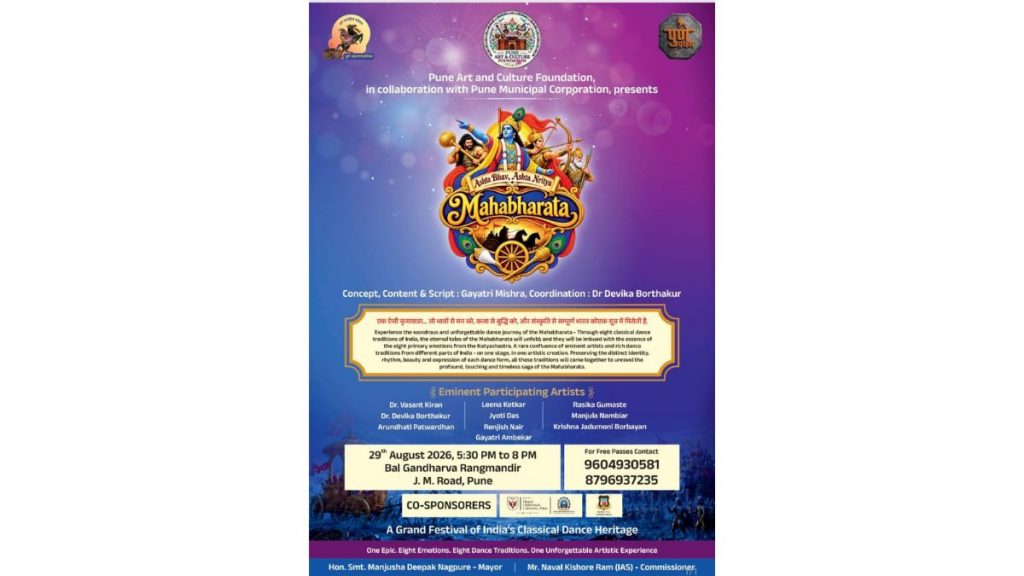
Pune, 27th August 2026: What happens when one of India’s greatest epics meets the country’s diverse classical dance traditions? Pune is set to witness an artistic confluence of eight classical dance forms as the Pune Art and Culture Foundation, in collaboration with the Pune Municipal Corporation’s Cultural Centre Department, presents ‘Ashta Bhava, Ashta Nritya – Mahabharata’ on August 29.
To be staged from 5.30 pm to 8 pm at Bal Gandharva Rangmandir on J M Road, the production will interpret eight selected episodes from the Mahabharata through eight classical dance traditions, using the eight primary emotions or Bhavas described in the Natya Shastra as its artistic framework. Entry to the programme will be free, with an invitation card mandatory for admission.
Citizens are urged to experience this unique artistic presentation.
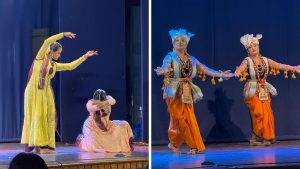
The production brings together Bharatanatyam, Kathak, Kathakali, Manipuri, Mohiniyattam, Kuchipudi, Odissi and Sattriya, each being used to interpret a distinct episode from the epic. The stories include Lakshagriha, Bhima-Hidimba, Arjuna and Chitrangada, Draupadi Cheer Haran, Vishwaroopa Darshan, Abhimanyu, Dushashan Rakta Paan and Karna.
At the heart of the production is an attempt to look at the Mahabharata not merely as a historical or mythological narrative, but as a vast emotional landscape. Its characters, conflicts, relationships and moments of triumph and tragedy provide the dramatic canvas, while the individual dance traditions bring their own vocabulary of movement, rhythm, music and expression to the storytelling.
The production has been conceptualised by Gayatri Mishra, Director of the Pune Art and Culture Foundation, while Dr Devika Borthakur, a Sattriya exponent and guru, has coordinated the entire programme. The central concept of the production is “One Epic, Eight Emotions and Eight Classical Dance Traditions.”
In the dance drama, gurus Dr Vasanth Kiran Rayasam (Kuchipudi), Dr Devika Borthakur (Sattriya), Arundhati Patwardhan (Bharatanatyam), Leena Ketkar (Kathak), Jyoti Das (Manipuri), Renjish Nair (Kathakali), Gayatri Ambekar (Kuchipudi), Rasika Ghumaste (Odissi), and Manjula Nambiar (Mohiniyattam) will present stories from the Mahabharata through their respective choreographic compositions.
For the audience, the production promises a journey through some of the Mahabharata’s most powerful moments — from the wonder and intrigue surrounding Lakshagriha and the emotional world of Bhima and Hidimba to the humiliation of Draupadi, the revelation of Vishwaroopa, Abhimanyu’s heroic struggle and the complex story of Karna.
Rather than presenting the epic through a single dance idiom, the production places India’s classical traditions alongside one another, allowing their individual strengths to shape the narrative. The result is intended as a contemporary and immersive interpretation while maintaining the classical character of the forms.
The organisers said the programme is also an effort to introduce audiences to the breadth of India’s classical dance heritage by bringing traditions from different regions of the country onto one stage. The production thus becomes both a retelling of the Mahabharata and a celebration of India’s plural cultural vocabulary.
The event will be attended by Pune city Mayor Manjusha Deepak Nagpure, PMC Commissioner Naval Kishore Ram, along with other PMC officials and corporators.
Guru Sucheta Bhide Chapekar, an exponent of Bharatnatyam, renowned Kathak dancer/Guru Shama Bhate, and Sharangdhar Sathe, Director of the School of Performing Arts, Bharati Vidyapeeth, will grace the event with their presence.
The programme has been co-sponsored by Pimpri Chinchwad University (Pimpri Chinchwad Education Trust), Sarhad Pune and PMC corporator Nivrutti Bandal from ward number 41.
As Pune prepares to host the production, Ashta Bhava, Ashta Nritya – Mahabharata seeks to turn the stage into a meeting ground for eight dance traditions, eight emotional worlds and one enduring epic — offering audiences a new way of experiencing the Mahabharata through the language of Indian classical dance.
Venue: Bal Gandharva Rangmandir, J. M. Road, Pune
Date: August 29, 2026
Time: 5:30 PM to 8 PM
Entry: Free; passes are mandatory. Passes will be available at the ticket counter of Bal Gandharva Rangmandir.