Before You Hoist the Flag, Walk These Streets: 10 Pune Places That Carry the Memory of India’s Freedom Struggle
Pune, 13th August 2026: Every August 15, Indians hoist the Tricolour, sing the national anthem and celebrate Independence Day. But for many Punekars, the history of India’s freedom struggle is closer than they realise — in the streets they travel, the institutions they pass and the historic buildings scattered across the city.
Pune was an important centre of political activity, social reform, journalism and revolutionary resistance during the struggle against British rule. Several places across the city remain closely associated with leaders and events that shaped India’s freedom movement.
This Independence Day, here are 10 Pune places where that history can still be traced.
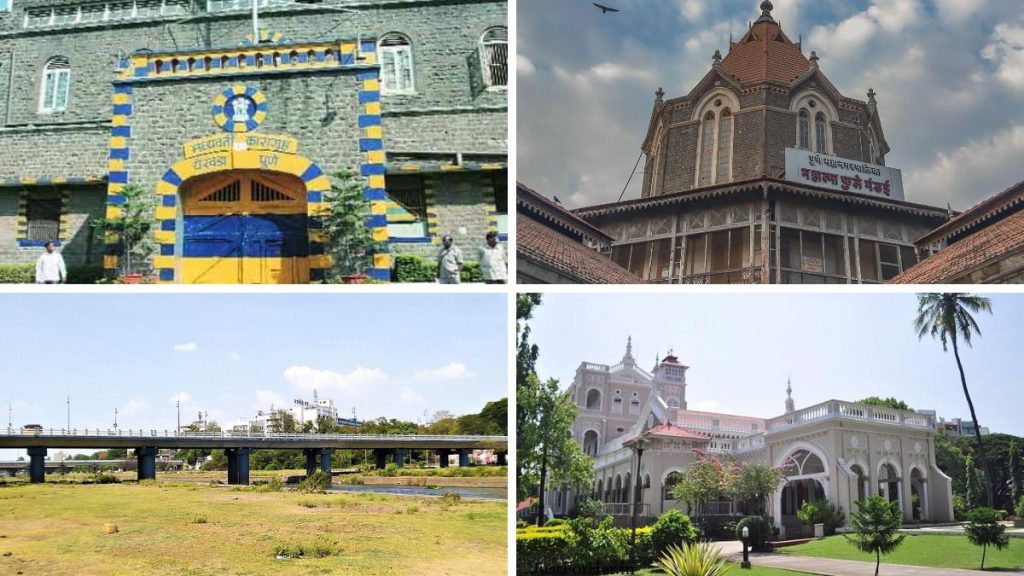
1. Aga Khan Palace, Yerawada — Where Gandhi Was Detained During the Quit India Movement
The Aga Khan Palace is among Pune’s most significant landmarks associated with India’s freedom struggle.
Built in 1892, the palace was used by the British authorities to detain Mahatma Gandhi, Kasturba Gandhi, Mahadev Desai and Sarojini Naidu during the Quit India Movement in 1942. Kasturba Gandhi and Mahadev Desai died during their detention at the palace.
Today, the premises house a memorial dedicated to Mahatma Gandhi and contain photographs, documents and personal belongings associated with Gandhi and the freedom movement. The memorials of Kasturba Gandhi and Mahadev Desai are also located within the complex.
The palace is currently listed as open from 9 am to 5:30 pm, with an entry fee of ₹25 for Indian visitors. Timings and ticket rates may change, so visitors are advised to check before planning a visit.
For anyone interested in Pune’s role in India’s independence movement, the Aga Khan Palace remains one of the city’s most important places to visit.
2. Yerawada Central Jail — Where the Poona Pact Was Signed
Yerawada Central Jail is another important site in Pune’s freedom history.
Built during British rule, the prison housed several prominent leaders of India’s freedom movement, including Mahatma Gandhi, Jawaharlal Nehru, Bal Gangadhar Tilak, Netaji Subhas Chandra Bose and Sarojini Naidu.
In September 1932, Gandhi began an indefinite fast while imprisoned at Yerawada in protest against the Communal Award and its provision for separate electorates for the depressed classes.
The negotiations that followed between Gandhi and Dr B.R. Ambedkar resulted in the Poona Pact, signed on September 24, 1932. The agreement was signed under a mango tree in the jail compound.
The tree is still associated with the historic Gandhi Yard, which has become an important part of the prison’s heritage.
Maharashtra’s jail-tourism initiative has also opened parts of Yerawada Central Jail to visitors, allowing people to see locations associated with some of the most significant episodes in India’s modern political history.
3. Kesari Wada, Narayan Peth — Where Nationalist Journalism Took Root
Kesari Wada in Narayan Peth is closely associated with Lokmanya Bal Gangadhar Tilak and the nationalist press.
Tilak was associated with Kesari, the influential Marathi newspaper established in 1881, as well as The Mahratta, its English-language counterpart. Both publications became important platforms for political debate and criticism of British rule.
The building now houses the Lokmanya Tilak Museum, where visitors can see photographs, documents, personal memorabilia and material related to Tilak and the nationalist movement.
Among the exhibits is an early Indian national flag associated with Madame Bhikaji Cama. The flag, which bears the words “Vande Mataram”, is regarded as an important artefact in the history of India’s national flag.
Kesari Wada is also closely associated with the development of the Sarvajanik Ganeshotsav movement promoted by Tilak. The public festival helped create a new space for social and political mobilisation in colonial Pune.
The wada therefore offers a glimpse into how newspapers, public festivals and political discussion were used to build nationalist consciousness.
4. Fergusson College, Deccan — Where Nationalist Ideas Took Shape
Fergusson College, established in 1885 by the Deccan Education Society, became one of Pune’s important centres of education and public debate during the colonial period.
The Deccan Education Society was founded in 1884 by prominent figures including Bal Gangadhar Tilak, Gopal Ganesh Agarkar, Vishnushastri Chiplunkar and Mahadev Ballal Namjoshi.
Tilak and Agarkar were among the institution’s early teachers. Over the years, Fergusson College became associated with several prominent figures in India’s political, intellectual and public life.
Its contribution to the freedom movement was not limited to direct political activity. The institution helped create an environment in which education, journalism, social reform and political debate flourished.
For visitors today, the campus is a reminder of Pune’s role in producing generations of Indians who questioned colonial rule and debated the country’s political future.
5. Ganesh Khind Road — The Site of the Chapekar Brothers’ Attack on Rand
Thousands of vehicles travel through the Ganesh Khind area every day, but the location has a significant place in Pune’s revolutionary history.
On June 22, 1897, brothers Damodar Hari Chapekar and Balkrishna Hari Chapekar attacked British officials returning from celebrations marking Queen Victoria’s Diamond Jubilee.
Their target was Walter Charles Rand, the British Plague Commissioner of Pune. The attack came against the backdrop of growing anger over the intrusive measures adopted by the British administration during the plague epidemic.
The plague authorities had conducted searches of homes and imposed measures that many residents considered humiliating and insensitive to local customs.
Rand was seriously injured in the attack and died on July 3, 1897. Lieutenant Charles Ayerst, who was travelling in another carriage and was also attacked, died immediately.
The Chapekar brothers were subsequently arrested and executed.
The attack became one of the early major acts of revolutionary violence against British officials in Maharashtra.
The historic Ganesh Khind Road is today associated with the Senapati Bapat Road area, making it a route where modern Pune intersects with the city’s revolutionary past.
6. Shaniwar Wada — From Peshwa Power to a Colonial-Era Political Meeting Ground
Shaniwar Wada predates India’s modern freedom movement by more than a century.
Built in 1730, it was the political centre of the Peshwa administration and a symbol of Maratha power.
Its connection with Pune’s later political awakening, however, is significant.
During the colonial period, the area around Shaniwar Wada became a venue for public meetings and political mobilisation. The controversy surrounding the Age of Consent Bill in the 1890s generated large public gatherings in Pune, involving prominent leaders and intellectuals of the period.
The historic site was also used for political meetings during a period when public spaces were becoming increasingly important to India’s emerging political movements.
Shaniwar Wada therefore represents a link between Pune’s Maratha political past and the development of modern public politics during British rule.
7. Mahatma Phule Mandai — Where Everyday Life Met the Political Unrest
Mahatma Phule Mandai was more than a marketplace during the colonial period. As one of the busiest public spaces in Pune, it became part of the city’s social and political life at a time of growing unrest.
Historical accounts of Pune’s freedom movement describe incidents in which freedom fighters were pursued by British forces through the market’s lanes during periods of unrest.
The market is named after Mahatma Jyotirao Phule, one of Maharashtra’s most influential social reformers. Phule worked extensively for education, women’s rights and the rights of oppressed communities.
His work belonged to the social reform movement rather than the later phase of the organised nationalist struggle. However, his ideas about education, equality and social justice contributed to the intellectual transformation of 19th-century Maharashtra.
For Pune, Mandai represents the intersection of everyday life, social reform and the political changes taking place in the city during the colonial period.
8. S.M. Joshi Bridge — Memories of the Swadeshi Movement
The S.M. Joshi Bridge, formerly known as Wellesley Bridge, is another location associated with Pune’s nationalist history.
During the Swadeshi movement, bonfires of foreign goods became a powerful form of protest against British economic policies. Historical accounts of Pune describe such demonstrations taking place around the bridge, with imported goods publicly burnt as a symbol of rejection of colonial economic control.
Such actions were part of a wider movement encouraging Indians to reject imported products and support locally made goods.
Today, the bridge is a busy part of Pune’s road network. Thousands of commuters cross it without necessarily knowing that the area was once associated with public demonstrations against British rule.
9. Deccan Gymkhana — Pune’s Intellectual and Political Landscape
The Deccan Gymkhana area became part of Pune’s expanding intellectual and political landscape in the early 20th century.
One of the prominent figures associated with this wider part of the city was Gopal Krishna Gokhale, a leading nationalist and founder of the Servants of India Society in 1905.
The organisation sought to train Indians for public service and social and political reform. Gokhale later became an important influence on Mahatma Gandhi, who regarded him as a political mentor.
Pune’s educational institutions, newspapers, public meetings and intellectual circles contributed to an environment in which ideas about self-government, social reform and India’s political future were debated.
The freedom movement was therefore not limited to protests and revolutionary activities. Political education, journalism and public debate also played an important role, and the Deccan Gymkhana area was part of that intellectual landscape.
10. Sassoon Hospital and the Plague Years — When a Public Health Crisis Fuelled Anger
Pune’s 1896-97 plague epidemic had consequences that went far beyond public health.
The British administration’s response included intrusive measures such as house searches, forced evacuation and segregation. These measures generated widespread resentment among sections of Pune’s population, particularly because they were seen as insensitive to local customs and personal dignity.
The anger formed part of the background to the Chapekar brothers’ attack on Rand in June 1897.
Contemporary nationalist writing, including Tilak’s Kesari, strongly criticised the government’s handling of the plague and its impact on residents. The British authorities subsequently accused Tilak of encouraging opposition to the government.
The assassination of Rand and Lieutenant Ayerst became one of the early major acts of revolutionary violence against British officials in Maharashtra.
The plague episode demonstrates how a public health crisis, when combined with coercive colonial administration, contributed to growing political anger in Pune.
Visit Pune’s Freedom Struggle Sites This Independence Day
Pune is known today for its IT parks, educational institutions, automobile industry and rapidly expanding neighbourhoods. But beneath the modern city lies a history of political debate, social reform, journalism, protest and resistance.
From the Aga Khan Palace and Yerawada Central Jail to Kesari Wada, Fergusson College and Ganesh Khind, the city’s freedom struggle history can still be traced through places that many Punekars pass every day.
This Independence Day, take some time to visit one of these sites. Walk through Kesari Wada, explore the Aga Khan Palace or learn about the history associated with Yerawada.
India’s freedom was shaped by events that took place not only in Delhi, Mumbai and Kolkata, but also in Pune — through newspapers, public meetings, social reform movements, protests, imprisonment and revolutionary resistance.
For a city that has changed dramatically over the decades, these places offer a chance to understand the people, debates and events that helped shape modern India.