Beyond the Throne : Kolhapur’s Most Stunning Escapes
By Samiccha Malik
Kolhapur, 27th June 2026: There is a royalty to Kolhapur that goes beyond its palaces and its history. It is a city and a district that carries itself with a certain confidence, an identity so strong and so specific that it is unlike anywhere else in Maharashtra. This is the home of the Mahalakshmi temple, one of the most revered goddess shrines in India. It is the birthplace of Kolhapuri chappals, worn across the subcontinent with pride. It is where the Panchganga River flows through a city that has been sacred and significant for over a thousand years. And it is where the cuisine – rich, spiced, unmistakably bold has earned a reputation that stretches far beyond the district’s borders. Kolhapur sits in the southernmost reaches of Maharashtra, where the Sahyadri mountains slope down toward Karnataka, and its landscape is as generous as its culture. Here are ten places that capture the best of this magnificent district.
1. Mahalakshmi Temple
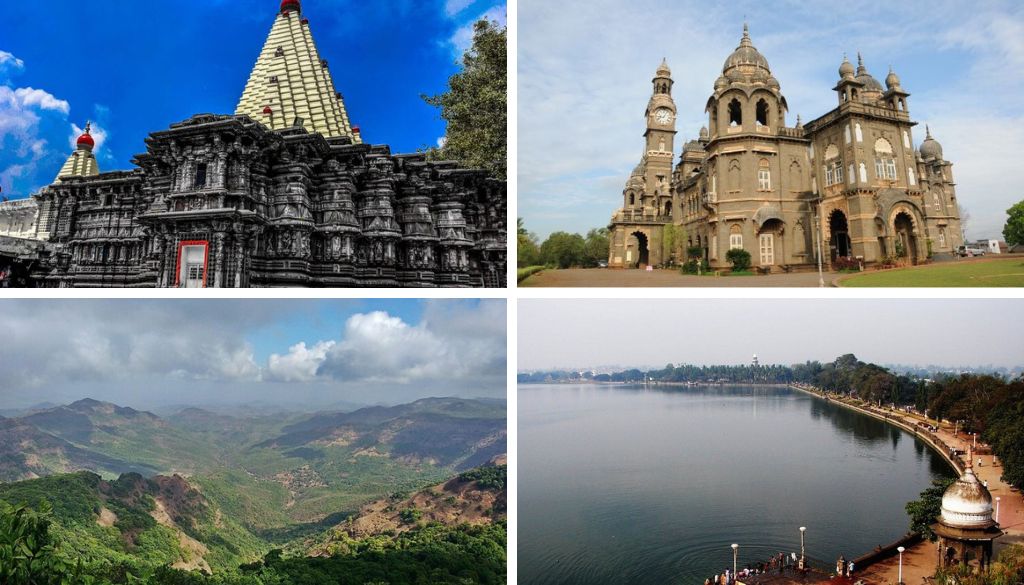
At the spiritual heart of Kolhapur city stands one of the most important goddess temples in all of India. The Mahalakshmi Temple also known as Ambabai is dedicated to Goddess Mahalakshmi, the guardian deity of Kolhapur, and is considered one of the six Shakti peethas of Maharashtra. The temple’s origins stretch back over a thousand years, and the structure as it stands today is a magnificent example of Hemadpanthi stone architecture – dark, intricately carved, and deeply atmospheric. Twice a year, in March and September, a natural phenomenon occurs known as Kirnotsav the rays of the setting sun fall directly on the idol of the goddess for three consecutive days, illuminating it in golden light without any artificial source. The temple draws thousands of devotees daily, and the experience of visiting during the evening aarti – bells, incense, devotion, the ancient stone of the inner sanctum is one of the most genuinely moving in Maharashtra.
2. New Palace & Museum
Kolhapur’s royal legacy is preserved beautifully in the New Palace a grand Indo-Saracenic structure built in 1884 during the reign of Chhatrapati Shahu Maharaj. Designed by the British architect Major Charles Mant, the palace is an architectural treasure its towers, arches, and carved stonework combining Mughal, Maratha, and European influences in a way that is entirely distinctive. A significant portion of the palace has been converted into a museum housing royal artefacts, weapons, hunting trophies, ceremonial objects, and photographs that trace the history of the Kolhapur royal family across generations. Chhatrapati Shahu Maharaj the king who ruled Kolhapur from 1894 and became one of Maharashtra’s greatest social reformers, championing the rights of backward classes decades before independence is particularly well represented here. The palace grounds are beautiful and the building itself commands attention from every angle.
3. Rankala Lake
In the heart of Kolhapur city, Rankala Lake is the district’s most beloved public space a wide, natural lake fringed by a promenade where the city comes to breathe. In the evenings particularly, Rankala is wonderfully alive; families walking the lakefront, children running near the water, the smell of street food drifting from the nearby chowpatty where local vendors sell everything from Kolhapuri misal to freshly fried bhajis. The lake itself has a quiet beauty, with the surrounding hills visible beyond the city skyline and the water catching the last light of the day in long golden ripples. Rankala is not a tourist attraction in the conventional sense it is where Kolhapur simply lives, and that is precisely what makes it worth spending time at.
4. Radhanagari Wildlife Sanctuary & Dajipur
About 65 kilometres from Kolhapur city, the Radhanagari Wildlife Sanctuary is one of the finest and most underappreciated wildlife reserves in Maharashtra. Spread across dense deciduous forest in the foothills of the Western Ghats, the sanctuary is home to a remarkable population of Indian bison – the gaur alongside leopards, sloth bears, wild boar, and an extraordinarily rich variety of bird species. The Dajipur buffer zone of the sanctuary is the most accessible for visitors and offers a genuine wildlife experience – jeep safaris through forest trails where gaur sightings are common and the forest itself is dense, ancient, and deeply beautiful. The Radhanagari Dam nearby creates a large reservoir that adds a scenic dimension to the area and supports a rich ecosystem around its banks.
5. Panhala Fort
Twenty kilometres from Kolhapur city, Panhala is one of the largest and most historically significant forts in the Deccan. Built in the twelfth century by the Shilahara dynasty and later controlled by the Bijapur Sultanate, Adilshahi rulers, and ultimately the Marathas, Panhala played a crucial role in the life of Chhatrapati Shivaji Maharaj. It was from Panhala, in 1660, that Shivaji made one of his most celebrated escapes slipping through a Bijapur siege in the middle of the night, with the loyal Baji Prabhu Deshpande holding back the pursuing army at Ghod Khind to give Shivaji time to reach Vishalgad. The fort today is a large, well-preserved complex with massive gateways, stone granaries, and views across the surrounding plateau and hills that are among the finest in Kolhapur district. The town within the fort is still inhabited, giving Panhala a rare living quality that most fort ruins lack.
6. Jyotiba Temple
Eighteen kilometres from Kolhapur, on a hill that rises above the surrounding plains, the Jyotiba Temple is one of the most vibrant and devotionally energetic pilgrimage sites in Maharashtra. Dedicated to Jyotiba a deity worshipped primarily in the Kolhapur and Sangli regions – the temple is a complex of multiple shrines built in the Maratha style, painted white and gold and visible from a considerable distance. The annual Jyotiba Yatra, held in April and May, draws hundreds of thousands of devotees who make the climb to the hilltop carrying palanquins and offerings in a procession of extraordinary colour and devotion. The views from the hilltop across the Kolhapur plains are excellent, and the atmosphere at the temple, particularly during festival time, is one of the most exuberant in the entire district.
7. Vishalgad Fort
Deep in the Sahyadri hills to the west of Kolhapur, Vishalgad is the fort to which Chhatrapati Shivaji Maharaj made his legendary escape from Panhala in 1660- the escape that Baji Prabhu Deshpande gave his life to protect. The fort sits at 3,500 feet on a commanding ridgeline and offers dramatic views across the forested hills in every direction. The Hazrat Malik Rehan Dargah within the fort complex – a Muslim shrine that Shivaji himself reportedly respected and protected is a remarkable symbol of the Maratha leader’s well-documented policy of religious tolerance. The road to Vishalgad passes through some of the most beautiful forested landscape in Kolhapur district, and the fort itself, while partially ruined, retains an atmosphere of tremendous historical gravity.
8. Siddhagiri Gramjivan Museum
Fourteen kilometres from Kolhapur city, within the campus of the Siddhagiri Math at Kaneri, is one of the most unusual and fascinating museums in Maharashtra. The Siddhagiri Gramjivan Museum is a sprawling, open-air installation of over three hundred life-size wax and cement statues depicting traditional village life in Maharashtra before the modern era – farmers at work, weavers at their looms, potters shaping clay, women grinding grain, children at play. The level of detail is extraordinary, and the museum covers seven acres of landscaped grounds. The project was inspired by the vision of Mahatma Gandhi’s dream of self-sufficient village communities and was created under the auspices of the Siddhagiri Gurukul Foundation. Walking through it is an immersive and genuinely moving encounter with a way of life that is rapidly disappearing.
9. Kopeshwar Temple, Khidrapur
At the very southern edge of Kolhapur district, on the banks of the Krishna River where Maharashtra meets Karnataka, stands the Kopeshwar Temple at Khidrapur one of the finest examples of Chalukyan stone temple architecture in the entire country. Built in the twelfth century, the temple is dedicated to Lord Shiva and is covered, inside and out, in carvings of such extraordinary intricacy and quality that they rival the famous temples of Belur and Halebidu in Karnataka. Celestial beings, mythological scenes, floral patterns, and divine figures cover every surface in a profusion of stone artistry that is genuinely breathtaking. The temple sits right on the riverbank with Karnataka visible across the water – a geographical boundary that means nothing to the beauty of what was built here centuries before those boundaries existed.
10. Kolhapuri Chappal Artisans : The Living Craft
No visit to Kolhapur is complete without an encounter with its most famous creation. The Kolhapuri chappal – a handcrafted leather sandal of deceptively simple appearance and extraordinary durability has been made in this district for centuries and is worn across India and exported around the world. The craft is alive and practiced by artisan communities in Kolhapur city and the surrounding villages, and visiting one of the traditional workshops where craftsmen cut, stitch, and assemble these sandals by hand is an experience that connects you to a living tradition of remarkable skill. The Shetkari Bazaar and the lanes around the old city are the best places to watch craftspeople at work and to buy directly from the makers something that gives the purchase a meaning that no shop or online listing can replicate.
Best Time to Visit
October to March is Kolhapur’s finest season – cool, dry weather that is ideal for temple visits, fort treks, and wildlife safaris at Radhanagari. The Jyotiba Yatra in April and May is worth planning a visit around despite the warmer temperatures – the scale and colour of the festival is extraordinary. The monsoon from June to September transforms the Sahyadri landscape beautifully and is the best time to experience the forests of Radhanagari and the hills around Vishalgad and Panhala.
Getting There
Kolhapur is well connected by road and rail. The Kolhapur Railway Station has direct connections to Mumbai, Pune, and major cities across Maharashtra and beyond. The Kolhapur Airport offers domestic flights to Mumbai and other cities. The district is also accessible via the Mumbai-Bangalore National Highway which passes through the region.
Kolhapur is a district that wears its identity with complete confidence sacred and royal, bold and artisanal, wild and warmly hospitable all at once. It is the kind of place that gets into your bones quietly, and the kind you find yourself recommending to everyone you know long after you have come home.