Beyond the Vines : Nashik District’s Most Stunning Escapes
By Samiccha Malik
Nashik, 11th June 2026: Nashik is a city of beautiful contradictions. It is one of Hinduism’s most sacred pilgrimage destinations – a city where the Godavari River was born, where the Kumbh Mela draws millions every twelve years, and where ancient temples line the riverbanks in quiet, enduring devotion. And yet it is also India’s wine capital, a landscape of rolling vineyards, sun-drenched grape estates, and cellar doors where glasses are raised against the backdrop of the Western
Ghats. Add to this picture a district full of commanding hill forts, dramatic waterfalls, forested hill stations, and one of Maharashtra’s most beloved pilgrimage shrines and you begin to understand why Nashik rewards visitors regardless of what they are looking for. It is a district that holds its many identities with remarkable ease. Here are ten places that capture it best.
1. Trimbakeshwar Temple
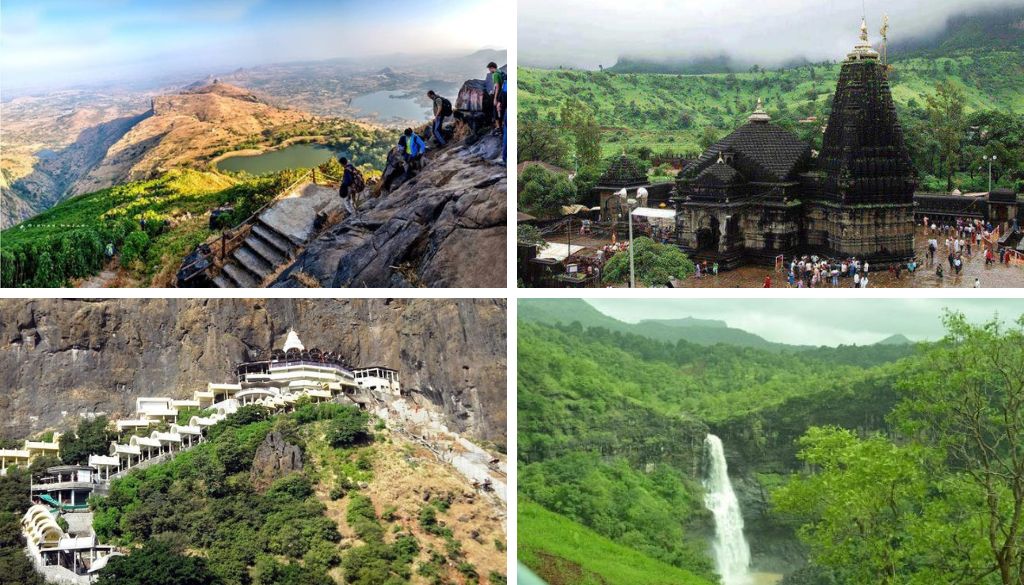
Twenty-eight kilometres from Nashik city, at the foot of the Brahmagiri mountain where the Godavari River has its source, stands one of the most sacred Hindu shrines in India. Trimbakeshwar is one of the twelve Jyotirlingas – the holiest Shiva temples in the country and its significance in Hindu tradition is difficult to overstate. The temple itself is a magnificent structure built in dark Hemadpanthi stone, its towering shikhara rising above the town in a way that commands the eye from every direction. What makes Trimbakeshwar uniquely special among all Jyotirlingas is the linga within it bears three faces, representing Brahma, Vishnu, and Shiva together. Pilgrims come from across the country to offer prayers here, and the atmosphere particularly during the early morning aarti when the sound of bells
fills the valley is one of the most profoundly moving in Maharashtra.
2. Sula Vineyards
Few things in Maharashtra surprise first-time visitors quite as much as discovering that the state has a thriving wine country and that its finest expression is found just outside Nashik city. Sula Vineyards, established in 1999 on a gentle hillside overlooking a lake, is the most celebrated name in Indian wine and a remarkable
destination in its own right. The vineyard offers tours of its winemaking facility, tasting sessions where glasses of Riesling and Shiraz are poured against the backdrop of the Sahyadri hills, and an annual SulaFest music festival that draws thousands of visitors every February. Even for those who do not drink, the landscape of the vineyard rows of vines stretching across undulating terrain, the lake glittering below is genuinely beautiful. Nashik has over twenty wineries today, but Sula remains the one that put Indian wine on the map.
3. Panchavati & Ramkund
Long before Nashik became India’s wine capital, it was and remains a city of deep Ramayana significance. Panchavati, the area along the Godavari’s banks within Nashik city, is believed to be the place where Lord Rama, Sita, and Lakshmana lived during their years of exile. The Ramkund a sacred bathing tank on the Godavari has been a place of pilgrimage for centuries, its steps worn smooth by millions of feet. The Kalaram Temple nearby, housing a striking black stone idol of Lord Rama, is one of the most important shrines in the city. Walking through Panchavati at dawn, with the river flowing gently below the ghats and temple bells carrying across the water, is an experience that connects you to a history far older than anything written in modern records.
4. Harihar Fort
Among all the trekking destinations in Nashik district, Harihar stands in a category of its own. The fort is not particularly large but the route to reach it is unlike anything else in Maharashtra. The final ascent involves climbing a near-vertical rock face cut with steps chiselled directly into the cliff, some sections inclining at angles that make your heart rate climb even before the views arrive. The fort at the top is a beautifully preserved structure with carved caves, a Shiva temple, and panoramic views across the surrounding valley that reward every difficult step of the climb. Harihar is not for the faint of heart but for those who attempt it, it is one of the most memorable treks in the Sahyadris.
5. Igatpuri
Fifty-one kilometres from Nashik city on the Mumbai-Agra highway, Igatpuri is a hill town that sits in the Sahyadris at an elevation of about 1,900 feet and wears its natural beauty with complete confidence. The landscape around Igatpuri is magnificent – forested hills, misty valleys, rivers cutting through rock, and in the monsoon, waterfalls appearing on every hillside. The town is also internationally known as the home of the Vipassana International Academy, one of the world’s most respected meditation centres, which has been drawing practitioners of silent meditation from across the globe for decades. The Tringalwadi Fort nearby offers a rewarding trek and extraordinary views. The Bhatsa River Valley and the Arthur Lake add further layers of scenic beauty to a town that needs very few
introductions once you arrive.
6. Saptashrungi Temple
Sixty kilometres from Nashik city, the Saptashrungi temple is one of Maharashtra’s most revered goddess shrines and its setting is among the most dramatic of any temple in the state. The temple is dedicated to Goddess Saptashrungi, believed to be one of the three and a half Shakti peethas of Maharashtra, and is carved into the face of a cliff on the Saptashrungi mountain, surrounded by seven peaks from which it takes its name. The climb to the temple over five hundred steps up
the rock face, with the valley dropping away below and the peaks rising above is itself an act of devotion. The views from the temple are extraordinary, and the spiritual energy of the place is palpable regardless of one’s personal faith.
7. Dugarwadi Waterfall
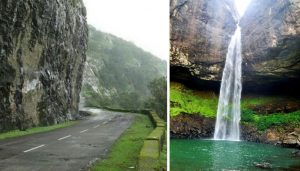
Thirty kilometres from Nashik city, hidden within dense forest that requires a short trek to penetrate, Dugarwadi is one of those waterfalls that rewards the effort of reaching it more than generously. The cascade drops from a considerable height into a pool below, surrounded by forest so thick and green during the monsoon
months that the light takes on an almost underwater quality. The trek to reach it winds through rock and tree root and stream crossing it is not difficult but it is proper outdoor walking rather than a roadside stop. Dugarwadi is far less visited than it deserves to be, which means you can often have it largely to yourself – a rare luxury when standing in front of one of Nashik’s most beautiful natural sights.
8. Anjaneri Hill
Anjaneri is a place of both natural and mythological significance that sits about eighteen kilometres from Trimbakeshwar. The hill is believed, according to Hindu tradition, to be the birthplace of Lord Hanuman – a claim that makes it an important pilgrimage site drawing devotees throughout the year. But even setting aside its mythological significance, Anjaneri is a rewarding destination. The trek to the top passes through forest and open plateau, the views from the summit take
in the surrounding Sahyadri landscape in every direction, and the small temple at the top adds a moment of quiet contemplation to the end of the climb. Anjaneri is a place where the sacred and the scenic are completely inseparable.
9. Gangapur Dam
Eight kilometres from Nashik city, the Gangapur Dam on the Godavari River is one of the district’s most popular and accessible natural retreats. The reservoir stretches across a wide, pleasant landscape of hills and farmland, and the area around it particularly the garden and viewpoint maintained near the dam wall is ideal for an unhurried afternoon. The dam is most dramatic in the monsoon when the overflow gates are opened and water thunders through the spillway in a
spectacle that draws visitors from across the district. Outside monsoon season, the calm stretch of the reservoir, the surrounding greenery, and the easy accessibility make Gangapur a dependable and genuinely lovely spot for anyone spending time in Nashik.
10. Salher Fort
For serious trekkers, Salher is the ultimate destination in Nashik district and for good reason. Standing at an elevation of approximately 5,400 feet, Salher is the highest fort in the Sahyadri range and among the highest points in Maharashtra. The fort carries significant Maratha history – it was the site of the Battle of Salher
in 1672, one of the first major open-field victories of the Maratha army against the Mughal forces. The trek to the summit is long and demanding, passing through forest and open ridgeline, but the views from the top are simply extraordinary – a vast panorama of hills, valleys, and on a clear day, a horizon that seems to stretch without limit. Salher rewards preparation and effort with one of the finest high-altitude experiences in the entire Western Ghats.
Best Time to Visit
October to February is Nashik’s finest season cool, dry weather ideal for temple visits, fort treks, and vineyard tours. The SulaFest music festival in February adds a vibrant cultural dimension to visits during that month. The monsoon from June to September transforms the landscape beautifully – waterfalls emerge across the district and the Sahyadri hills turn intensely green making it the best time for trekking and nature exploration. Summers from March to May are warm but the grape harvest season adds its own charm to vineyard visits in the earlier part of this period.
Getting There
Nashik is well connected by road and rail. The Nashik Road Railway Station serves as the main rail hub, with connections to Mumbai, Pune, Delhi, and major cities across India. The Ojhar Nashik International Airport handles domestic flights to several major cities. The Mumbai-Agra National Highway passes directly through the district, making road access from Mumbai and Pune straightforward and comfortable.
Nashik is a district that refuses to be defined by a single identity. Sacred and spirited, ancient and surprisingly modern, it is a place where you can offer prayers at a Jyotirlinga in the morning and raise a glass of locally grown wine by evening and feel, somehow, that both experiences belong to the same extraordinary place.