Debate Tipu Sultan Through Facts, Not Violence, Says Activist Amid BJP–Congress Tension in Pune
By Anwar Shaikh
Pune, 16th February 2026: Shivaji Maharaj’s legacy stands for harmony, and it is time to address misconceptions surrounding Tipu Sultan while strongly condemning the recent violence in Pune.
The incident that occurred in Pune on Sunday should not be viewed merely as a reaction to a political statement; it reflects a broader test of social tolerance and historical understanding. Social activist and political analyst Anwar Shaikh stated that inflaming public sentiment without adequate study of history can be harmful to any community.
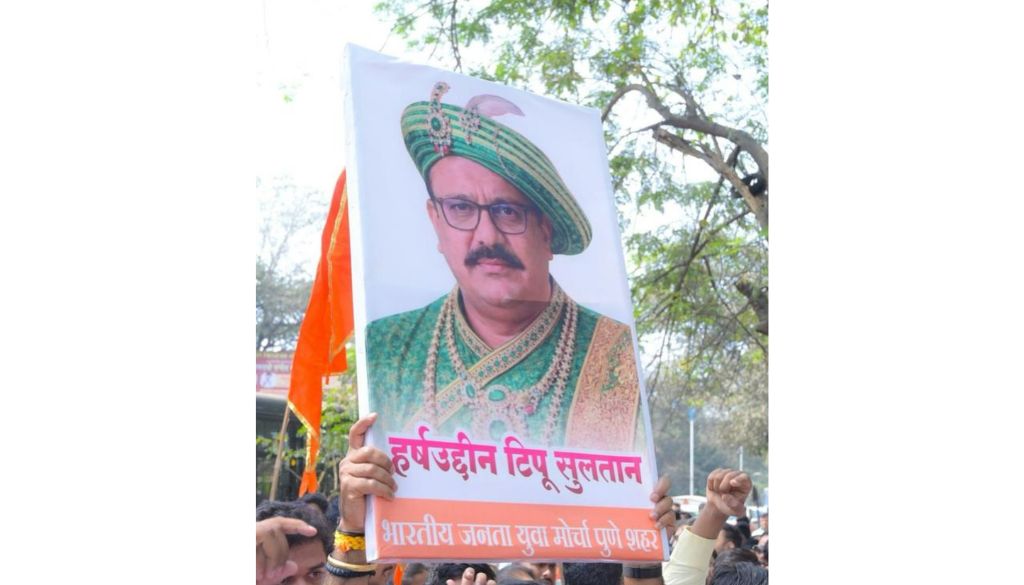
Following remarks attributed to Maharashtra Pradesh Congress President Harshvardhan Sapkal, tensions reportedly escalated. A march was taken out by BJP activists, and incidents of stone-pelting near Congress Bhavan led to damage to vehicles and injuries to citizens — developments that Shaikh described as unworthy of a democratic society. He stressed that ideological disagreements should be resolved through dialogue rather than confrontation on the streets.
Chhatrapati Shivaji Maharaj is a deeply revered historical figure in Maharashtra, but Shaikh noted that his principles emphasised justice and protection rather than conflict. Historian Sir Jadunath Sarkar wrote: “Shivaji’s policy was not communal; he respected both temples and mosques.” According to Shaikh, this interpretation reflects a legacy rooted in coexistence and respect for all faiths.
Historical Perspectives on Tipu Sultan
Shaikh said that public discourse often contains misconceptions about Tipu Sultan, who is sometimes portrayed solely through a religious lens, whereas several historians present a more complex assessment.
Historian Mohibbul Hasan, in his work History of Tipu Sultan, wrote: “Tipu Sultan’s wars were political conflicts against expanding empires, not a campaign against a religion.”
Researcher B. Sheikh Ali, drawing on Mysore records, noted that archival evidence shows grants to several Hindu temples and the appointment of Hindus to senior administrative positions during Tipu Sultan’s rule.
Historian K. A. Nilakanta Sastri also observed in his writings on South Indian history that Tipu Sultan continued earlier traditions of patronising religious institutions, including temples.
Shaikh added that certain Government of India publications have listed Tipu Sultan among early Indian rulers who resisted British colonial expansion, describing him as a prominent opponent of imperial rule. He emphasised that historical understanding should be based on documented evidence rather than hearsay.
Condemnation of Violence
Shaikh stated that acts such as stone-pelting do not honour any historical figure. Resorting to violence in the name of Shivaji Maharaj, he argued, contradicts the ideals associated with his legacy. Differences, he said, must be addressed through dialogue rather than actions that inflame tensions.
In his concluding appeal, Shaikh urged political parties, workers and citizens to exercise restraint, avoid reacting to incomplete information, and form opinions only after studying historical sources. He noted that Pune has long been known for its tradition of intellectual discourse and reasoned debate, and preserving that tradition is a shared civic responsibility.
(Anwar Shaikh is a Social Activist and Political Analyst based in Pune. He can be reached on email: [email protected])