Riding from the Cantle: A Lesson in Leadership Maturity
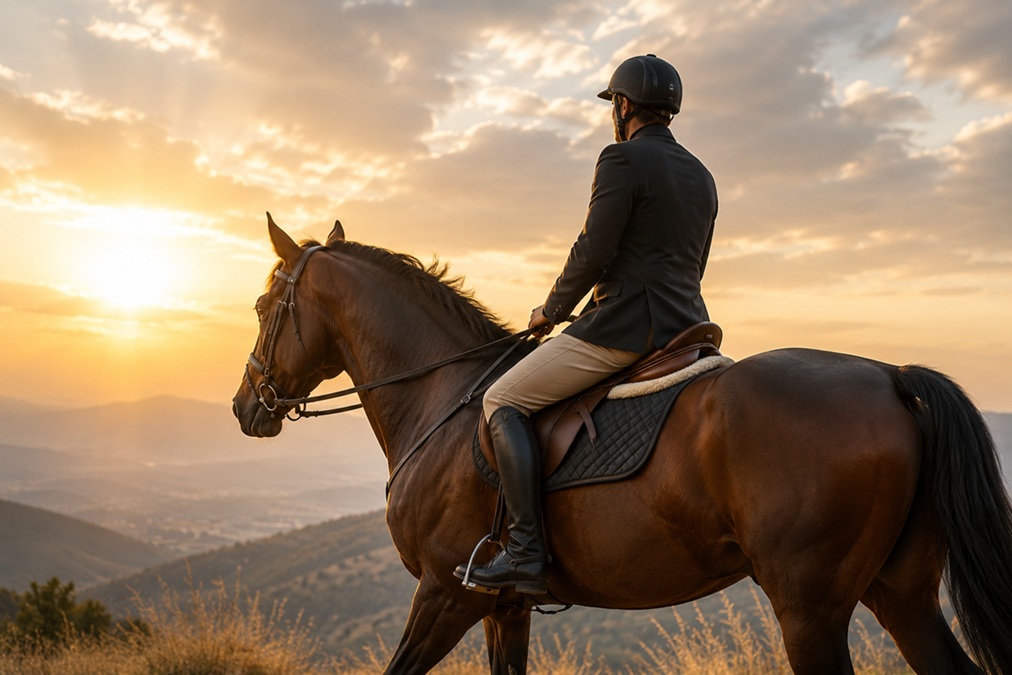
“True leadership is not about appearing busy, it’s about being effective; it is not about controlling every movement, it’s about guiding the overall direction.”
Brig Akashdeep Bhanot, SM (Retd)
Pune, 19th July 2026: In mid-2011, I shed my role as a Horsed Cavalryman at the helm of The President’s Bodyguard (PBG) and moved to the Armoured Corps Centre and School (ACC&S), Ahmednagar. ACC&S is the alma mater of the erstwhile Indian Cavalry (present day Armoured Corps) and prides itself for having a horsed legacy. While with the PBG for three years, I had spent most of my waking hours with horses and was privileged to have lived the horsed cavalry life, understandably absent in the tanks equipped Armoured Corps.
On reporting at ACC&S, I went around the campus that was far more elegant and worthy than I had seen before. When I first entered “Saddleback”, a multi-facility complex, a beautiful sight lay before me. In the middle of the foyer was a horse saddle on a wooden frame, facing the Conference Room door. The frosted glass wall next to the door had the term “CANTLE” etched on it – just brilliant, I thought. What better name could have been assigned to such an important room where intense cerebral indulgence led to important decisions for this great institution and the Corps.
Asking the young officers present in the foyer what Cantle meant, drew not a single correct answer. So much so for their claims at being the cavalry. I had to enlighten them on the parts of a saddle – pommel being the raised front of the saddle and cantle, the back of the saddle.
Recently, reminiscing about this incident, I realised how “Riding from the Cantle” resonated with leadership, a field I have been dwelling upon through various platforms. Let’s see how.
In the world of horsemanship, subtle posture reveals profound truths. To the untrained eye, a rider is simply someone mounted on a horse, guiding it forward. But to those who understand the craft, where a rider sits – whether leaning forward towards the pommel or resting back near the cantle – tells a story about experience, confidence and control.
The pommel often attracts the novice rider. It feels safer there. Leaning forward, gripping tightly, eyes fixed ahead, the rookie rider seeks control through tension. The horse senses this urgency, sometimes responding with nervous energy of its own. The ride becomes reactive, hurried and often inefficient.
In contrast, experienced horsemen sit deeper, closer to the cantle. Their posture is relaxed, but not careless; attentive, but not anxious. They do not clutch at control, they embody it. Their weight is balanced, their movements measured and their commands subtle. The horse responds not to force, but to presence. This distinction offers a powerful metaphor for leadership in modern organisations.
The Rookie Leader Leans on the Pommel
Young or inexperienced leaders often resemble the rider “perched near the pommel.” Eager to prove themselves, they lean forward into every situation. They act quickly, speak often and intervene frequently. Their intentions are rarely misguided, but their approach can betray a lack of depth. Ambition, energy and a desire to succeed, drive them.
Such leaders often equate action with effectiveness. They believe that decisiveness must be immediate, that silence signals weakness and that control is maintained through constant involvement. Like the novice rider gripping the saddle, they hold on tightly to decisions, people and processes.
This over-eagerness manifests in premature decision-making, avoidable micromanagement, reactive leadership and emotional volatility. While this style may produce short-term results, it often creates long-term instability. Teams feel constrained and innovation suffers, while the leader becomes exhausted.
The Seasoned Leader Rests on the Cantle
Experienced leaders, much like the seasoned rider, understand that leadership is not about constant motion; it’s about controlled direction. By “resting on the cantle,” they demonstrate confidence not only in themselves, but also in the system around them.
This does not mean passivity. On the contrary, it reflects a deeper level of engagement that prioritises awareness over impulse. Such leaders think deliberately, as well as display calm and patience, that inspires their teams to deliver optimally.
The experienced rider does not need to pull hard on the reins to steer the horse. A slight shift in weight, a gentle cue (even a reassuring sound) or a moment of stillness can communicate intent. Similarly, an effective leader influences through clarity, consistency and composure, rather than constant intervention.
The Power of Sitting Back
“Sitting back” in leadership is often misunderstood. It’s not about disengagement or indifference. In today’s fast-paced corporate environments, where there is immense pressure to act quickly, it’s about creating space to think, to observe and to respond rather than react.
When leaders rest back metaphorically on the cantle, they gain perspective that reduces noise, improves judgement and builds trust. The irony is that slowing down often leads to faster, more effective outcomes. Just as a balanced rider enables the horse to move more fluidly, a composed leader enables the organisation to function more efficiently.
The Transition From Pommel to Cantle
Every leader begins somewhere. The rookie phase is not a flaw; it’s a necessary stage of growth. The challenge lies in transitioning from the pommel to the cantle. This transition requires conscious effort in terms of developing self-awareness, gaining experience and reflection.
Importantly, this shift is not about losing energy or enthusiasm. It is about channelling that energy more effectively. The goal is not to suppress initiative, but to temper it with wisdom.
Balancing Urgency and Patience for Young Leaders
The art of leadership, like horsemanship, lies in knowing when to shift the weight. The key lies in balance. Constantly leaning forward leads to fatigue and instability, while always sitting back can result in missed opportunities. Just as the most experienced riders will adjust their posture when the terrain changes, there are moments when an experienced leader must lean forward when urgency demands immediate action, when crises require swift decisions or when opportunities must be seized quickly.
Experienced leaders develop this instinct over time. They learn to read the environment, anticipate challenges and adjust their approach accordingly. Young leaders would benefit from embracing this mindset early in their careers. The urge to prove oneself is natural, but it must be balanced with the discipline to listen, observe, think and then respond; to be sure it is the right moment to act.
In Sum
The horse and rider move as one when there is harmony between control and trust. The rider does not dominate the horse, rather partners with it. Similarly, effective leadership is not about exerting authority at every turn, it’s about creating alignment and momentum.
The rookie rider clings to the pommel, seeking control through proximity. The seasoned rider rests on the cantle, demonstrating control through balance.
In leadership, as in riding, how and where you sit determines how you lead.
Choose wisely.