Does Moringa Have 17 Times More Calcium Than Milk? Here’s How to Include It in Your Diet for Stronger Bones
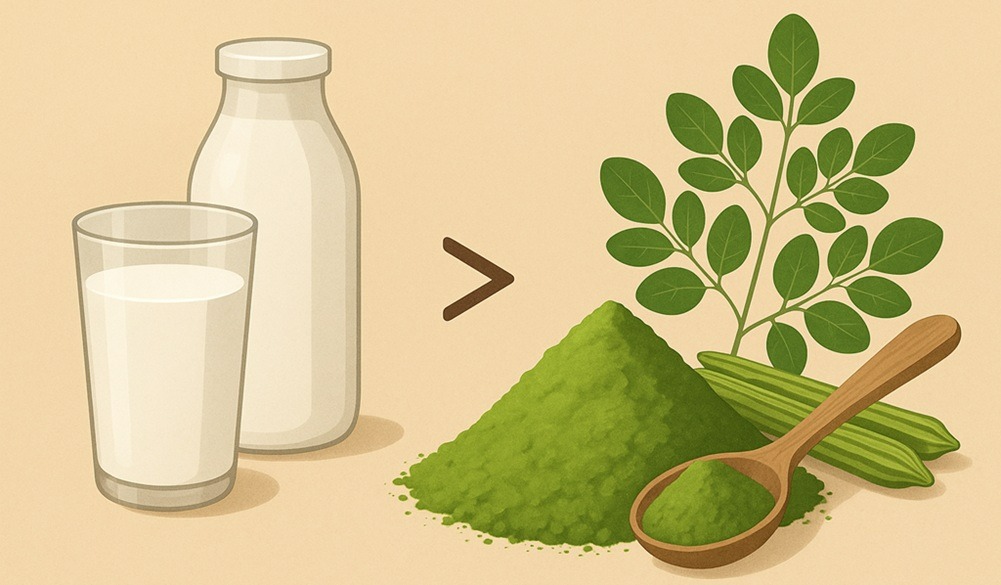
Pune, 26th August 2025: Did you know there is a plant that contains many times more calcium than milk? We are talking about Moringa, also known as drumstick or sahjan. This superfood is not only rich in calcium but is also packed with vitamins, minerals, and other essential nutrients. Here’s how you can include it in your diet to strengthen your bones and support overall health.
If you rely solely on milk for calcium, you could be missing out on a highly nutritious alternative. Studies have shown that dried moringa leaves contain 17 times more calcium than milk, making it a powerful addition to your diet.
Moringa is more than just a plant; it is a nutritional powerhouse that can address multiple health concerns. Let’s explore why moringa is so beneficial and how you can incorporate it into your daily meals.
Does Moringa Really Have 17 Times More Calcium Than Milk?
According to the International Journal of Food and Science, moringa leaves provide essential nutrients required to maintain good health. Along with calcium, they are rich in vitamins A, B, C, D, and E.
A blessing for bones: Dried moringa leaves contain 17 times more calcium than milk. Regular consumption helps strengthen bones, prevent osteoporosis, and keep teeth healthy.
Excellent source of iron and zinc: Moringa is also rich in iron, which combats anemia, and zinc, which boosts immunity and supports growth and development.
Packed with vitamins: Its wide range of vitamins helps maintain energy levels and supports various bodily functions.
How to Include Moringa in Your Diet
Moringa powder: Dried moringa leaves are ground into powder. Mix a spoonful in a glass of water and drink it on an empty stomach in the morning. It can also be added to smoothies, soups, or lentils, making it one of the easiest and most popular ways to consume moringa.
Vegetables and soups: Use moringa pods or leaves to prepare curries, stir-fries, or soups. Moringa soup is especially nutritious and comforting during the winter months.
Parathas and rotis: Add moringa powder to flour to make parathas or rotis, boosting both flavor and nutrition.
Salads and raita: Sprinkle moringa powder in salads or yogurt-based raita for an easy nutritional upgrade.
Tea: Boil moringa leaves in water to make a herbal tea. Add honey or lemon to enhance the taste.
Moringa is versatile, nutrient-dense, and easy to incorporate into daily meals, making it a natural choice for stronger bones and better overall health.