DSK MUN 2025: Fostering Leadership and Global Citizenship Beyond Classrooms
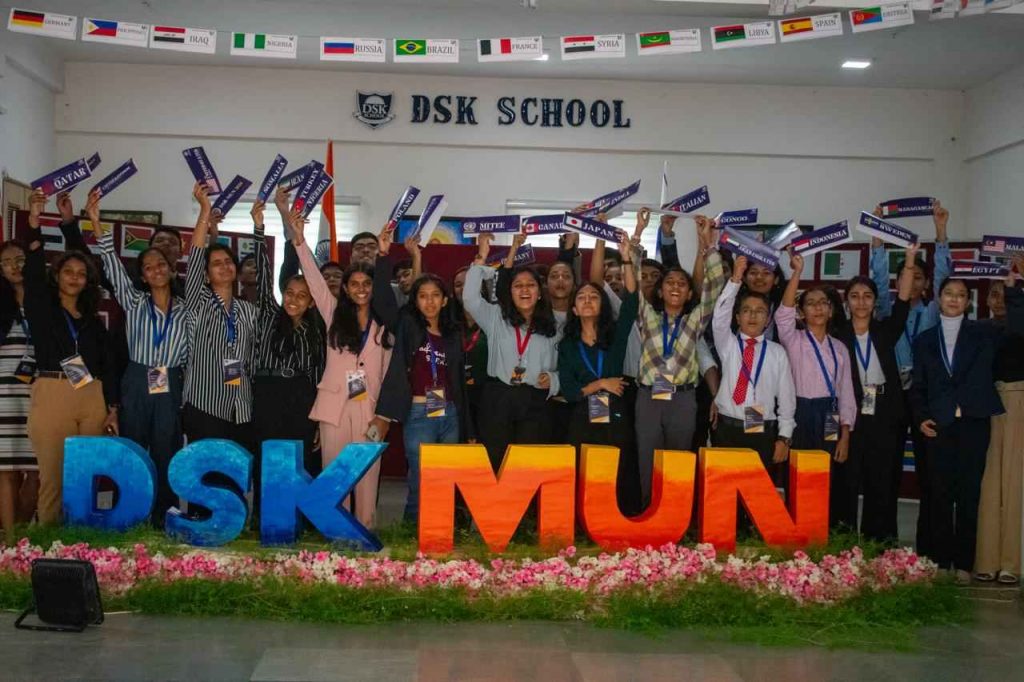
Pune, 16th July 2025: At a time when Indian education is often reduced to marksheets and standardized assessments, DSK School in Pune is carving a unique path—emphasizing leadership, inclusivity, and global thinking. This vision came to life during the third edition of its flagship event, DSK MUN 2025, held from July 12 to 14, which saw students take on pressing global issues through dialogue, diplomacy, and ethical leadership.
Organised under the aegis of the D.S. Kulkarni Education Trust, the Model United Nations (MUN) conference brought together students from varied social and academic backgrounds. Participants debated and drafted resolutions on topics such as digital privacy, orbital debris, climate change, and refugee rights, simulating real-world global negotiations with impressive depth and passion.
But DSK MUN went beyond intellectual discourse. One of the most powerful highlights was the Underprivileged Committee Day, which opened its doors to students from marginalised communities, allowing them to participate in a simulated Maharashtra Legislative Assembly.
This unique initiative reinforced the school’s commitment to inclusive leadership and provided a rare platform for students from underserved backgrounds to express, engage, and envision change.
“At DSK, we are not just preparing students to crack exams — we are preparing them to tackle global challenges with empathy, intellect, and courage,” said a senior faculty member. The school’s infrastructure backs this vision with features like a student-run radio station, foreign language programs, smart classrooms, and a well-stocked library. A low student-teacher ratio ensures individual attention and guidance that nurtures both academic and personal growth.
Students participating in DSK MUN 2025 described the event as transformational. “It taught me how to think beyond my perspective, listen better, and communicate more clearly,” said one student delegate. Another added, “This was not just about debate; it was about learning to lead with purpose.”