Economics Labs Must in Every College, Says SPPU Expert at Pune Workshop
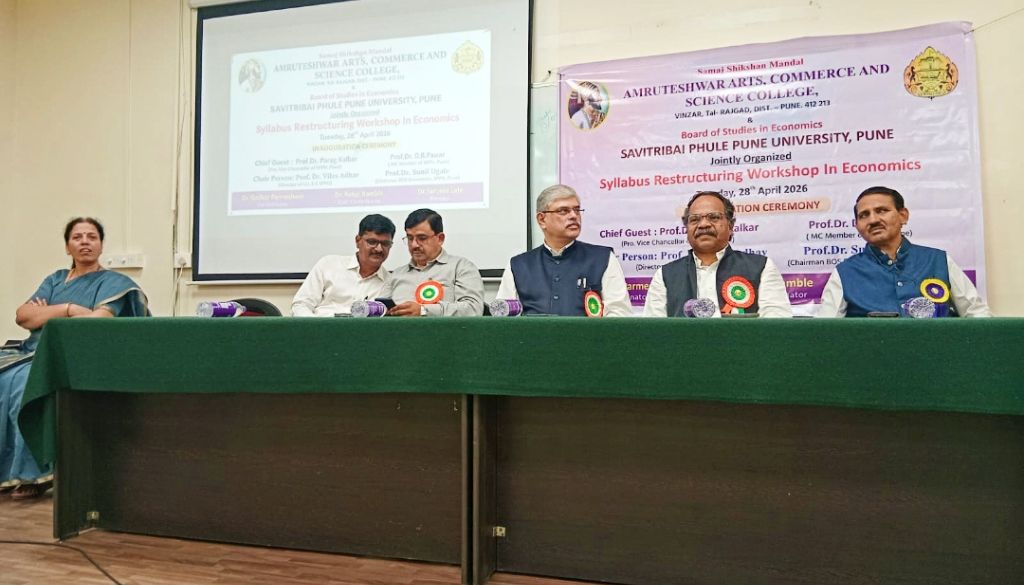
Pune, 29th April 2026: A one-day syllabus restructuring workshop was organised by the Board of Studies in Economics at Savitribai Phule Pune University (SPPU) under its Quality Improvement Programme, in collaboration with Samaj Shikshan Mandal Vinzar’s Amruteshwar Arts, Commerce and Science College in Velhe taluka.
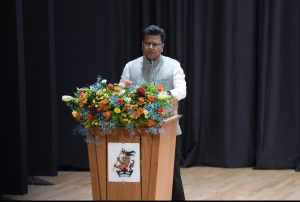
Addressing the workshop, Prof. Dr. Vilas Adhav, former Head of the Economics Department at SPPU and Director of the School of Education, stressed the need to modernise economics education in line with emerging technologies such as Artificial Intelligence and Machine Learning. He said establishing an Economics Laboratory in every college is now essential for effective learning and research.
Presiding over the session, Dr. Adhav said economics education must evolve to bridge the gap between theory and industry requirements. He noted that students should be equipped with an AI-ready curriculum and access to data-driven research facilities to improve employability. “Economics is the art of balancing life’s financial decisions from birth to death. Integrating modern tools with education will help students adapt to global job markets,” he said.
He clarified that an Economics Laboratory should function as a research hub rather than merely a computer room. Such labs would enable students to test economic theories and models using real-world data. Key components include experimental economics to study decision-making behaviour, integration of statistical tools such as STATA, SPSS, R, Python, EViews and Excel, and econometric analysis to assess economic trends. Access to global databases like those of the World Bank, Reserve Bank of India, Centre for Monitoring Indian Economy (CMIE) and National Sample Survey Office (NSSO) was also highlighted as crucial.
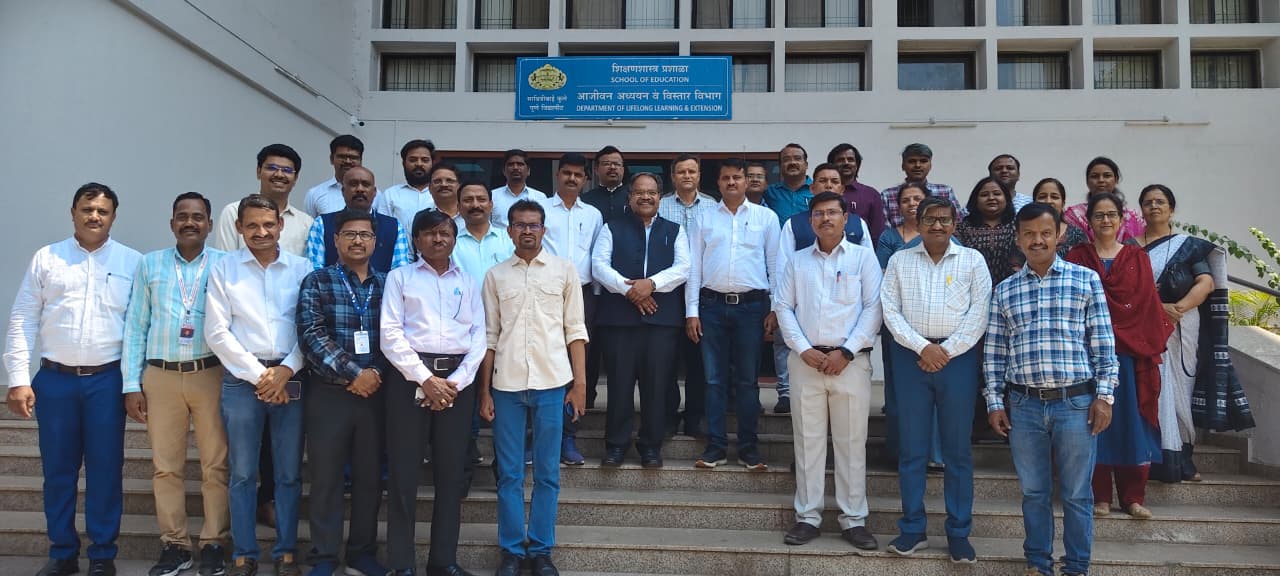
Speakers at the workshop outlined the benefits of institutionalising such laboratories, including improved practical understanding of market dynamics, enhanced research capabilities for postgraduate and doctoral students, and better career readiness in roles such as data analysts and professional economists.
Dr. Adhav also called for curriculum reforms, advocating a balance between global economic theories and Indian perspectives. While acknowledging contributions of economists such as Adam Smith, David Ricardo, John Maynard Keynes and John Stuart Mill, he emphasised the inclusion of Indian thinkers including Dr. B.R. Ambedkar, Mahatma Gandhi, Justice M.G. Ranade, Gopal Krishna Gokhale and Mahatma Jyotiba Phule. He specifically referred to Ambedkar’s work “The Problem of the Rupee” as an important addition to the syllabus.
He further stressed the importance of regular feedback mechanisms and integrating fieldwork with digital tools to strengthen conceptual understanding. “Using practical applications alongside digital tools to explain concepts like demand and supply can significantly improve student learning outcomes,” he added.
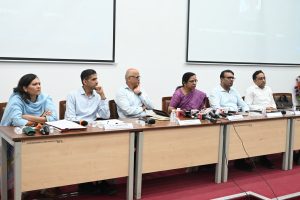
The workshop was attended by several academic leaders, including Dr. Parag Kalkar, Pro-Vice-Chancellor of SPPU; Prof. Dr. D.B. Pawar, Management Council Member; Prof. Sunil Ugle, Chairman of the Board of Studies in Economics; Principal Dr. Sanjay Late; and Principal Dr. Devidas Waydande.
Faculty members Mahadev Dongre, Dr. Parmeshwar Gadkar, Dr. Sangita Salve, Dr. Mahadev Shinde, Dr. Namdeo Doke, Dr. Somnath Patil and Dr. Nitin Ade contributed to organising the event.