Energy Drinks Still Sold Outside Pune Schools Despite Government Crackdown
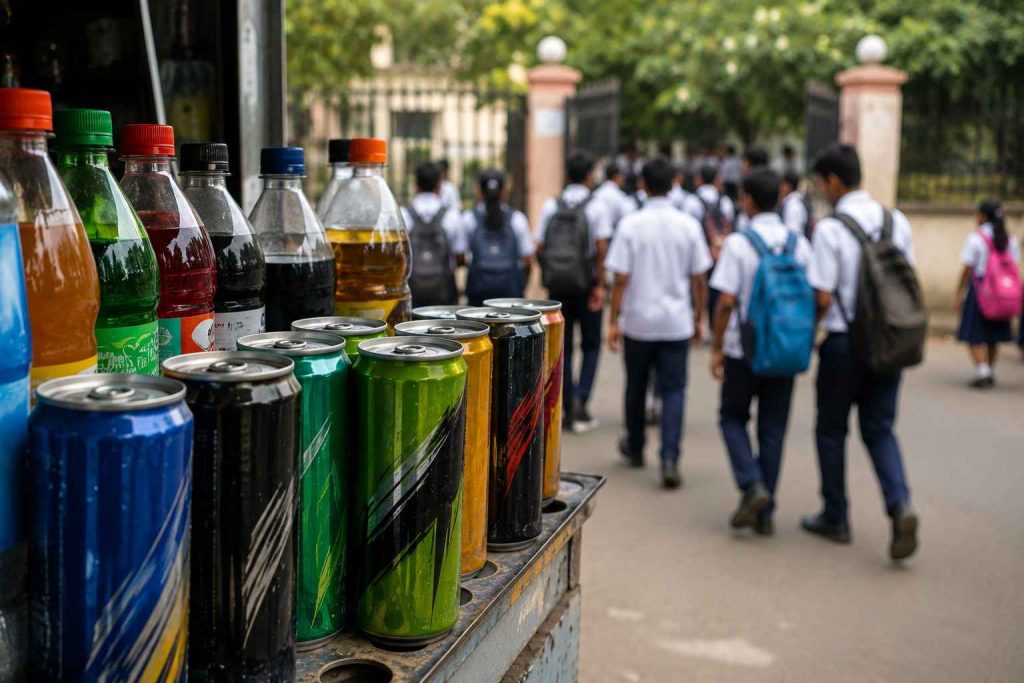
Pune, 15th July 2026: Caffeinated energy drinks continue to be sold openly outside several schools in Pune despite growing concerns over their impact on children’s health and the Maharashtra government’s assurance of strict action against such sales.
A recent ground survey found that shops and roadside stalls located just outside school gates were selling energy drinks in areas including Erandwane, Law College Road, Paud Road, Karve Road, Bharati Vidyapeeth, Nal Stop, and Tilak Road.
The issue came into focus after Food and Drug Administration (FDA) Minister Narhari Zirwal informed the Maharashtra Legislative Assembly that action would be taken against vendors found selling caffeinated beverages on school premises. However, the survey found that the drinks remain easily accessible to students from shops located near schools.
Health experts have warned that regular consumption of energy drinks can lead to caffeine dependence, headaches, irritability, and fatigue. They say children are particularly vulnerable because their brains and nervous systems are still developing. Excessive caffeine intake may also affect digestion, kidney function, and overall physical and mental development.

Parents say children are often attracted to these drinks because of their taste, aggressive marketing, and peer influence. The availability of energy drinks at prices as low as ₹20 has further increased their popularity among school students.
Many parents have questioned the state’s proposal to ban the sale of such beverages within a 500-metre radius of schools, arguing that children can easily purchase them from shops located just beyond the restricted zone. They have instead called for stricter regulations, including prohibiting the sale of energy drinks to minors.
Most energy drink bottles carry a warning stating that the product is not recommended for children, pregnant or breastfeeding women, or people sensitive to caffeine. A 250 ml bottle typically contains about 72 mg of caffeine, which is higher than the caffeine content in a typical cup of coffee, raising concerns over its regular consumption by schoolchildren.

While the government has directed teachers and school authorities to report the sale of such products on school premises, the survey indicates that stronger enforcement and greater public awareness are needed to curb children’s easy access to high-caffeine beverages.