From Pensioners’ Paradise to India’s Youngest Metropolis: How Pune Changed in 79 Years
By Samiccha Malik
Pune, 15th August 2026: In 1947, Pune was a quiet city.
It had wide roads lined with trees, a cantonment area that felt more British than Indian, a handful of colleges that gave it a certain intellectual reputation, and a population that could fit comfortably into what today would be considered a single large neighbourhood. People called it a pensioners’ paradise a place where retired government officers came to live out their years in the pleasant climate of the Deccan plateau, surrounded by gardens and unhurried streets.
Today, that description sounds like fiction.
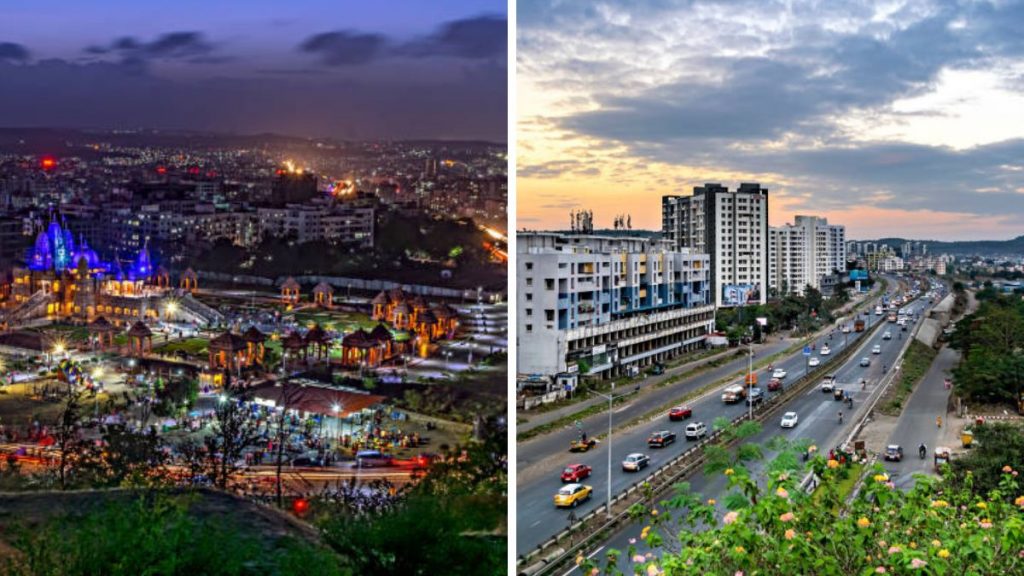
Pune in 2026 is a city of nearly 40 lakh people within city limits and a metropolitan region that stretches far beyond any boundary the 1947 city could have imagined. It is home to one of Asia’s largest manufacturing belts, one of India’s biggest IT corridors, some of the country’s most prestigious universities, and a real estate market that attracts national developers and global investors alike. A metro line connecting Hinjawadi to Shivajinagar a stretch that once took exhausted IT professionals upwards of two hours in peak traffic began carrying passengers in May 2026.
How did a pensioners’ paradise become all of this? And what did Pune gain and lose along the way?
1947: What Pune Actually Looked Like
When India became independent on August 15, 1947, Pune was integrated into the bilingual Bombay State, serving as the headquarters of the Pune Division. The city retained much of its British-era framework, including its role as a key military cantonment hosting the Southern Command of the Indian Army.
The 1951 Census recorded Pune’s urban population at just 4,88,419 under five lakh people.The city’s economy was largely administrative and educational. Its identity was shaped by its colleges Fergusson, Deccan, the College of Engineering and by the cultural and intellectual legacy of the freedom movement. Prime Minister Nehru famously called it the “Oxford of the East.”
That description, at the time, was entirely accurate. Pune was a city of students, scholars, retired officers, and a small but proud middle class rooted in Marathi culture and intellectual tradition. The peths Kasba, Narayan, Sadashiv, Shaniwar were the city’s heartbeat. The cantonment area was its British inheritance. And the hills around it Sinhagad, Vetal, Hanuman Tekdi were mostly undisturbed.
The 1950s and 60s: The First Big Shift Industry Arrives
The transformation began not with software or startups but with factories.
Industrial development started in the outlying areas of the city Hadapsar, Bhosari, and Pimpri in the 1950s. The first major operation was the government-run Hindustan Antibiotics plant in Pimpri in 1954. The Maharashtra Industrial Development Corporation set aside the Bhosari area for industrial development in the early 1960s, providing the necessary infrastructure for new businesses.
The 1960s and 1970s marked a new chapter with the arrival of major industrial units Tata Motors, Kirloskar, and Bajaj Auto. Pimpri-Chinchwad, an adjoining industrial belt, became one of the largest manufacturing hubs in Asia. This industrialisation attracted a workforce from across India, contributing to rapid population growth and urban sprawl.
The University of Pune now Savitribai Phule Pune University was established in 1949. The National Chemical Laboratory followed in 1950. The National Defence Academy opened its gates in Khadakwasla. The city’s status was elevated from town to city when the Municipality became the Pune Municipal Corporation in 1950.
In the space of two decades, the pensioners’ paradise had quietly become an industrial and educational powerhouse. Workers from across Maharashtra and beyond began arriving in search of factory jobs. New neighbourhoods grew to house them. The city started expanding slowly at first, then faster than anyone planned for.
The 1990s: Software Changes Everything
If factories changed Pune’s economy, the software boom changed its identity.
The late 1990s and early 2000s witnessed Pune’s emergence as an IT powerhouse. The Rajiv Gandhi Infotech Park in Hinjawadi, along with other IT corridors, introduced global corporations like Infosys, Wipro, and Tech Mahindra to the city.
This was not just an economic shift it was a demographic and cultural one. A new kind of Punekar arrived: young, educated, often from outside Maharashtra, working for multinational companies, earning salaries that previous generations of the city’s residents could not have imagined, and spending those salaries in ways that transformed the city’s character from the inside out.
Koregaon Park once a quiet cantonment neighbourhood of bungalows and old trees became one of India’s most recognisable addresses for nightlife, cafes, and upmarket living. Baner, Aundh, and Kothrud expanded dramatically. Hinjawadi went from farmland to one of Asia’s largest IT parks within fifteen years.
The rapid growth transformed the city’s character from pensioners’ city to educational and administrative centre, and then to a bustling economic metropolis.
2026: The Numbers Tell the Story
The scale of Pune’s transformation since 1947 is most visible in its numbers.
Population: From under 5 lakh in 1951 to a projected 40 lakh within city limits in 2026 with the broader metropolitan region, including Pimpri-Chinchwad, pushing that figure significantly higher.
Real Estate: The average price of residential apartments in Pune reached an all-time high of ₹6,590 per square foot in 2024, up from ₹5,938 the previous year a 10.98% increase in a single year. In 2024 alone, 90,127 residential units were sold across the city.
Commercial Growth: Pune captured 15% of India’s total commercial leasing volume in recent years, absorbing approximately 4.8 million square feet of Grade-A office space placing it second nationally, behind only Bengaluru.
Metro: The Pune Metro’s Line 3, connecting Hinjawadi Phase 3 to Shivajinagar, began opening to passengers in May 2026 cutting peak-hour commute times from up to two hours down to approximately forty minutes. It is a piece of infrastructure that the Pune of 1947 could not have conceived of needing, because the Hinjawadi of 1947 did not exist.
Ring Road: The new Ring Road, connecting the Pune-Mumbai Expressway, Nashik Road, Solapur Road, Pune-Bangalore Road, and other highways passing through Hinjawadi, Kharadi, Baner, Pimpri-Chinchwad, Wagholi, Hadapsar, and Dhanori is progressing toward completion between 2026 and 2028.
What Pune Gained
The gains are real and significant.
A city that once offered quiet retirement now offers genuine opportunity for engineers, doctors, artists, entrepreneurs, and the millions of workers who arrived from across India and found a livelihood in its factories and tech parks. Its literacy rate stands at nearly 90%. Its universities produce graduates who compete globally. Its cultural life theatre, music, food, literature has diversified and deepened even as the city grew.
The Pune of 2026 is a city where a young woman from a small Maharashtra town can arrive, find work in an IT company, rent an apartment, and build a life that her parents’ generation could not have imagined. That is not a small thing. That is the promise of independent India, imperfectly but genuinely delivered.
What Pune Lost
But transformation at this pace always has a cost and Pune’s is visible everywhere if you know where to look.
The trees that once lined its wide cantonment roads have thinned dramatically under the pressure of widening roads and new construction. The Mula and Mutha rivers the reason Pune existed in the first place are under severe stress from encroachment, pollution, and the sheer weight of a city that has grown far faster than its infrastructure. Urban growth has put enormous pressure on Pune’s land and water resources, changing the ecology of the area. The increasing water demand of Pune’s growing population competes with growing energy demands.
The peths Kasba, Narayan, Sadashiv still exist, but feel increasingly like islands of old Pune in a sea of new construction. The pensioners’ paradise is long gone. Whether what replaced it is better or just different is a question that different Punekars answer differently, depending on which Pune they grew up in.
Between 2000 and 2015 alone, almost half of all major urban development in Pune took place in peripheral areas farmland and open ground that the 1947 city never imagined would be absorbed. The hills are under pressure. The traffic is legendary. The potholes are a citywide conversation every monsoon.
Seventy-Nine Years of Becoming
Pune in 1947 was a city of under five lakh people, colonial infrastructure, great educational institutions, and a proud history as a centre of Maharashtra’s intellectual and political life.
Pune in 2026 is a city of 40 lakh, a metro line, a booming real estate market, Asia’s largest manufacturing belt next door, one of India’s biggest IT corridors, and a population drawn from every corner of the country.
It is louder. It is faster. It is significantly wealthier. It is considerably more congested. It has lost some of what made it quiet and beautiful, and gained almost everything it needed to become something larger.
That is not a simple story of progress or loss. It is the story of a city that absorbed the full force of independent India’s ambitions the industrial dreams of the 1950s, the educational aspirations of the 1960s, the software revolution of the 1990s, and the infrastructure boom of the 2020s and became, in the process, something its 1947 self could not have recognised.
Whether that something is everything Pune was meant to be is the question this city
and its people are still in the middle of answering.