How Digital Driving Documents and Online Traffic Services Are Simplifying Compliance
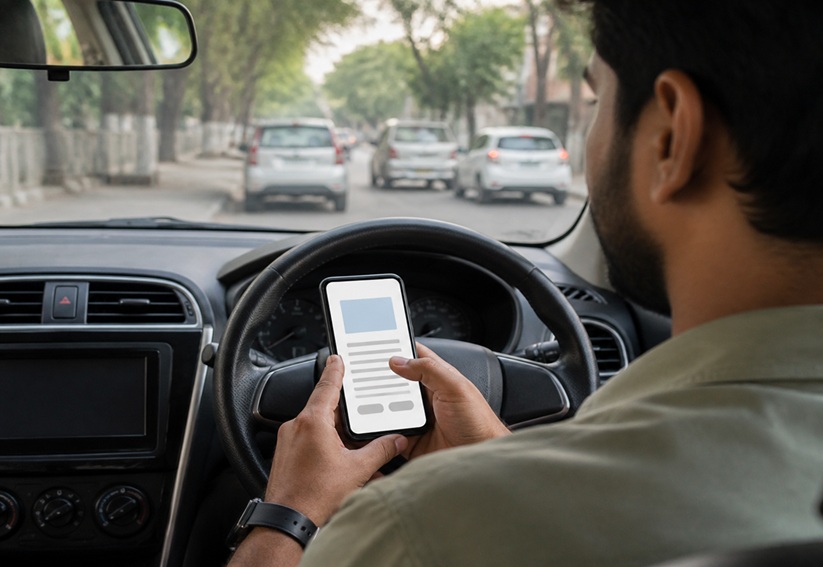
Kochi, 18th August 2026: A constable waves you down at a junction. You dig into the glovebox: registration papers, a faded insurance printout, and no licence. That sinking feeling used to cost time, money and a fair bit of dignity.
It costs far less now. The documents that matter have moved onto phones and government servers, shifting compliance away from remembering to carry things and toward knowing where to look. That shift runs deeper than convenience. It has quietly changed how enforcement reaches drivers and how disputes actually get resolved.
Paper Was Never the Safer Option
A screenshot doesn’t hold up at a checkpoint. That surprises people.
An image pulled from the phone gallery looks identical to what an officer needs, but it isn’t. A document retrieved from an authorised government app carries a live verification record sitting behind it. Officers scan rather than squint now, because the Ministry of Road Transport and Highways has formally recognised digital copies stored in official platforms as equivalent to originals.
The practical benefit is obvious to anyone who has lost a wallet. A physical licence requires a police complaint, a duplicate application and several trips you didn’t plan to take. A digital copy needs a login. A simple guide walking you through how to download driving licence in Kerala will take care of all your next instances involving a licence check.
What Actually Happens When a Licence Goes Digital
The mechanics are straightforward once you stop treating the platform as a mystery. Every licence issued in India sits in a central register maintained through the Sarathi system. When a driver requests a digital copy, the portal matches the licence number and date of birth against that register, then returns the record with a QR code attached.
Most people ignore the QR code. Bad idea.
It isn’t decoration. When an officer scans it, the app queries the government database in real time and returns current licence status, including any suspension flags. A forged printout fails immediately, because the code either won’t resolve or returns details that don’t match. The system catches mismatches that would have sailed through a manual checkpoint five years ago without anyone noticing.
Here’s where most people get caught out: they download the document and move on. Don’t.
Check whether the personal details actually match your current reality, covering:
- Address
- Name spelling
- Blood group
- Whatever was last submitted
If something looks wrong on the digital copy, it’s wrong in the register too. Correcting it now takes minutes. Arguing about it during a vehicle transfer later does not.
The Fine That Arrives Without a Constable
Camera-based enforcement has spread across most major cities. A violation captured by an automatic number plate reader doesn’t involve anyone stopping the car. The notice travels directly to the mobile number linked to the registration certificate.
Sounds clean. It rarely plays out that way, because that number often belongs to a previous owner, a relative or a dealership. The alert never arrives. The fine still does.
It sits there, quietly unpaid, until it surfaces at a bad moment, usually during ownership transfer, fitness renewal or an insurance claim assessment. Running an e challan online check against the registration number takes a couple of minutes and removes the guesswork entirely.
Buyers of used vehicles should treat this as a standard pre-purchase step, alongside verifying RC and insurance history.
Disputing a Wrongly Issued Challan
Most people think disputing a wrongly issued challan is complicated. It’s not, but speed matters more than most realise.
State portals display the captured image or camera location alongside the challan entry. If the photograph shows a different vehicle, or a plate misread by a single digit, that’s the evidence. File the grievance through the relevant traffic police portal while the record is fresh.
Under the Motor Vehicles Act 1988 and its 2019 amendment, e-challans processed through state RTO portals and the mParivahan app carry legal standing. Many states offer reduced penalty settlement through Lok Adalat for timely payment, making early action the more practical route.
Making Compliance Boring Again
The goal isn’t enthusiasm for paperwork. It’s reaching the point where none of this demands active thought. A short routine covers most of it:
- Download the licence and RC into an authorised government app, not the phone gallery, which proves nothing to anyone checking
- Update the mobile number on the registration certificate whenever it changes; this one gets skipped constantly and causes most challan delivery failures
- Run a challan check every few months, and always before buying or selling a vehicle, since penalties attach to the registration rather than the registered keeper at the time of the offence
- Set calendar reminders for insurance, PUC and licence renewal before they become emergencies