IIT Roorkee Pioneers AI Model to Digitize Modi Script, Preserving India’s Medieval Heritage
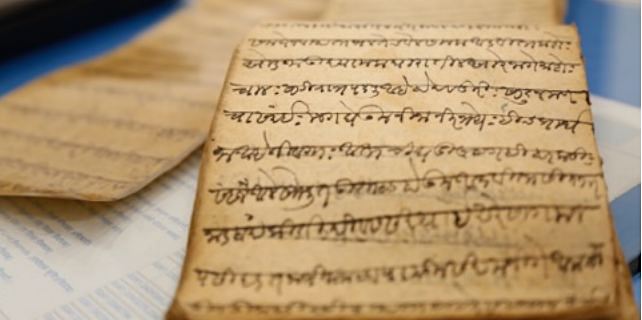
Roorkee, 18th July 2025: In a significant leap for digital heritage preservation, the Indian Institute of Technology Roorkee (IIT Roorkee) has unveiled a revolutionary AI-powered framework capable of transliterating the ancient Modi script into Devanagari. This landmark development not only safeguards centuries-old Indian manuscripts but also advances the country’s cultural digitization efforts through initiatives such as Digital India and Bhashini.
At the heart of the project is MoScNet, an AI model built using a cutting-edge Vision-Language Model (VLM) architecture. The framework offers an efficient, scalable, and lightweight solution tailored for low-resource settings, making it suitable for mass deployment across India. Its purpose is to unlock access to more than 40 million historical documents written in the Modi script, ranging from land records and Ayurvedic treatises to scientific texts from medieval India.
The innovation is part of a broader initiative titled “Historic Scripts to Modern Vision”, which also launched MoDeTrans—the first-ever dataset of real Modi script manuscripts paired with Devanagari transliterations verified by experts. The dataset includes over 2,000 images from three key historical periods: the Shivakalin (Shivaji Era), Peshwekalin (Peshwa Era), and Anglakalin (British Colonial Era).
Leading the project is Prof. Sparsh Mittal, supported by a talented team that includes Harshal and Tanvi—students from COEP Technological University—and Onkar, an alumnus of Vishwakarma Institute of Information Technology, Pune. Together, they’ve crafted a tool that surpasses existing Optical Character Recognition (OCR) models in accuracy and efficiency.
“This initiative exemplifies the transformative power of AI in reviving India’s cultural wealth and democratizing access to our historical knowledge,” said Prof. Kamal Kishore Pant, Director of IIT Roorkee. “It aligns with the vision of Viksit Bharat and furthers academic, national, and technological development.”
Prof. Mittal emphasized the open-source, ethical foundation of the tool, “We aim to make India’s ancient wisdom accessible to all by developing AI tools that are transparent, scalable, and community-driven. MoScNet sets the stage for future AI research in Indian languages and historical scripts.”
By making the MoScNet model and MoDeTrans dataset publicly available on Hugging Face, the research team ensures global collaboration and ongoing improvements from the AI and heritage communities. The project also opens the door for future integration with national AI platforms like BharatGPT and Bhashini, expanding the capabilities of multilingual AI in India.
Beyond the immediate impact on Indian heritage, the transliteration model holds global promise. Its architecture could be adapted for other endangered scripts around the world, offering a universal model for historical digitization.