India’s Looms of Glory: 11th National Handloom Day Honours Weaving Excellence and Heritage
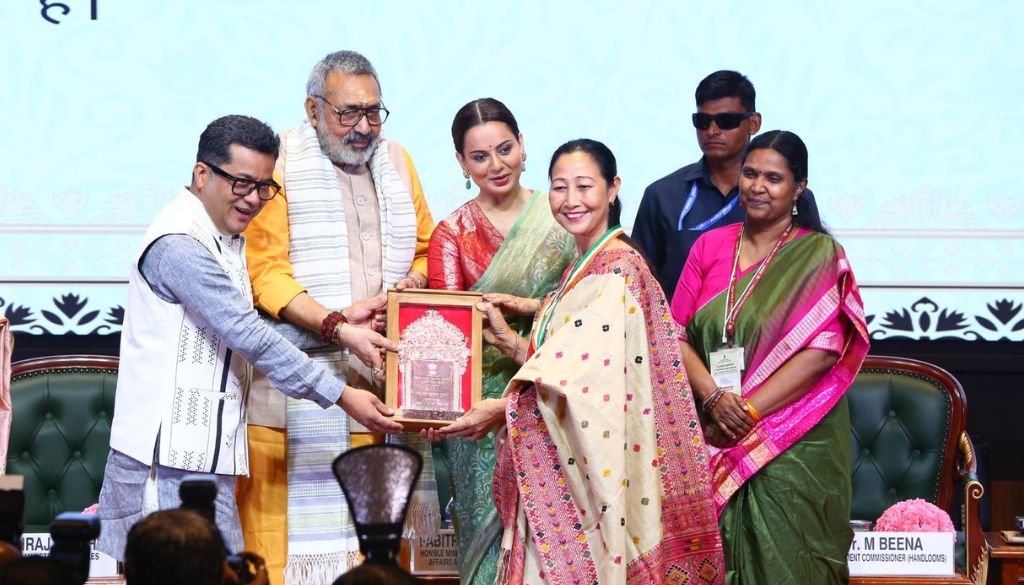
New Delhi, 13th August 2025: On the seventh of August, the heart of New Delhi became a living canvas of colours, textures, and tradition as the Ministry of Textiles marked the 11th National Handloom Day with a ceremony that was as much a tribute to India’s weaving heritage as it was a vision for its future. The occasion, graced by an array of distinguished guests, radiated the spirit of pride, craftsmanship, and cultural continuity.
The Union Minister of Textiles, Giriraj Singh, formally inaugurated the celebrations and presided over the conferment of the nation’s most esteemed handloom honours. Joining him were Minister of State for External Affairs and Textiles Pabitra Margherita, Minister of State for Consumer Affairs, Food and Public Distribution Nimuben Jayantibhai Bambhaniya, Member of Parliament Kangana Ranaut, Secretary Textiles Neelam Shami Rao, Additional Secretary Textiles Rohit Kansal, Development Commissioner for Handlooms Dr. M Beena, Members of Parliament from across the country, senior officials of the ministry, and a gathering of foreign buyers, exporters, eminent personalities, and approximately six hundred and fifty weavers representing every corner of India.
The moment that stood at the very centre of the day’s celebrations was the presentation of the prestigious Sant Kabir and National Handloom Awards to twenty-four master weavers. These honours are more than mere recognition; they are a celebration of generations of artistry, innovation, and unwavering dedication to a craft that forms part of India’s cultural identity. Among the awardees were six women and one Divyang artisan, each of whom has contributed uniquely to the preservation and evolution of weaving traditions. Their works speak of painstaking precision, regional character, and creative renewal, embodying the philosophy that tradition thrives not in preservation alone but in its ability to adapt and inspire.
In his address to the gathering, Giriraj Singh spoke of the textile sector’s ever-growing significance in the nation’s economic and social fabric, noting that it now stands as the second-largest employment-generating sector in the country. With pride, he extended his warm congratulations to all the award recipients, recognising not just their skill but their role in sustaining livelihoods and heritage. He reiterated the Prime Minister’s vision of Aatmanirbhar Bharat, underscoring the need to encourage entrepreneurship within the handloom industry. Schemes such as the Mudra Yojana, he reminded the audience, could be harnessed to empower weavers and small-scale entrepreneurs, giving them both the capital and confidence to expand their horizons.
The Minister’s vision was expansive. He spoke of product diversification as a way to meet the tastes of evolving markets, the promotion of natural fibres like ramie and linen as eco-friendly and high-value alternatives, and the importance of nurturing second-generation handloom entrepreneurs. His emphasis on the 797 handloom clusters spread across the country was a reminder of the scale and potential that lies in every loom and shuttle. Technology, too, has a role to play. He shared the government’s efforts to protect indigenous designs using advanced tools such as Artificial Intelligence and Blockchain, safeguarding the intellectual property rights of India’s weavers and designers. This, he said, was vital not only for honouring the work of artisans but also for ensuring that their creative legacy is shielded from imitation and exploitation. In a heartfelt appeal, he urged the youth of the nation to engage with the handloom sector, encouraging designers and weavers to collaborate in creating contemporary products that resonate with younger audiences. To every citizen, he extended a simple invitation — wear handloom at least once a week and in doing so, participate in the preservation of a centuries-old craft.
Pabitra Margherita, Minister of State for Textiles, brought his own depth of sentiment to the occasion. He reflected on how National Handloom Day is rooted in the spirit of the Swadeshi Movement, when handwoven fabric became more than clothing; it became a symbol of resistance, self-reliance, pride, and identity. He spoke of how the Prime Minister’s call for “vocal for local” and “local for global” is now becoming a tangible reality under the guidance of Giriraj Singh. The handloom sector, he affirmed, is stepping into a new era of innovation and growth. Initiatives like the Handloom Mark and the India Handloom Brand, he said, are transforming Indian fabrics into global symbols of sustainability and cultural elegance.
Beyond speeches, the day was an immersive celebration of handloom artistry. Dignitaries were invited to embark on a curated walkthrough of the award-winning exhibits, a visual journey through the diversity of India’s weaving traditions. Each display told a story of its region, its community, and the hands that shaped it. The event also saw the unveiling of a coffee table book on handloom excellence created by NIFT Mumbai, an ode to the dedication and artistry of master weavers. There was an exclusive exhibition of award-winning products that allowed visitors to experience the finesse of the craft up close. A facilitation desk provided information on various handloom schemes, connecting artisans directly with opportunities for growth. The highlight for many was “Vastra Veda – The Handloom Heritage of India,” a fashion show that brought the looms’ creations to life on the runway, bridging the gap between heritage and modernity. Specially curated films on handlooms were also launched, offering cinematic glimpses into the craft’s journey from the weaver’s hands to the wearer’s heart.
National Handloom Day, observed annually on August seventh, commemorates the launch of the Swadeshi Movement in 1905, an historic campaign that encouraged the use of indigenous products and fortified the handloom industry as a pillar of self-reliance. First inaugurated by the Prime Minister Narendra Modi in 2015 in Chennai, it has since become a day not only of remembrance but of renewal. Today, the handloom sector provides livelihoods to over thirty-five lakh people, more than seventy percent of whom are women. It stands as a beacon of sustainable production, women’s empowerment, and the preservation of India’s cultural heritage.
This year’s celebration brought together a remarkable blend of stakeholders: weavers and artisans, designers, students from IIHT and NIFT, winners of the Handloom Hackathon, exporters, foreign buyers, senior government officials, and admirers of the craft from all walks of life. Together, they formed a living illustration of the sector’s reach and relevance. The day’s events affirmed what every thread in a handwoven fabric quietly proclaims that handloom is not merely a product of labour but an inheritance of artistry, patience, and cultural memory. It is the fabric of India’s past, present, and future, and in every warp and weft lies a story worth telling, wearing, and cherishing.